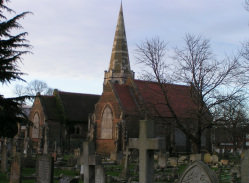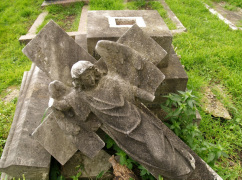
Derelict London Cemeteries,Churches & Chapels
BARNES - OLD BARNES CEMETERY
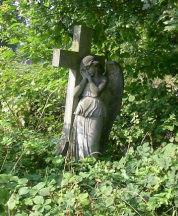
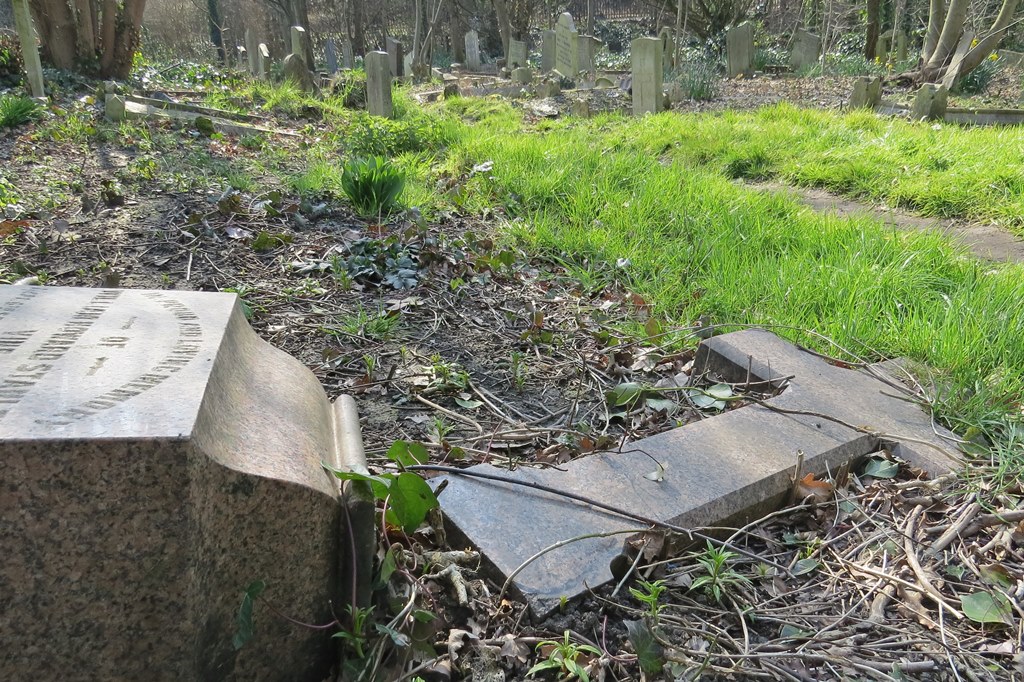
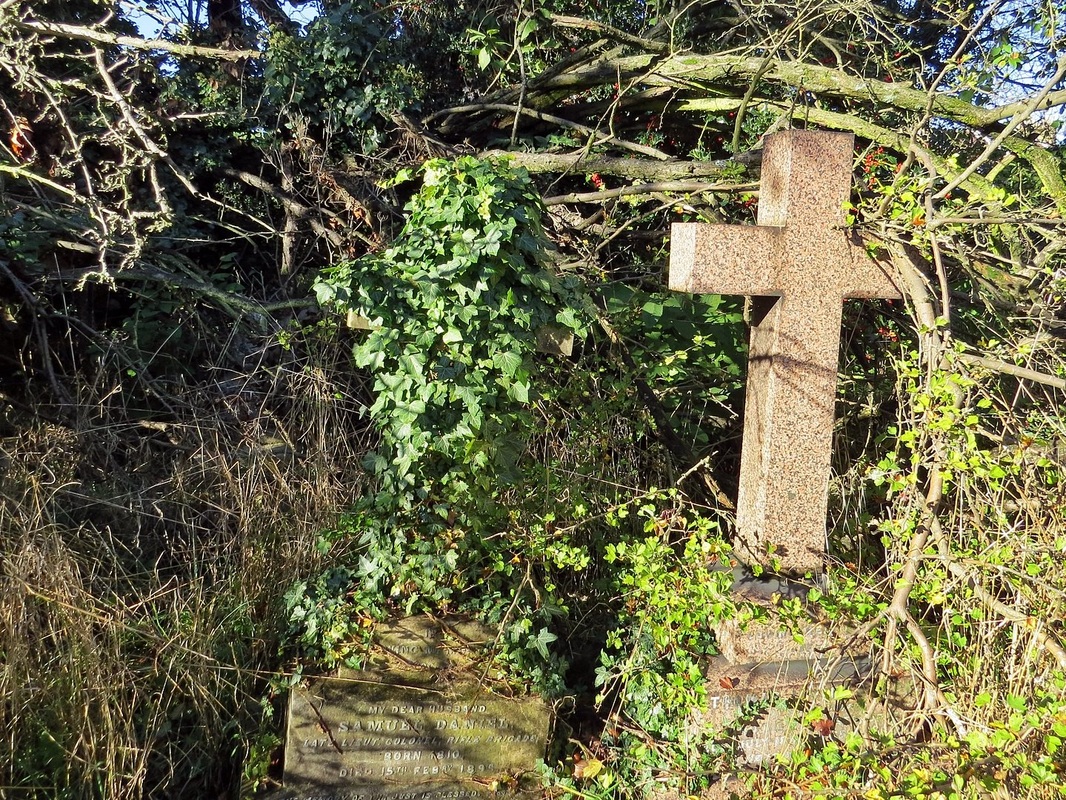
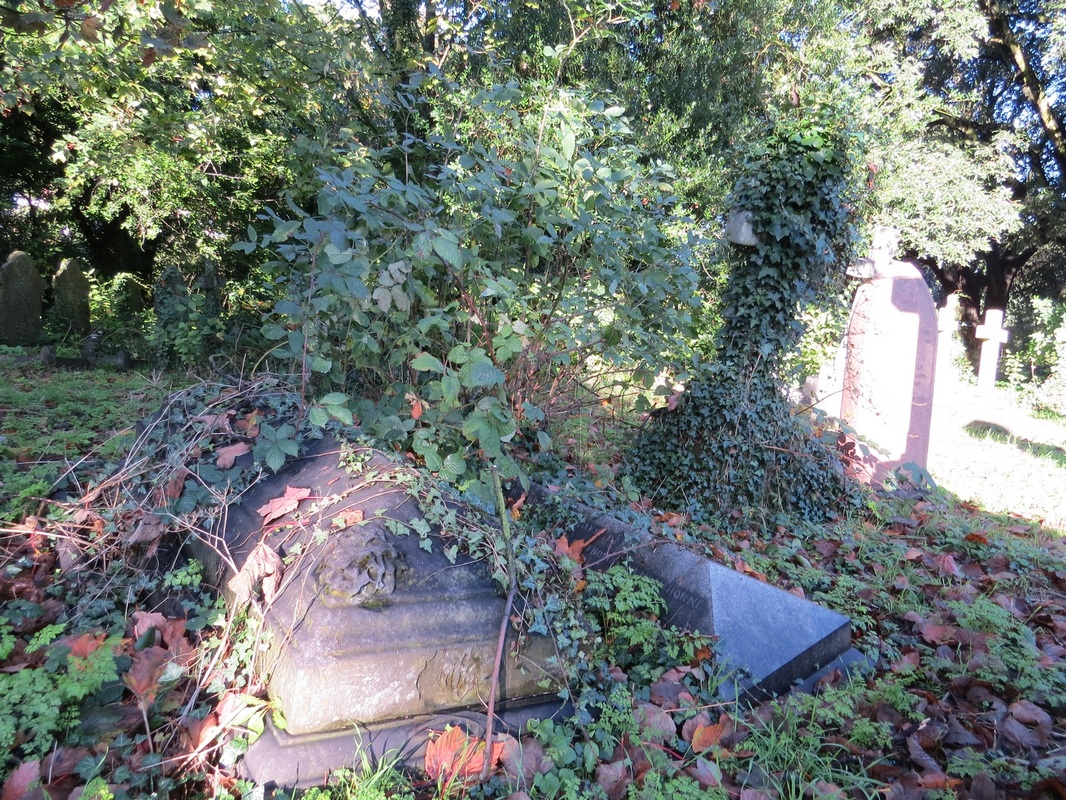
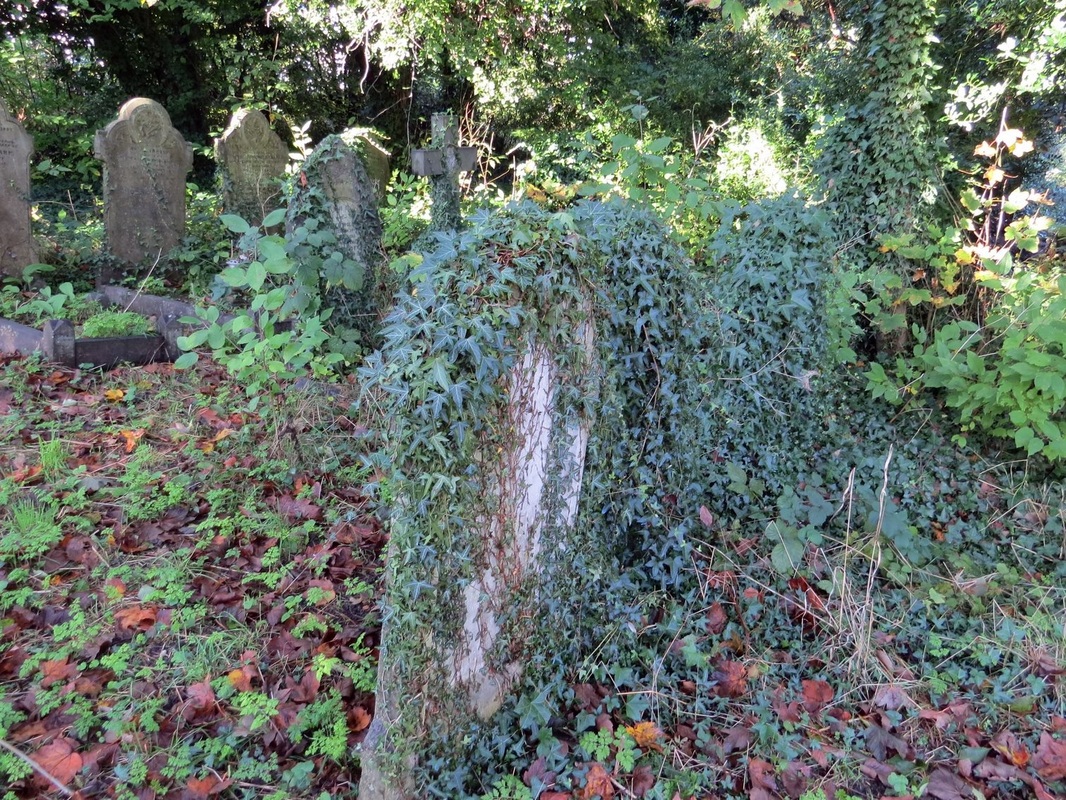
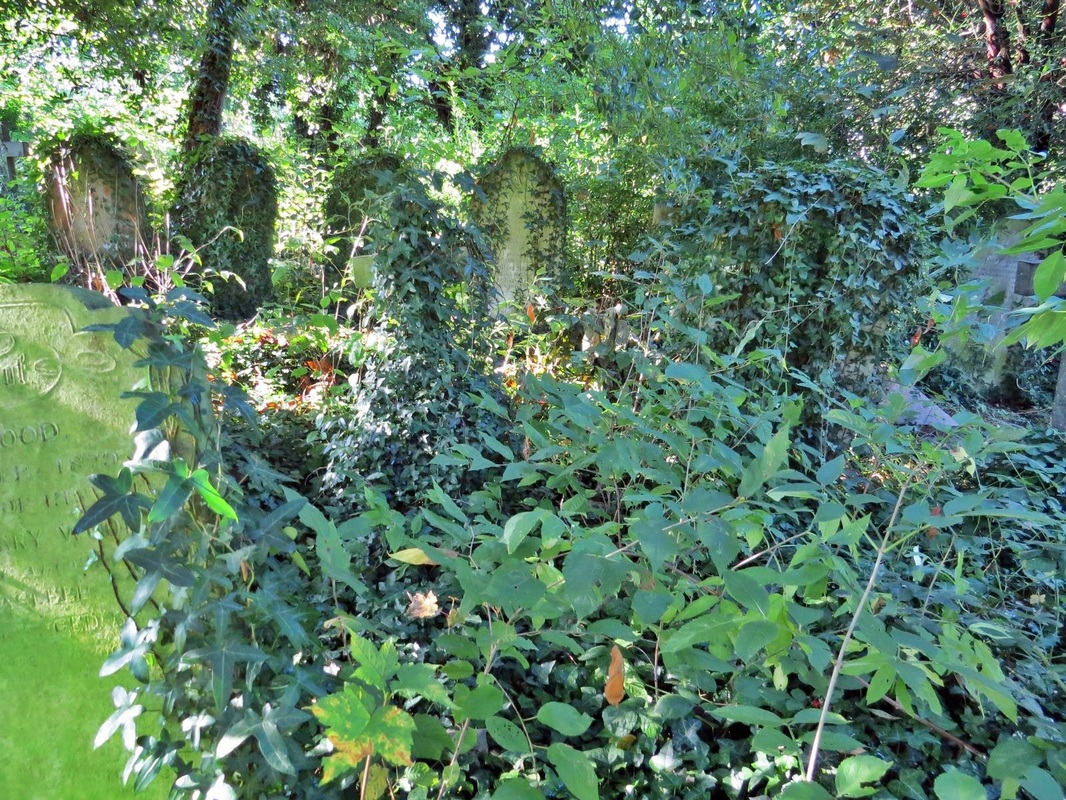
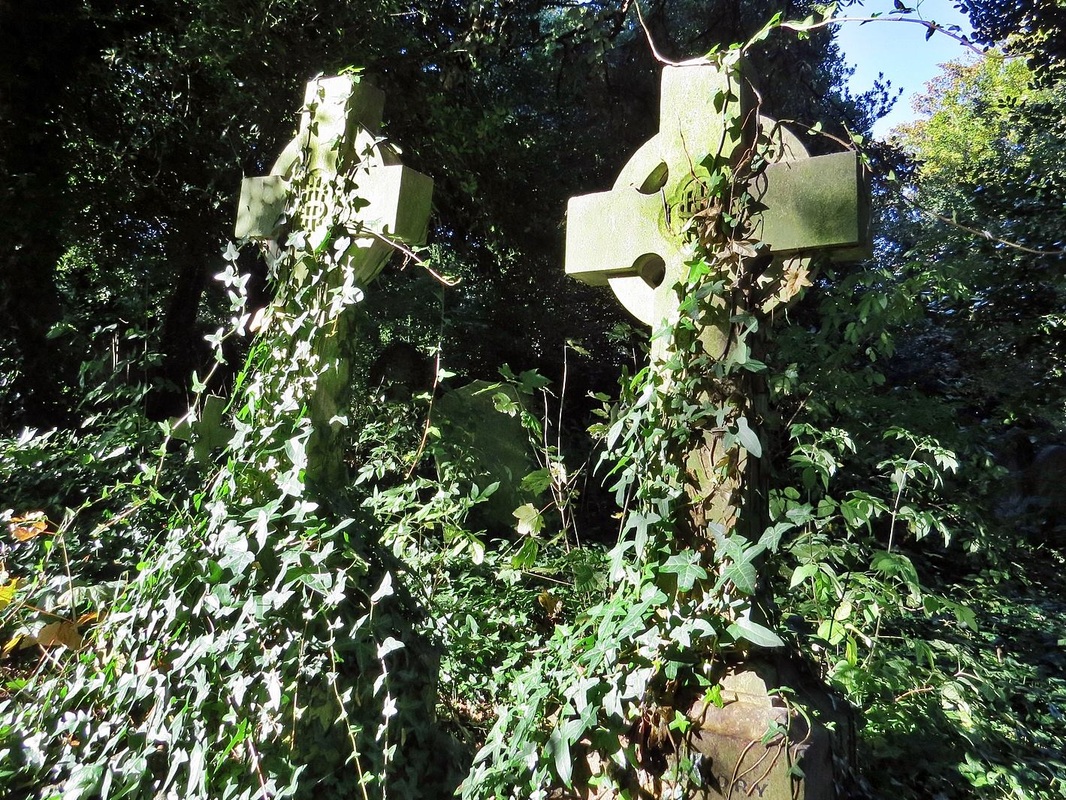
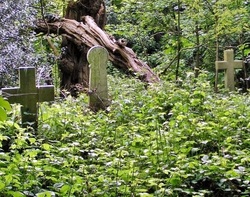
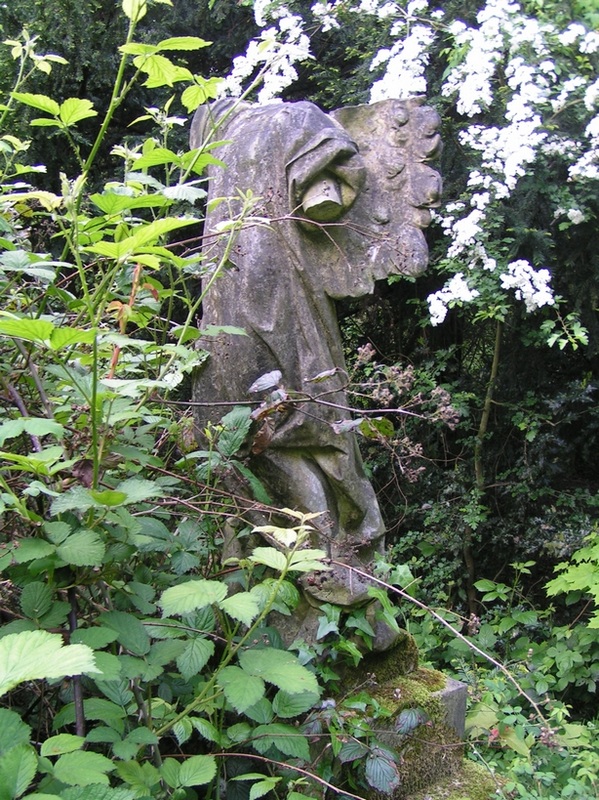
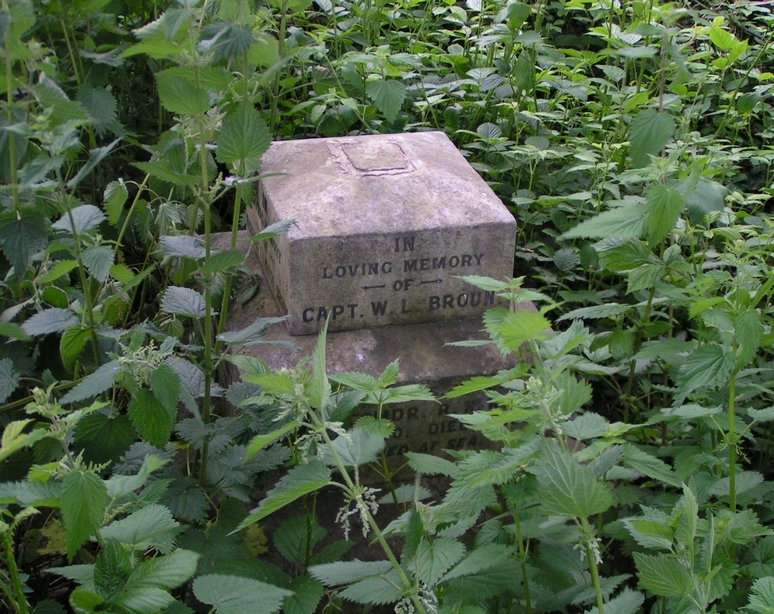
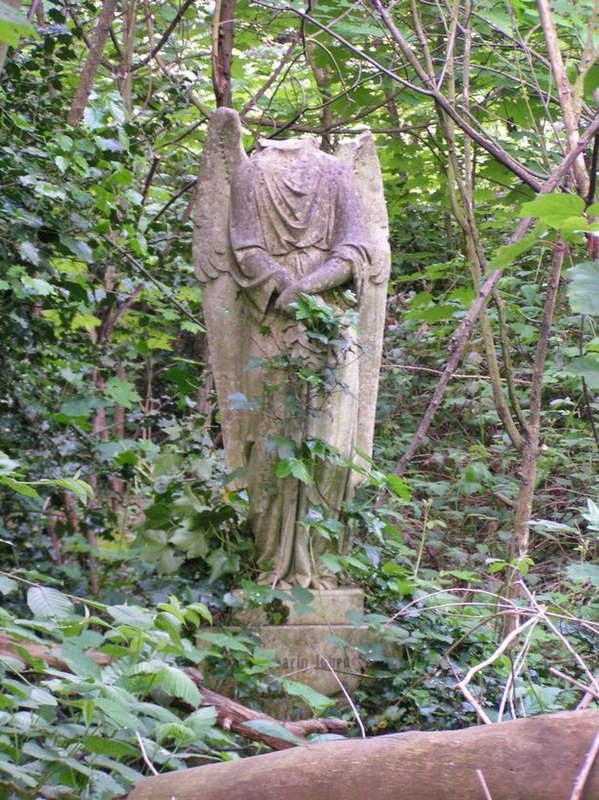
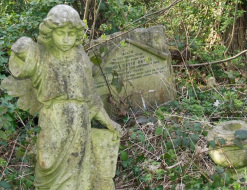
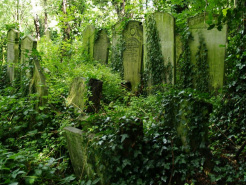
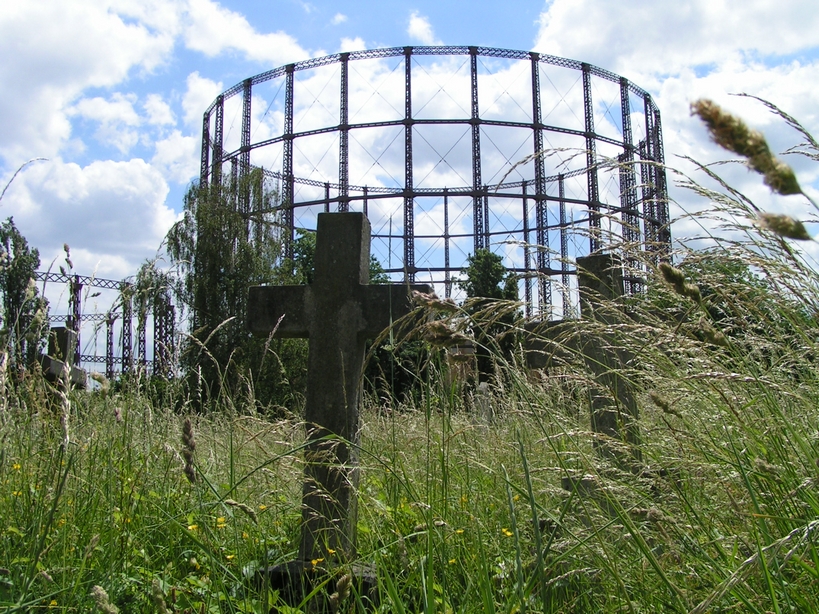
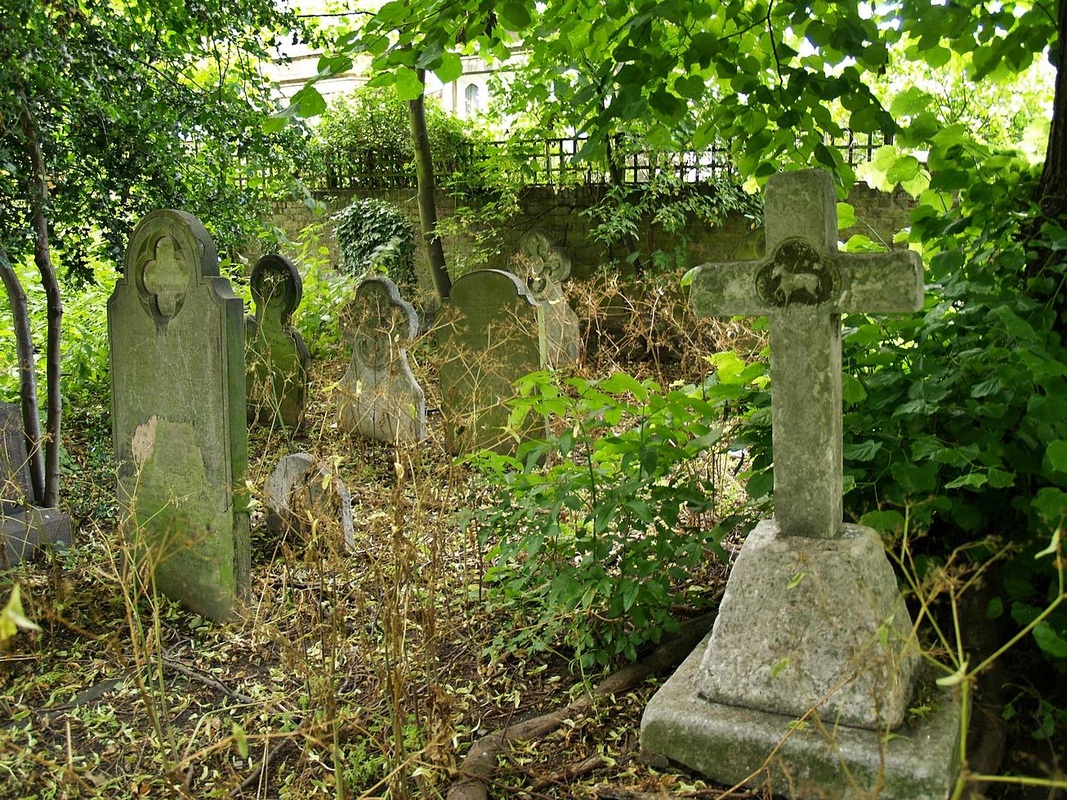
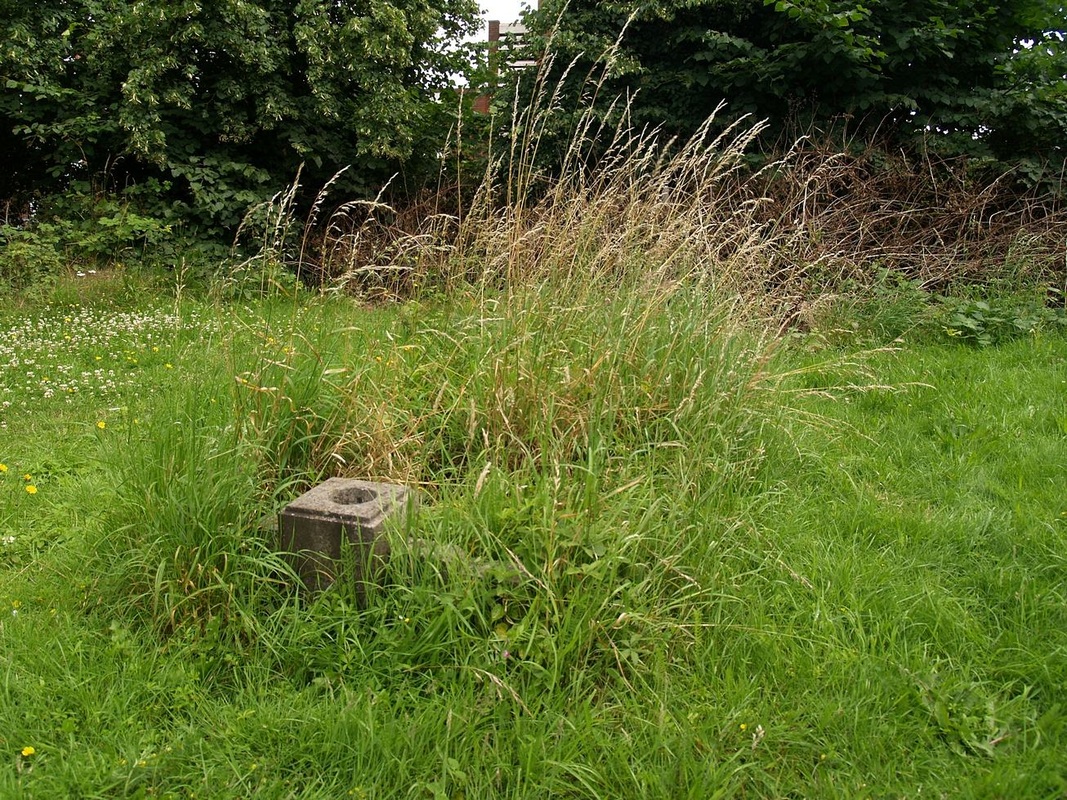
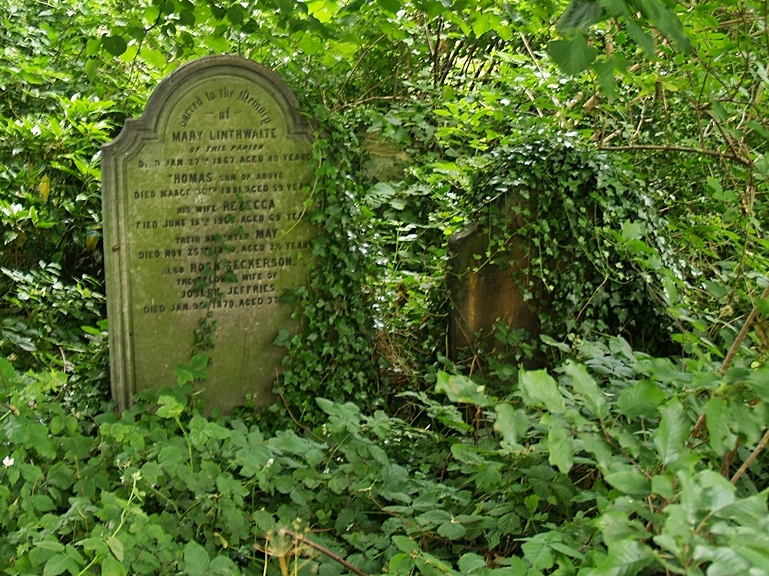
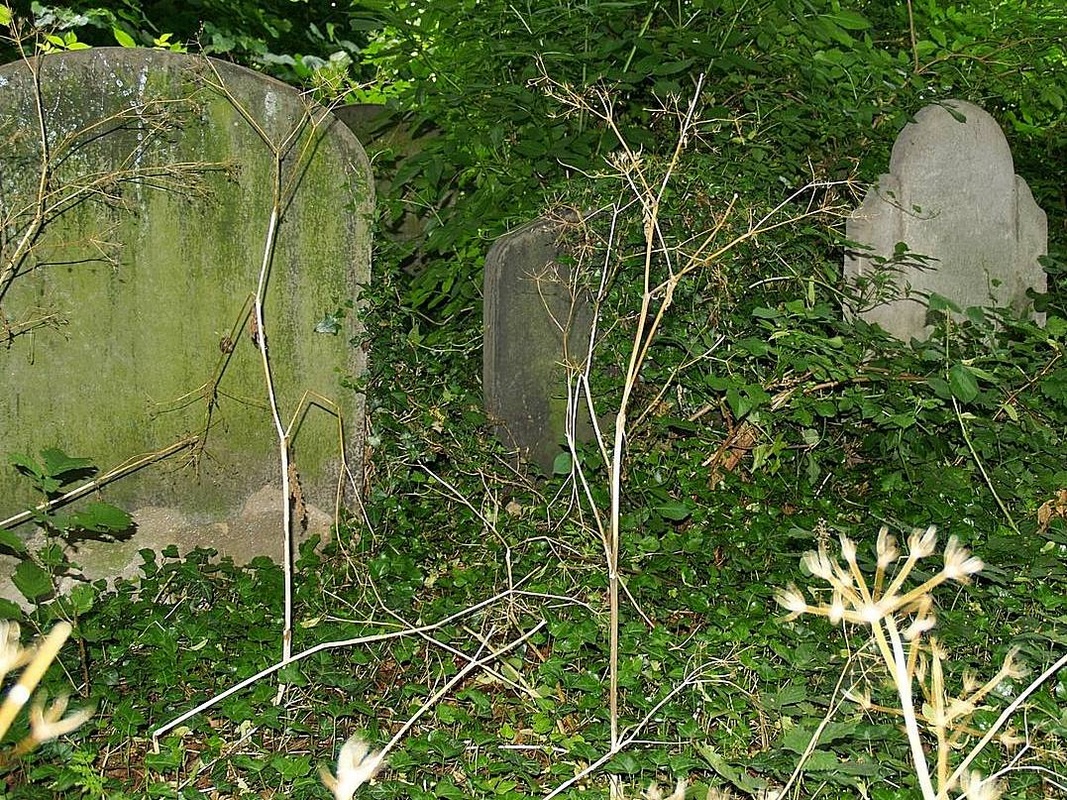
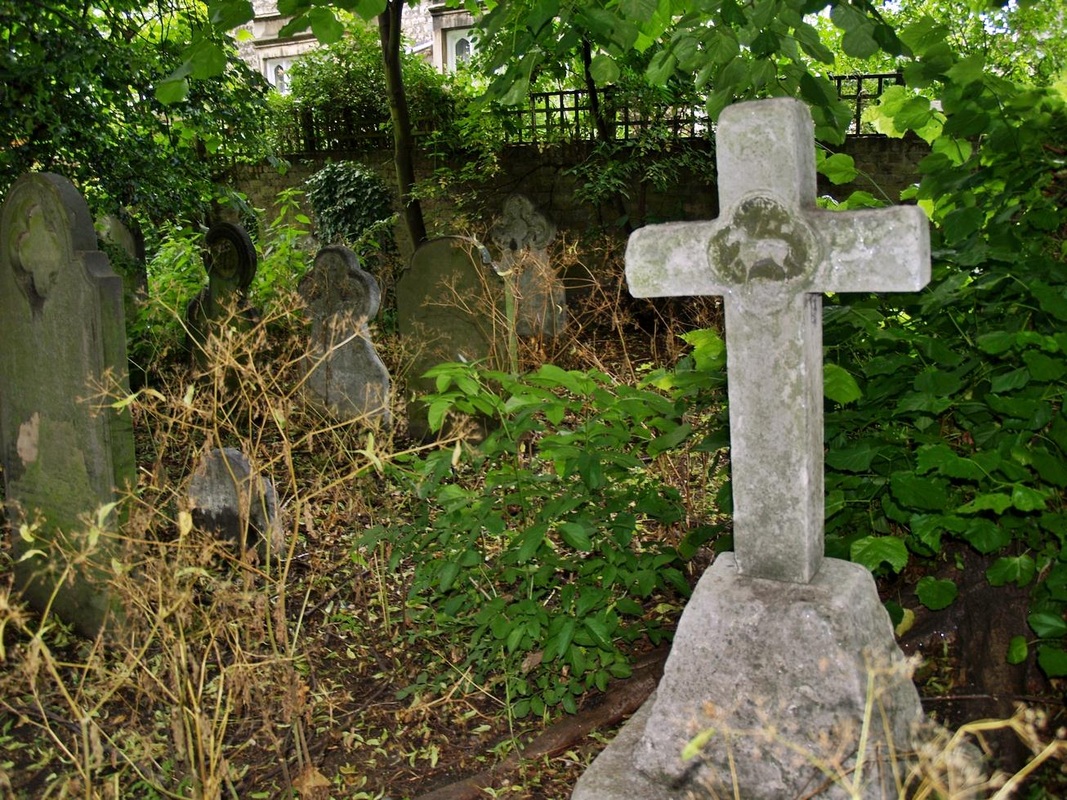
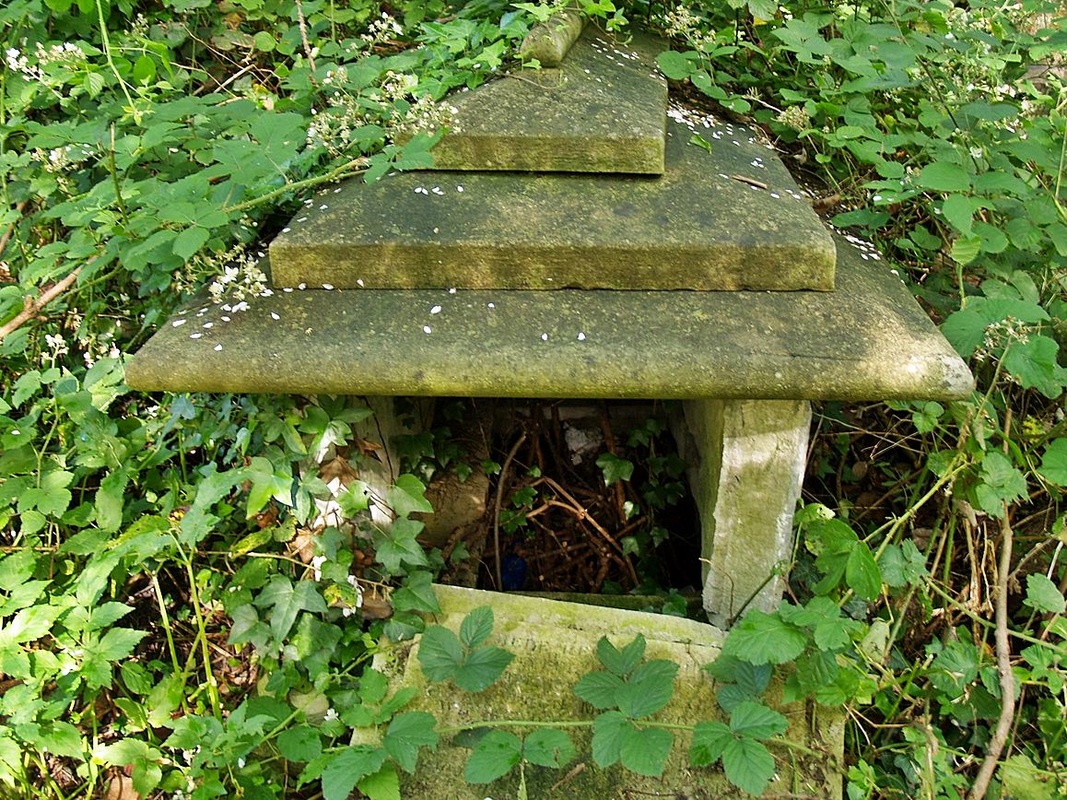
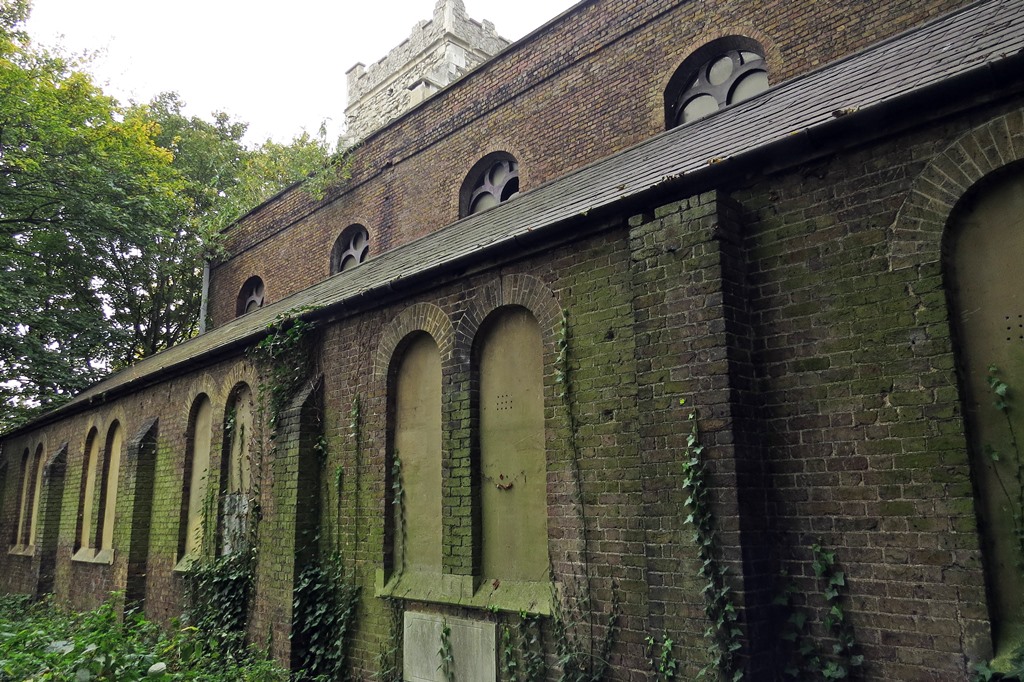
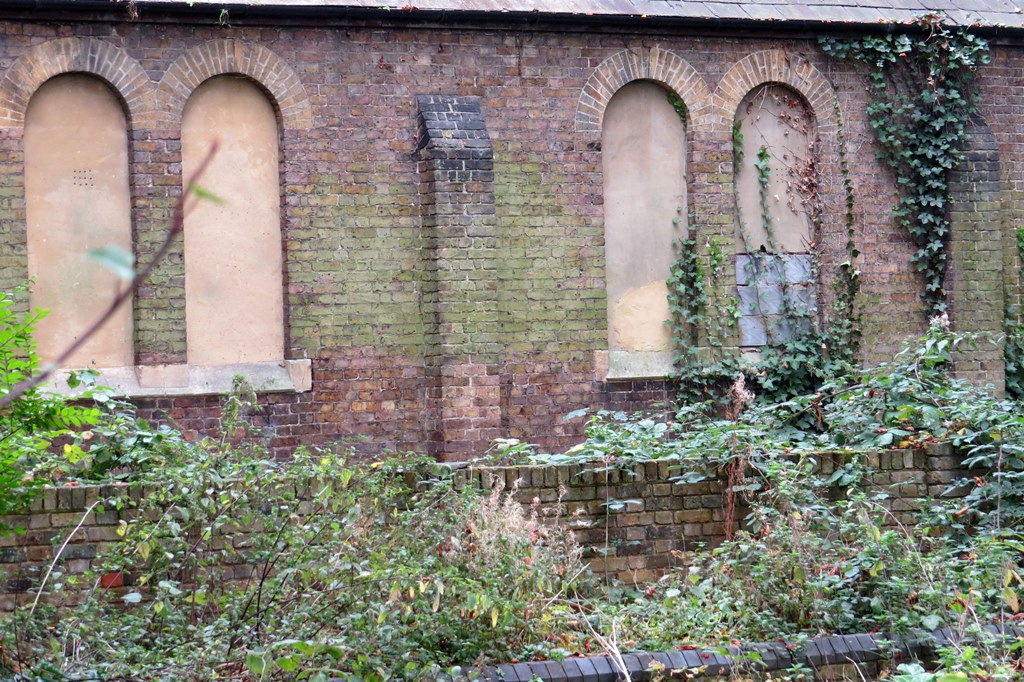
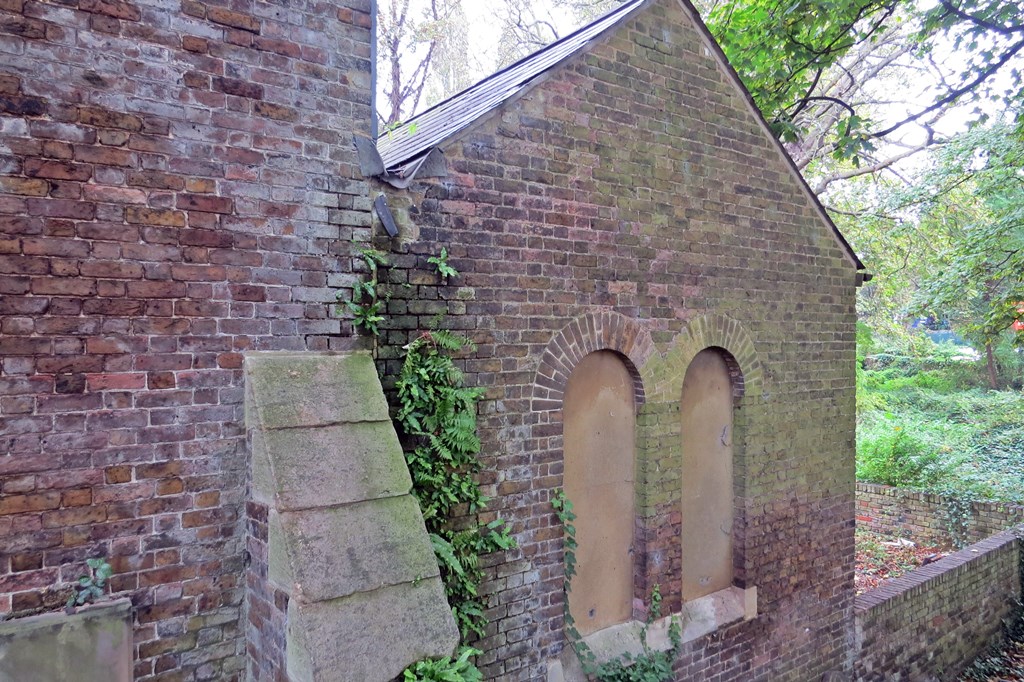
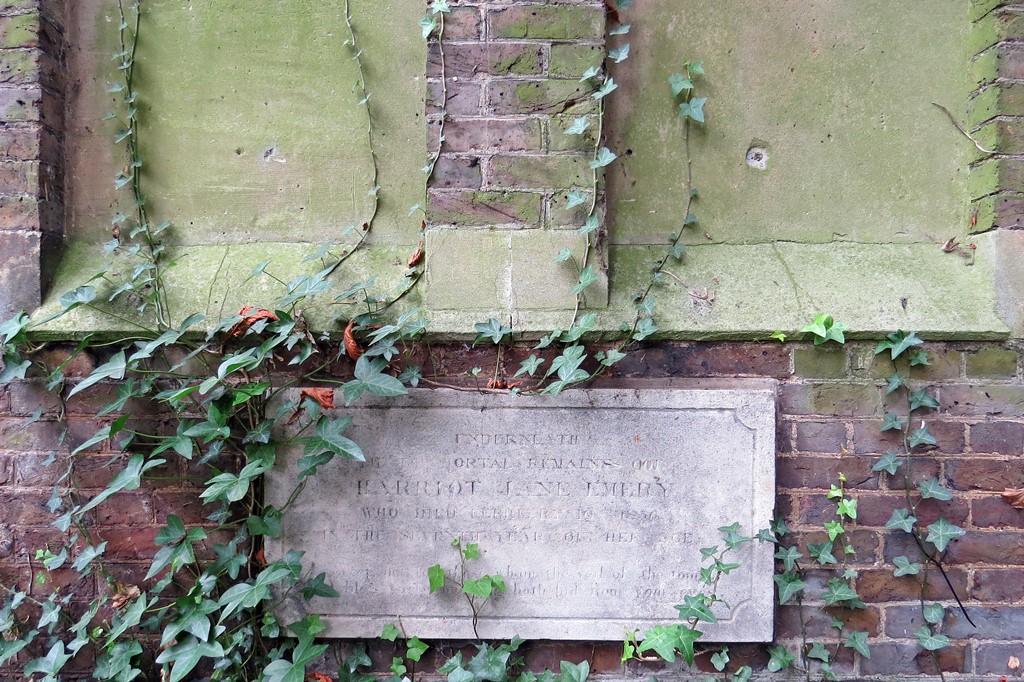
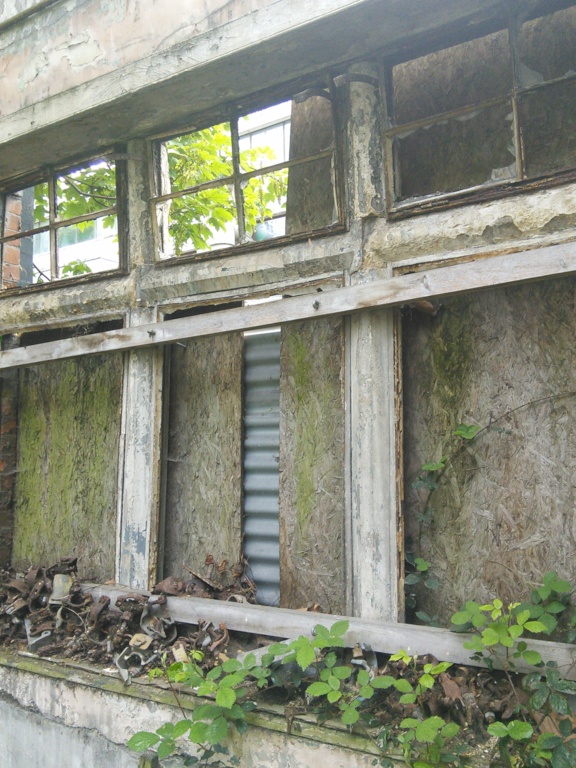
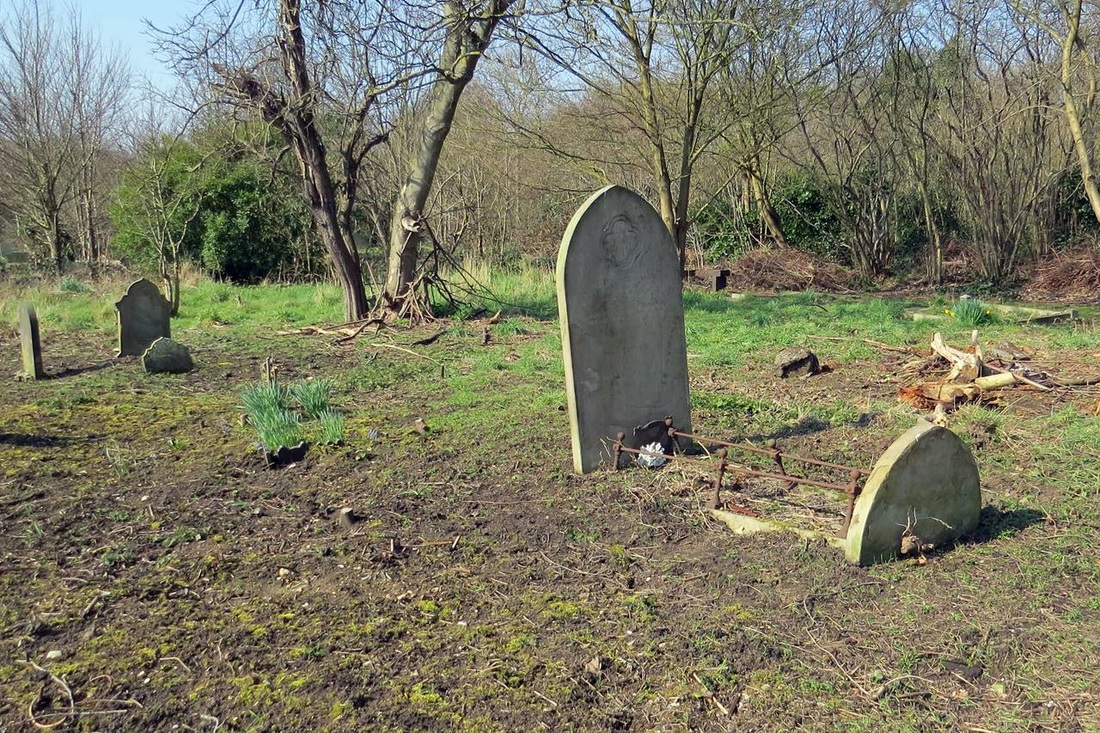
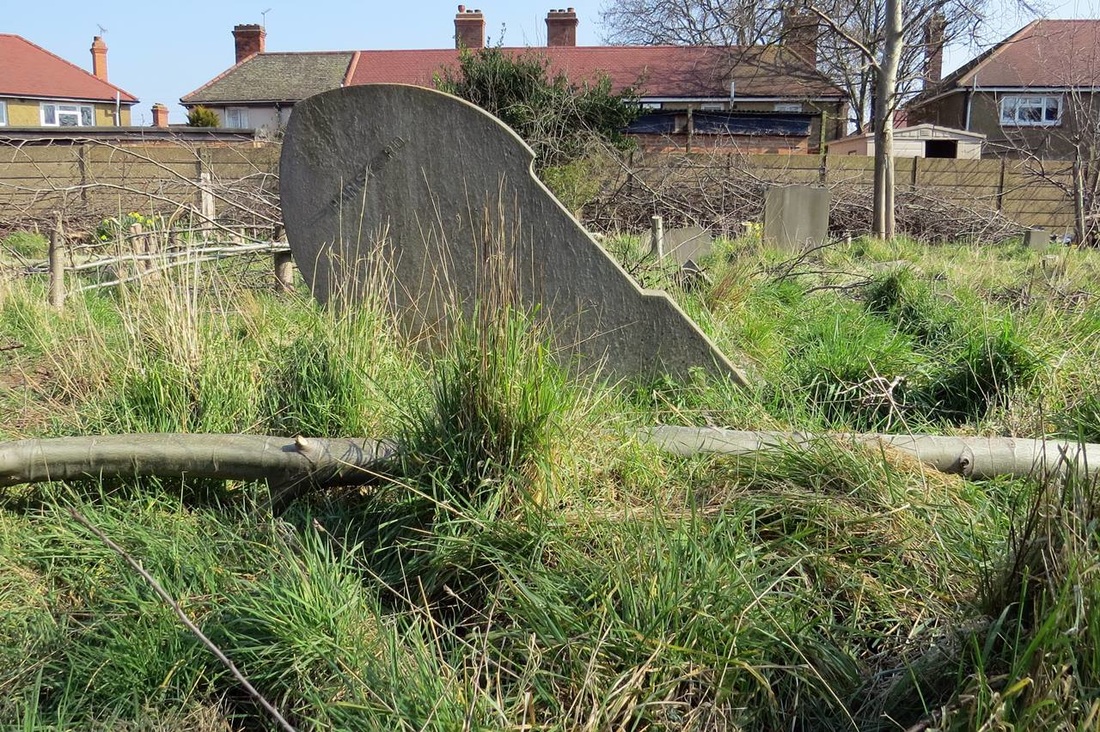
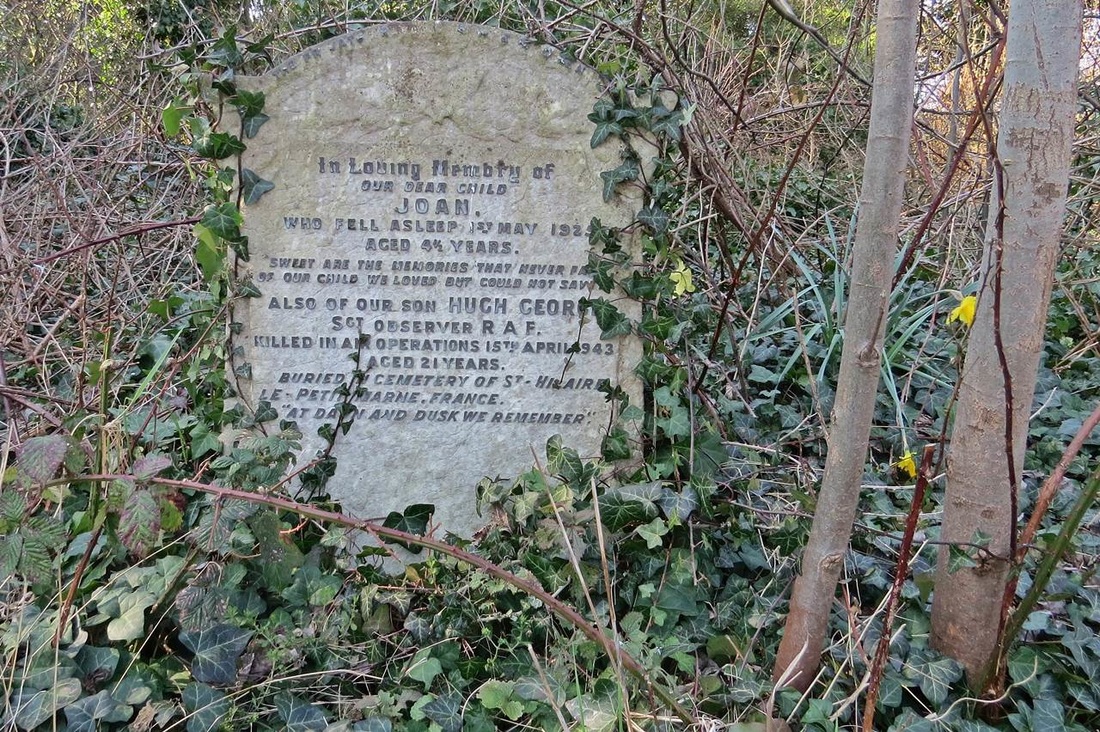
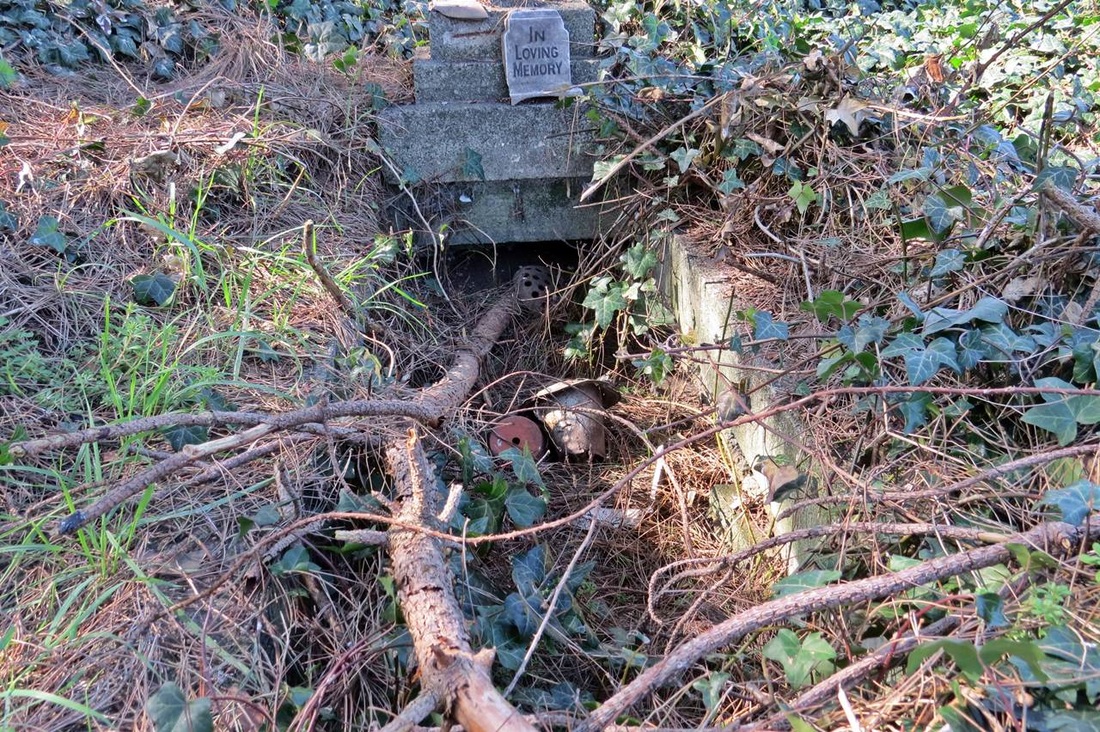
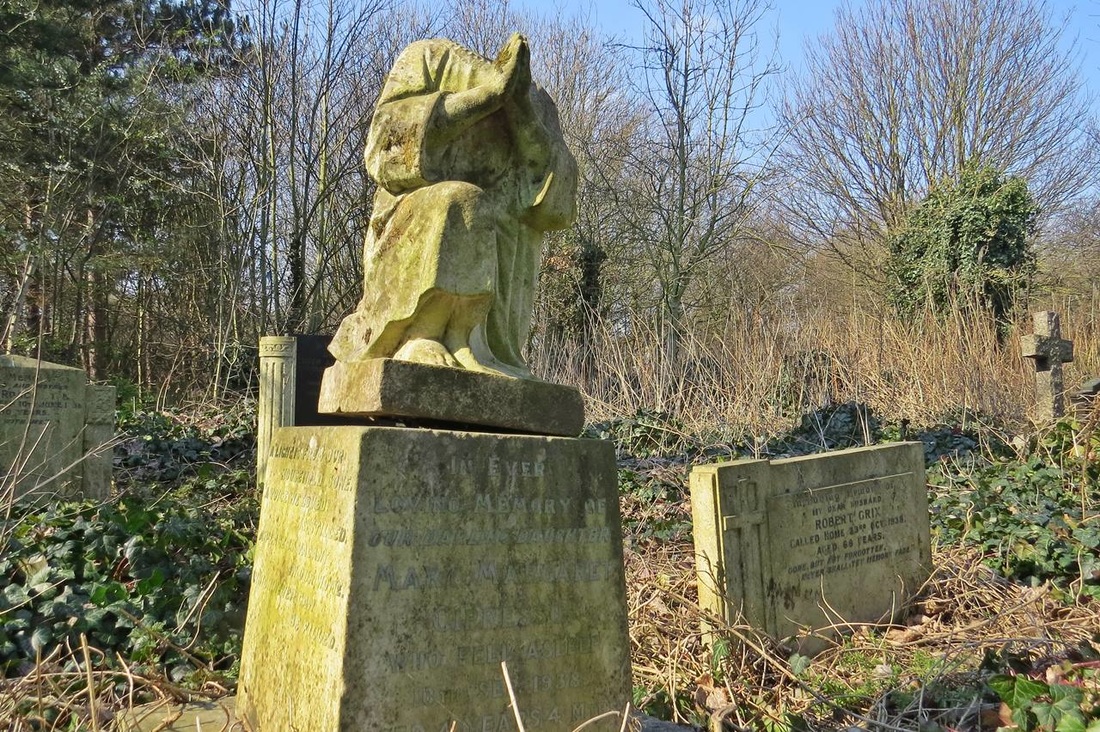
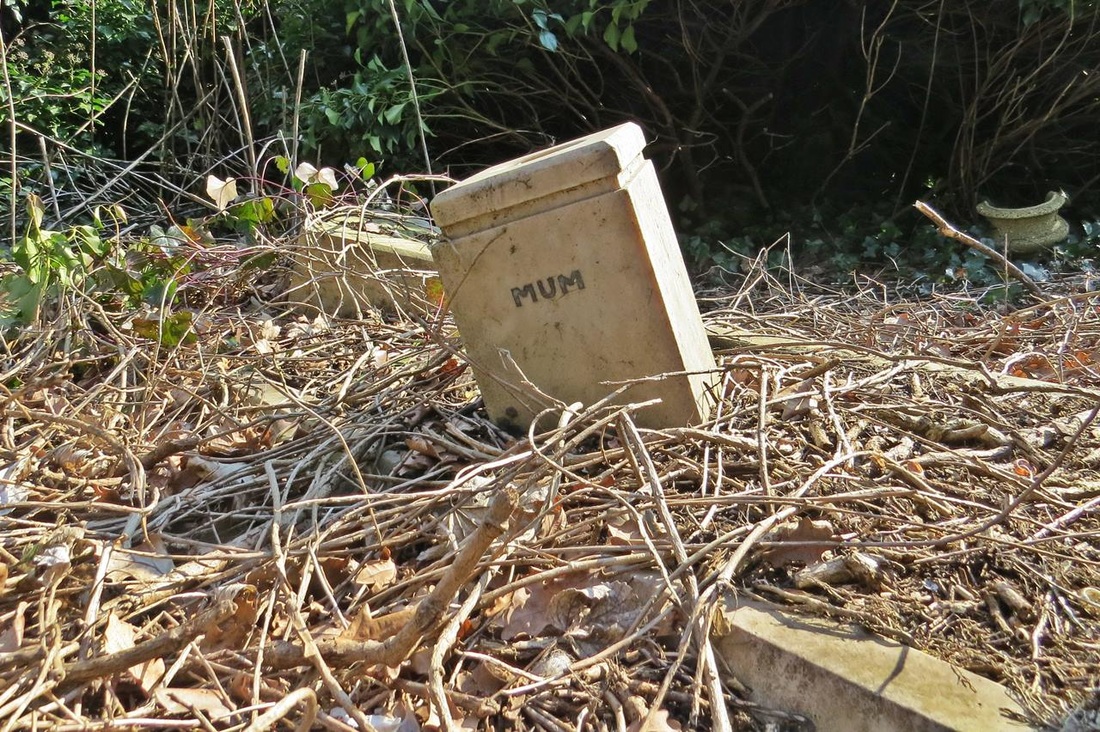
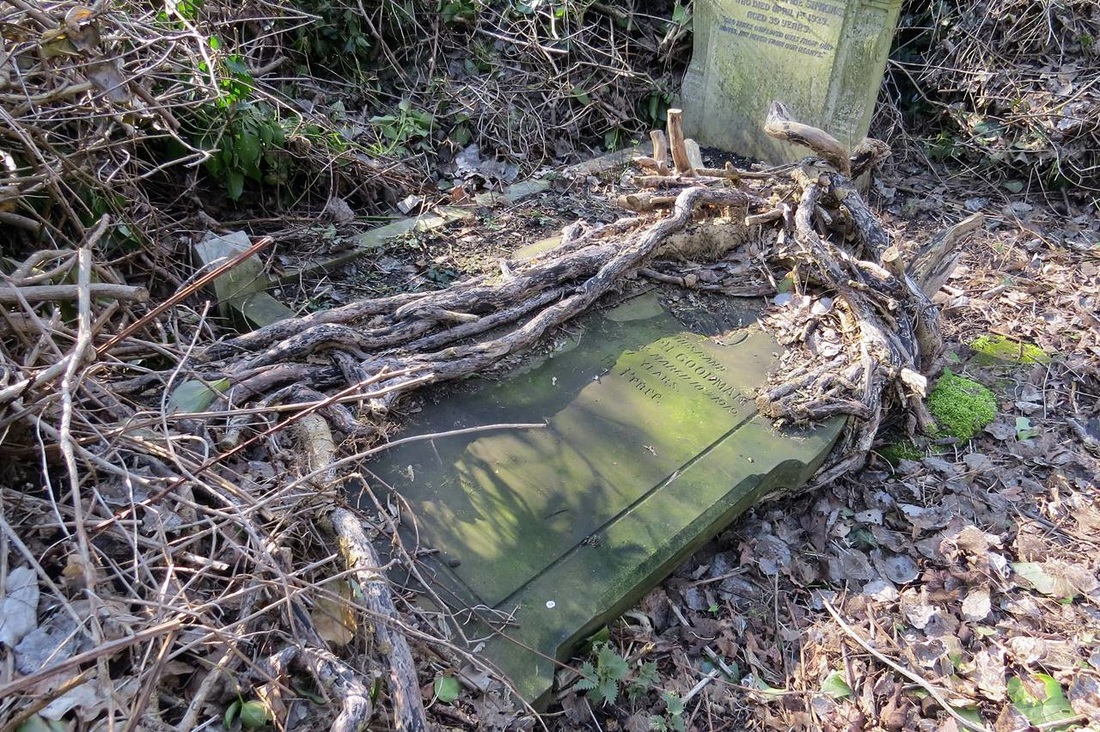
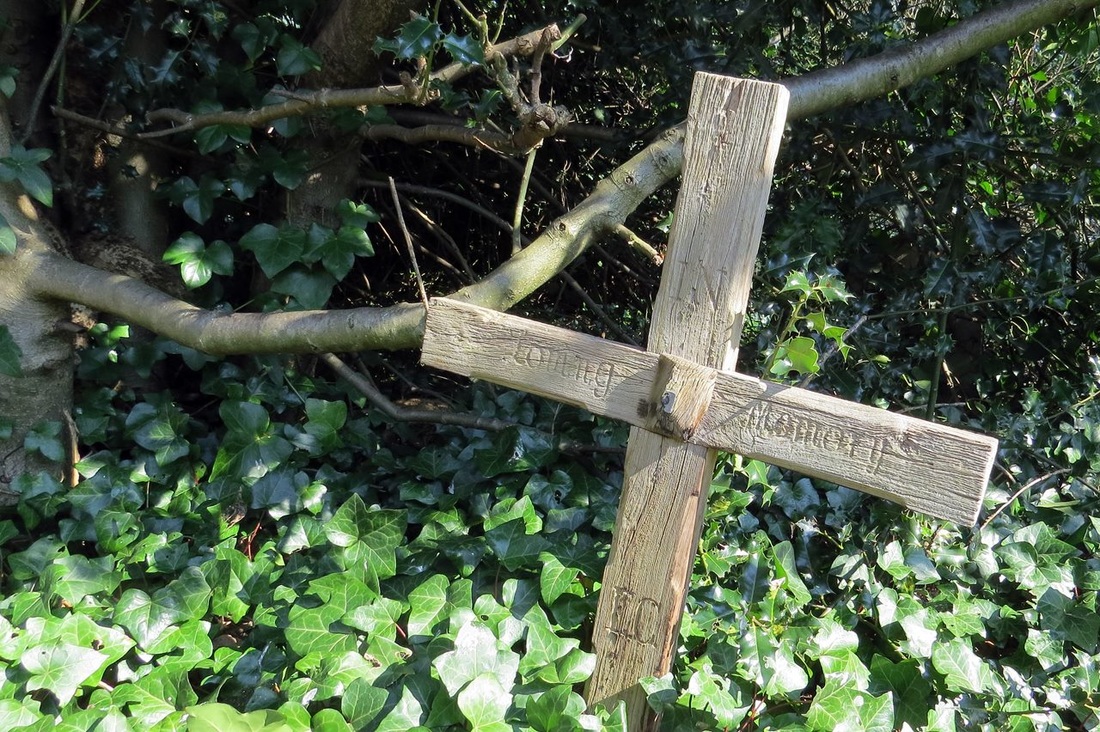
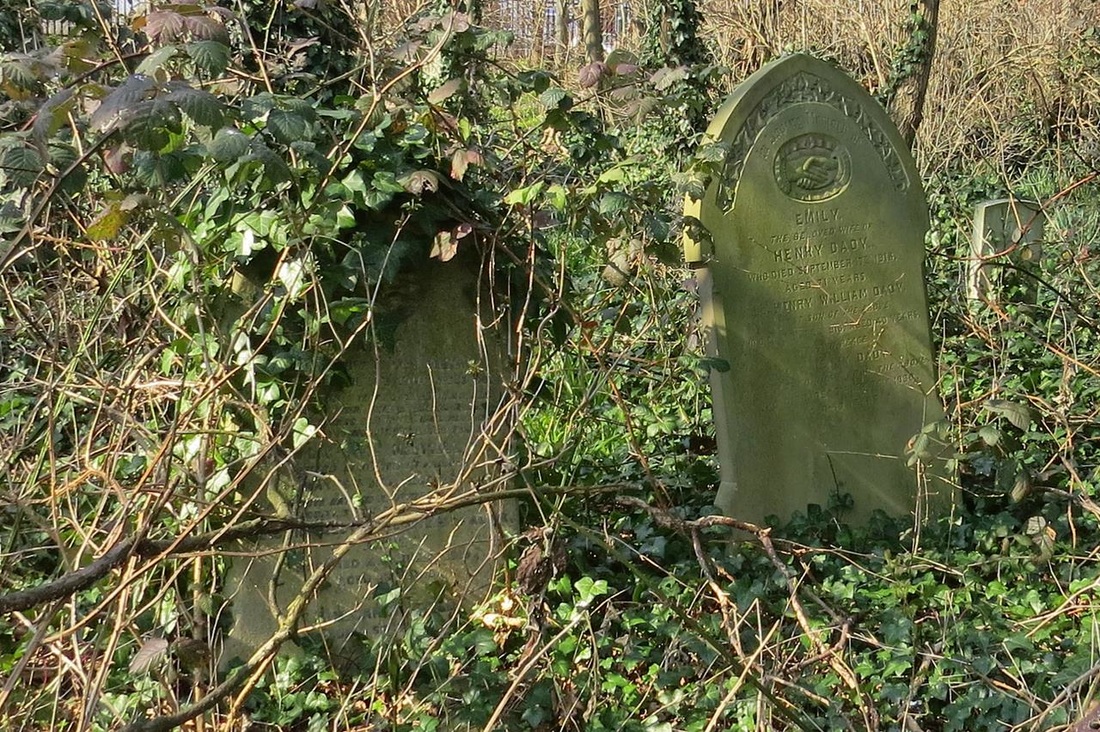
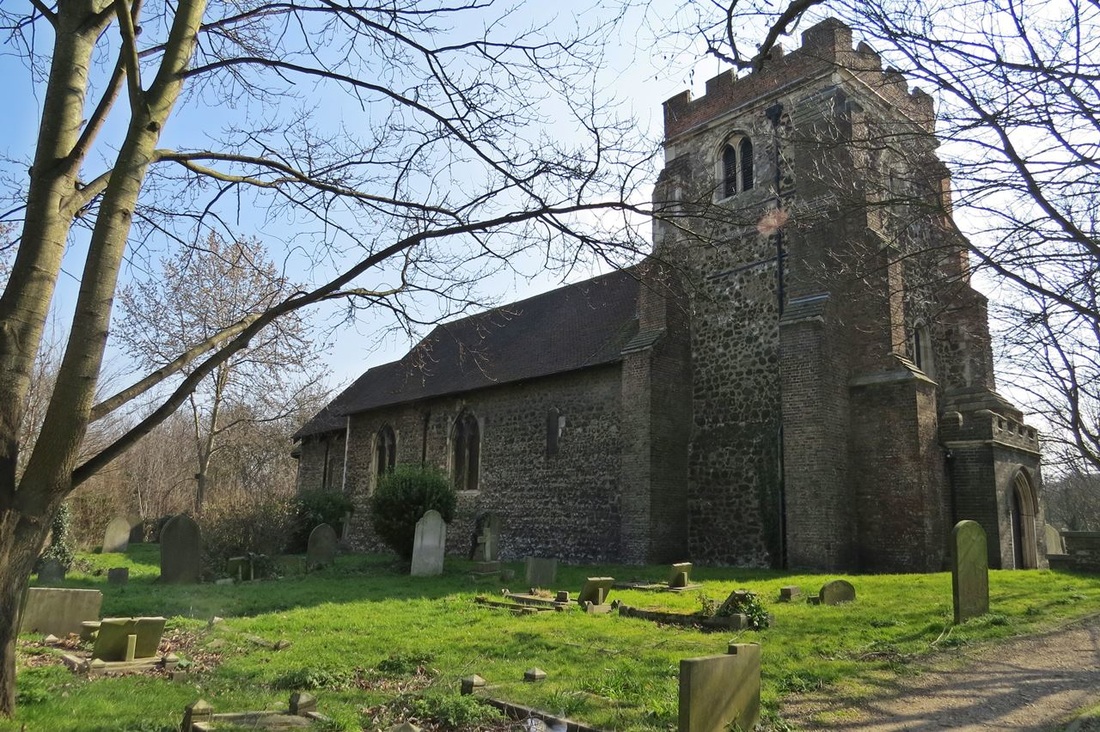
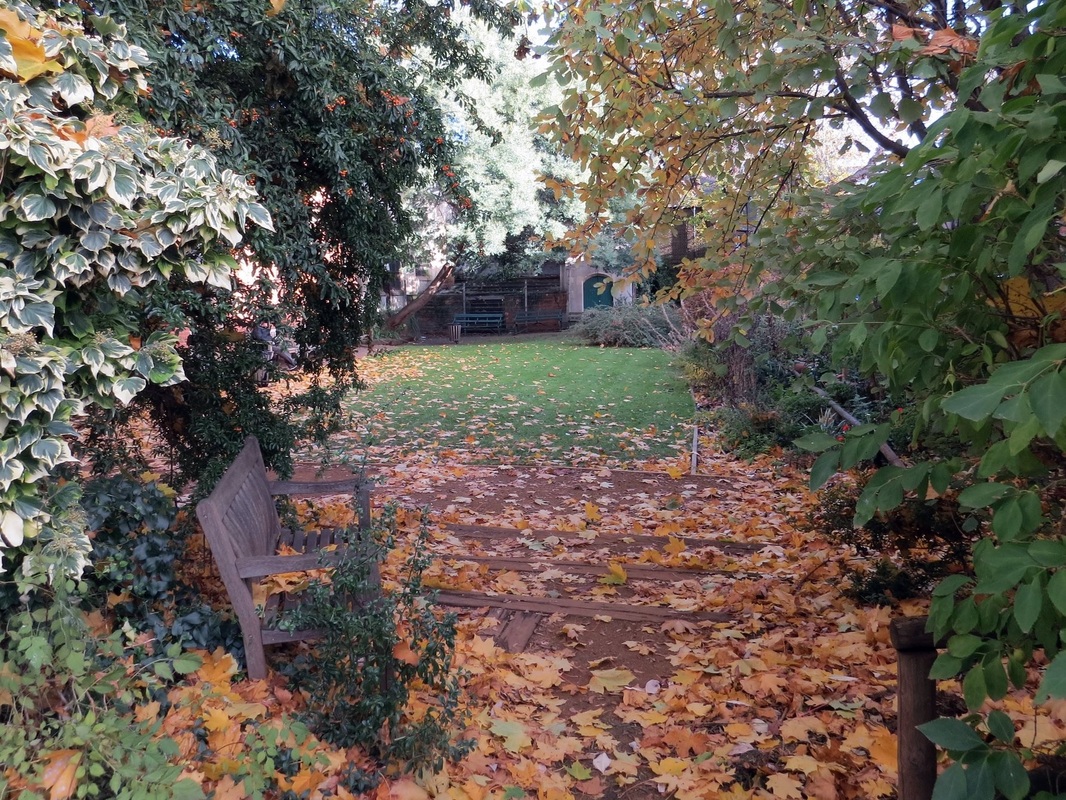
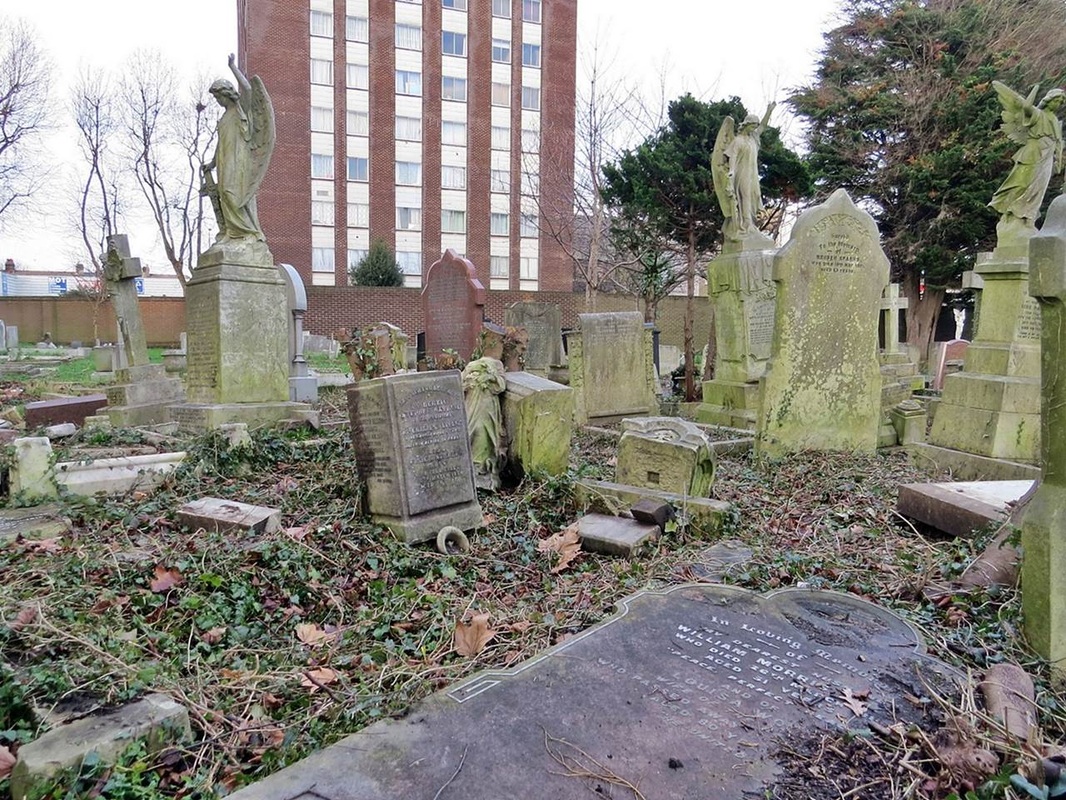
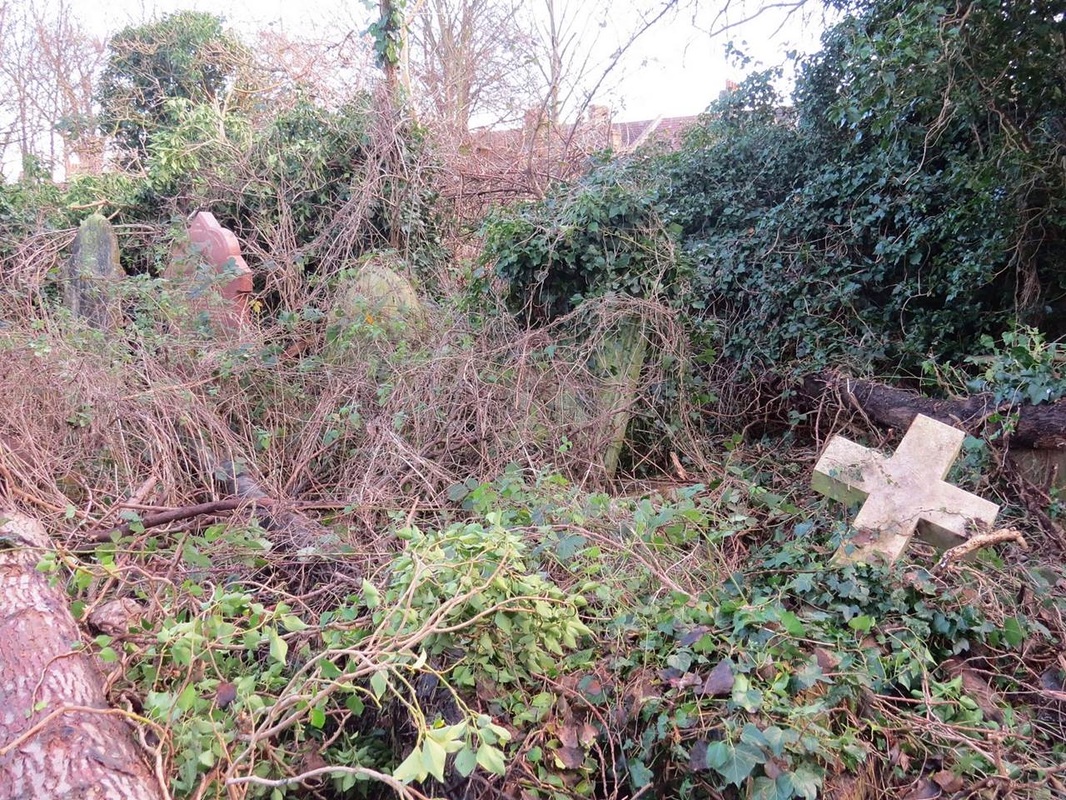
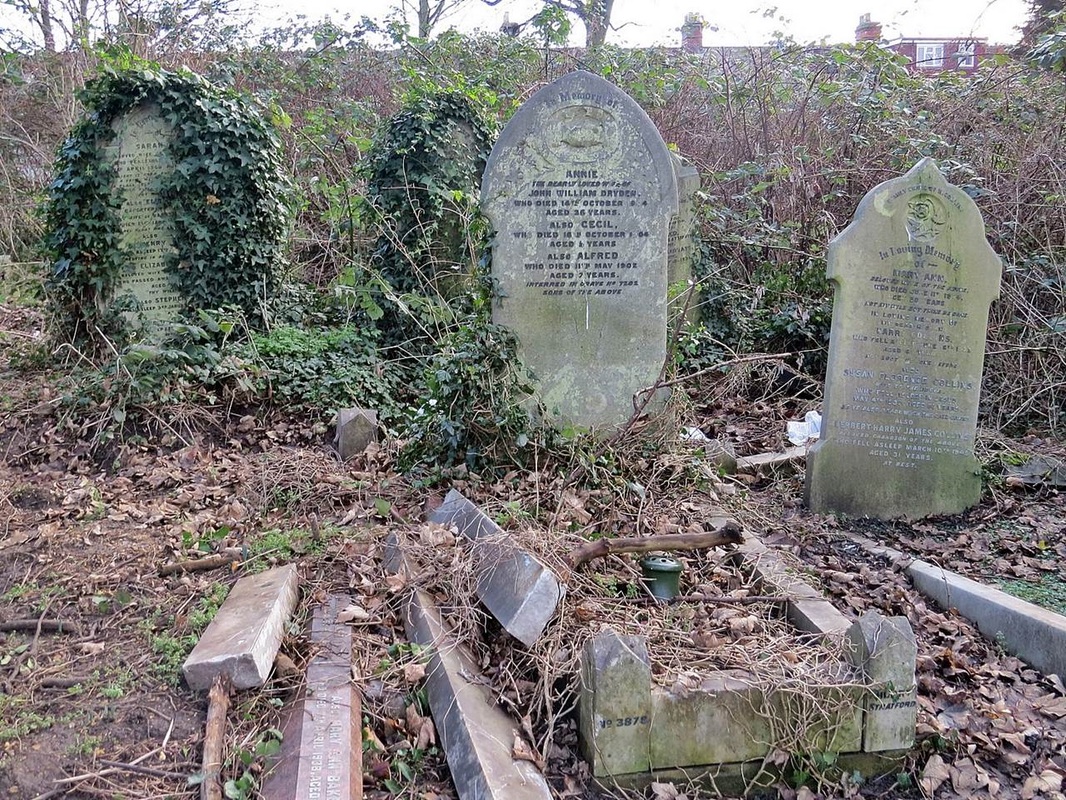
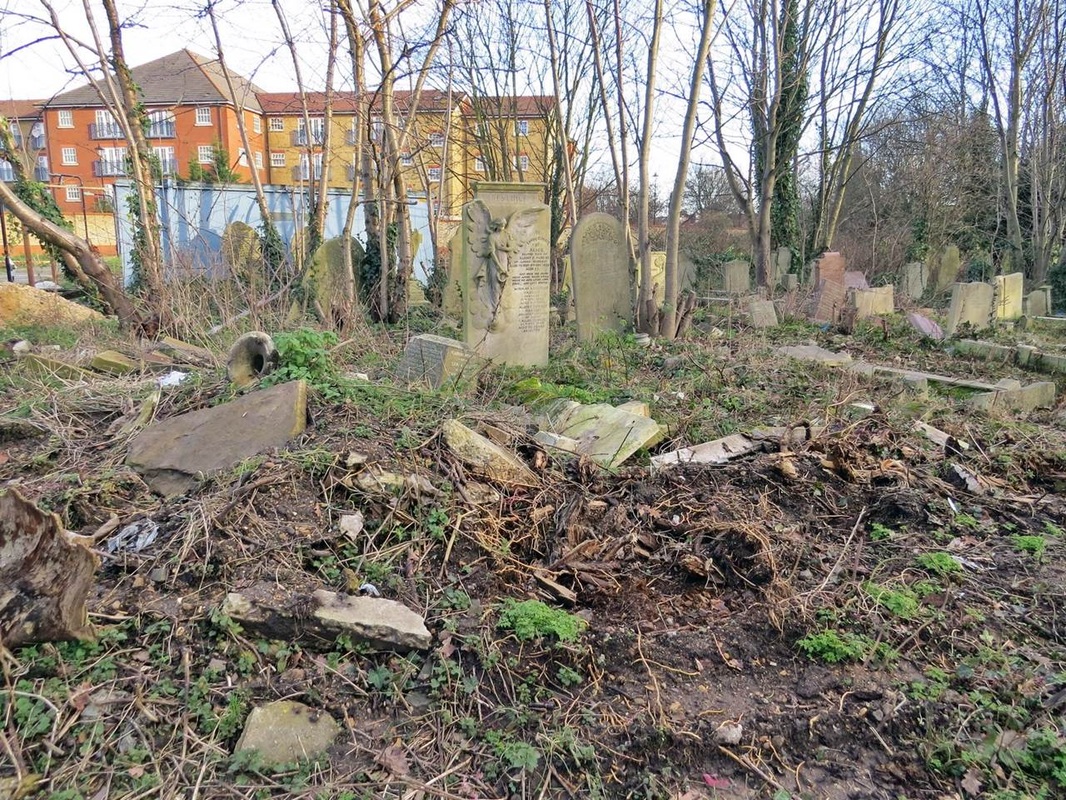
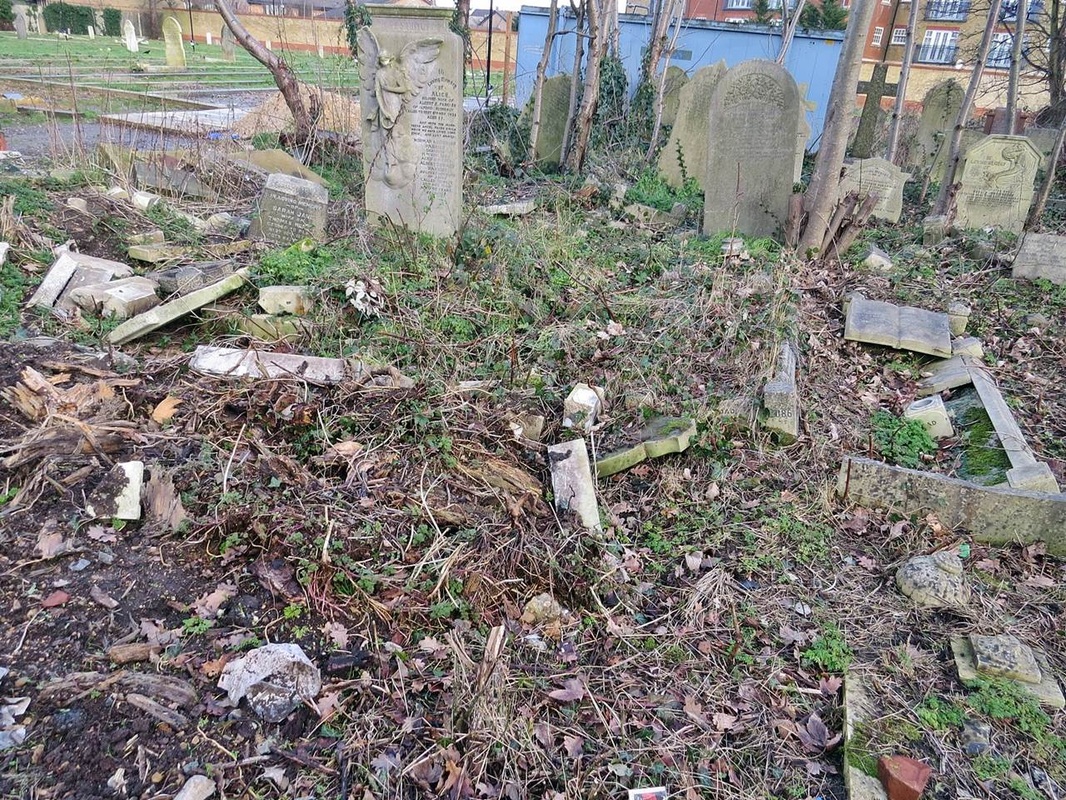
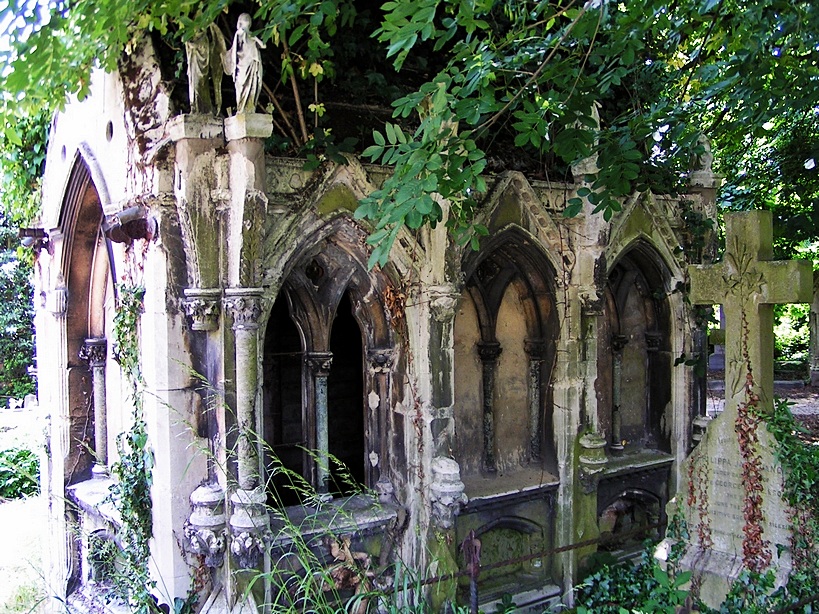
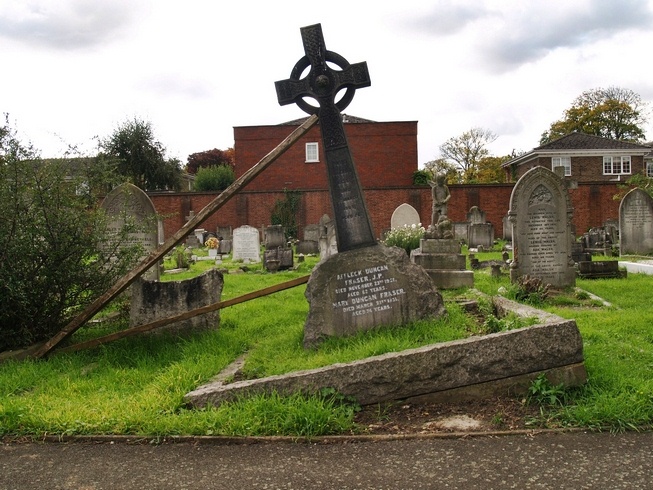
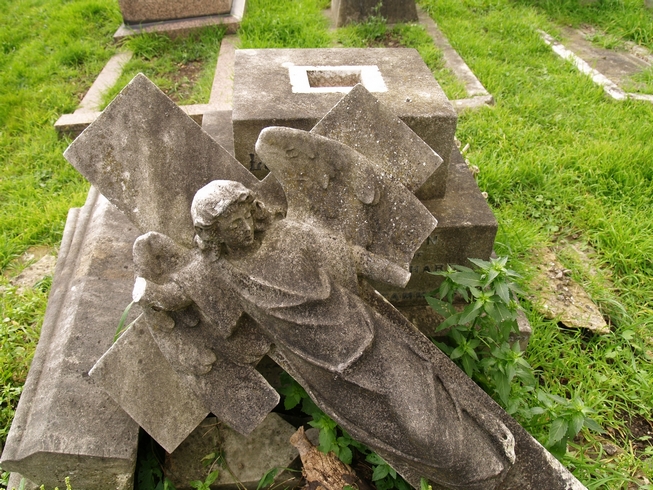
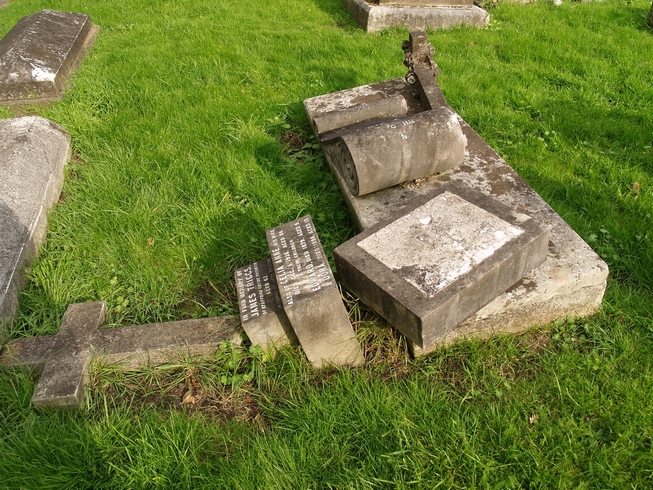
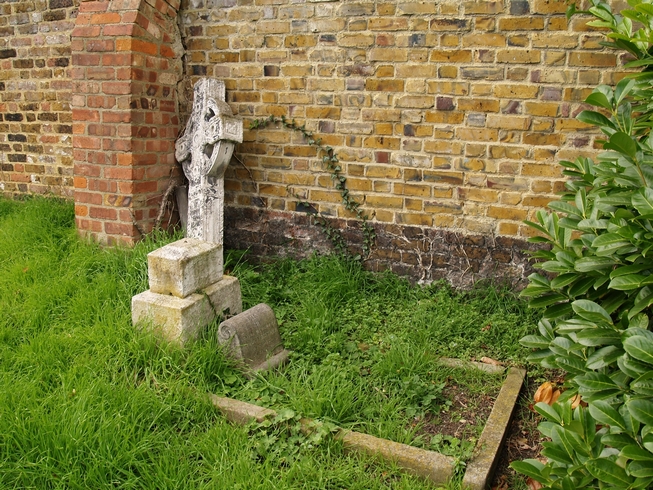
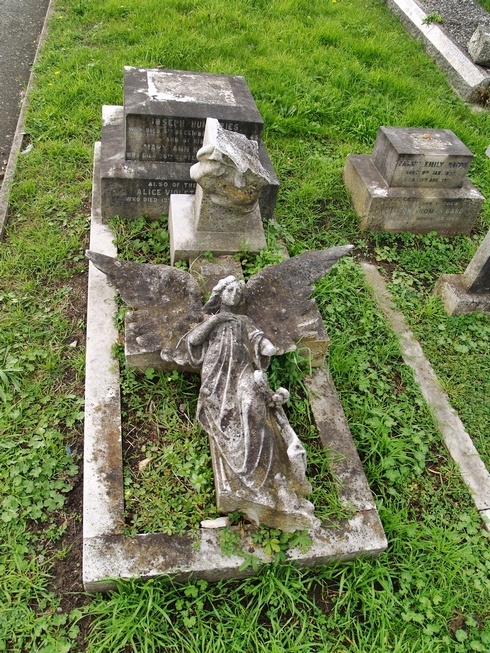
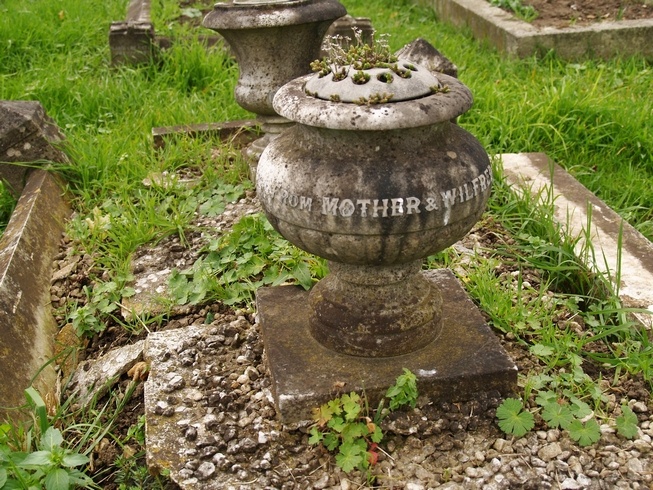
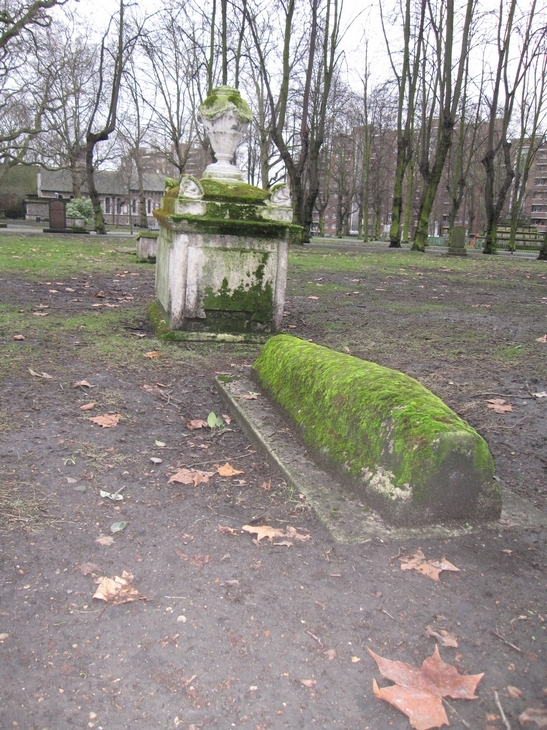
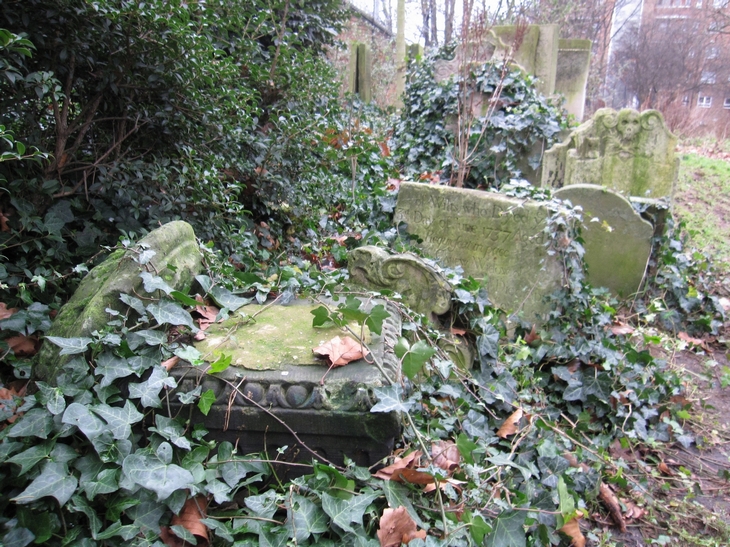
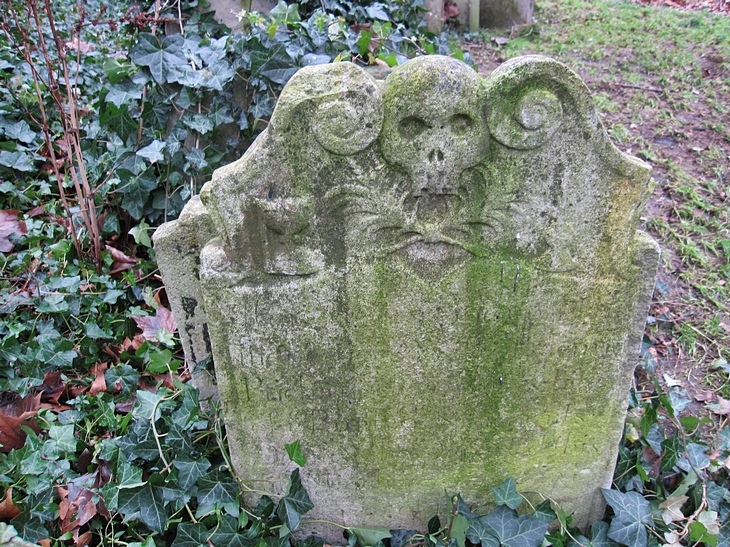
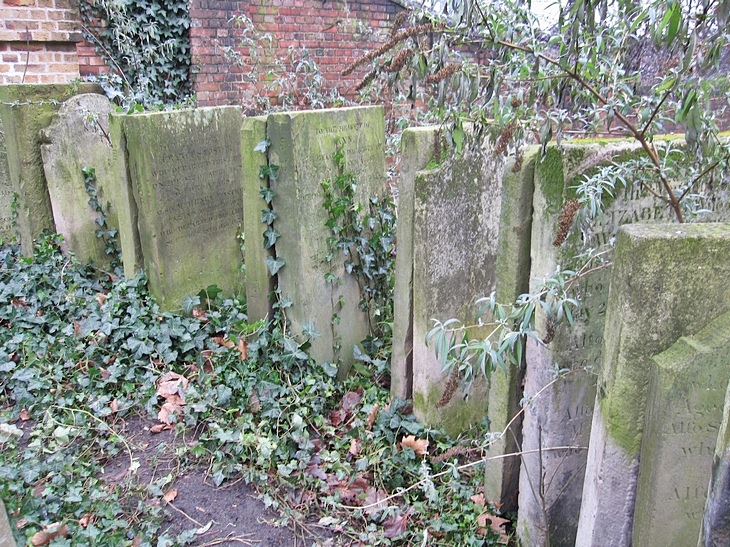
This cemetery was formed in 1855 and was nearly full when John Eustace Anderson was writing his local history in 1900 when he anticipated the need for a new cemetery. Anderson records that there was a mortuary chapel as well as the cemetery. There is no more - the chapel was demolished, along with the boundary railings, soon after the cemetery officially closed in the 1950's. This really is one of London's forgotten cemeteries and people walking along one of the footpaths in these woods might be forgiven for not appreciating that this was once a cemetery at all. There are several ghostly tales associated with this place including a hovering nun who floats above a grave plus "Spring Heal Jack" a devilish imp with pointed ears and piercing eyes carried out a number of attacks on people as they crossed common at night during Victorian times.
STOKE NEWINGTON - ABNEY PARK CEMETERY
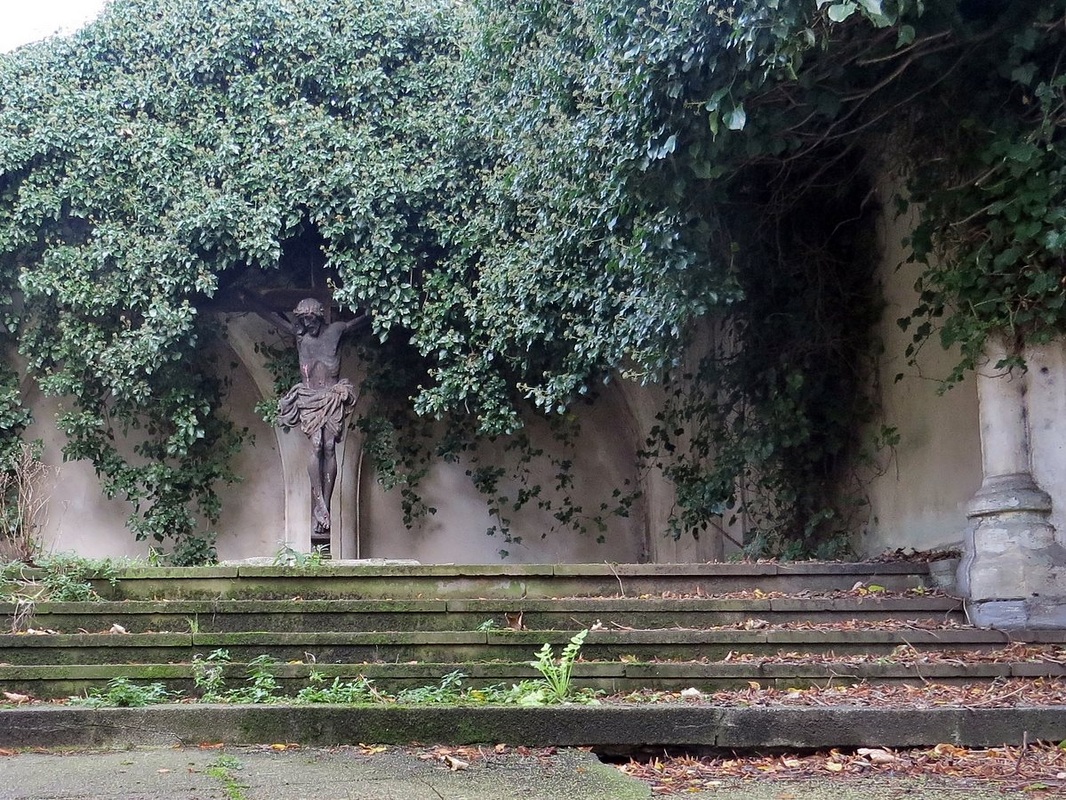
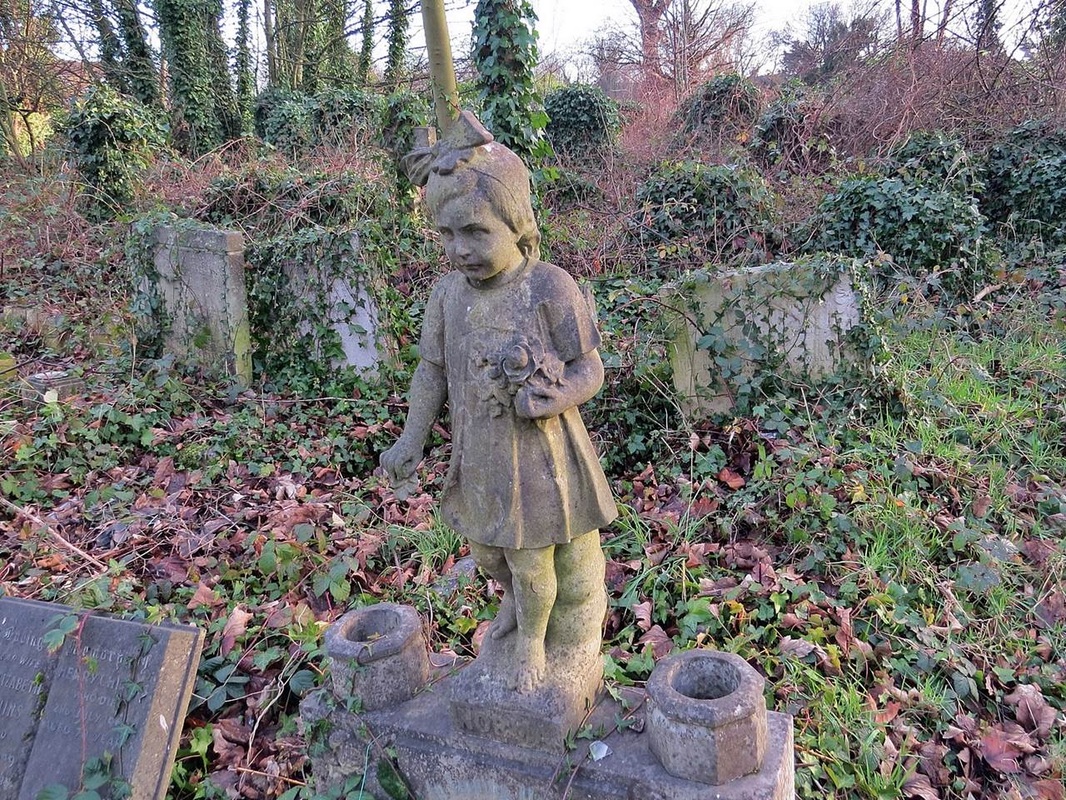
Abbey Park Cemetery is an eery, tranquil Victorian Gothic graveyard - a burial ground for dissenters and Nonconformists. General Booth, founder of the Salvation Army, is buried here. It is noted for its mature woodland, rich in wildlife. In its heyday it boasted 2500 varieties of shrubs & 1000 types of rose The cemetery was abandoned by the Abney Park Cemetery Company over 25 years ago, and became badly neglected but has now been taken overby a charitable trust who have done much improvement work. The trust is seeking funding to restore the chapel - this chapel has recently been used as a set for horror films.
MANOR PARK - WOODGRANGE PARK CEMETERY
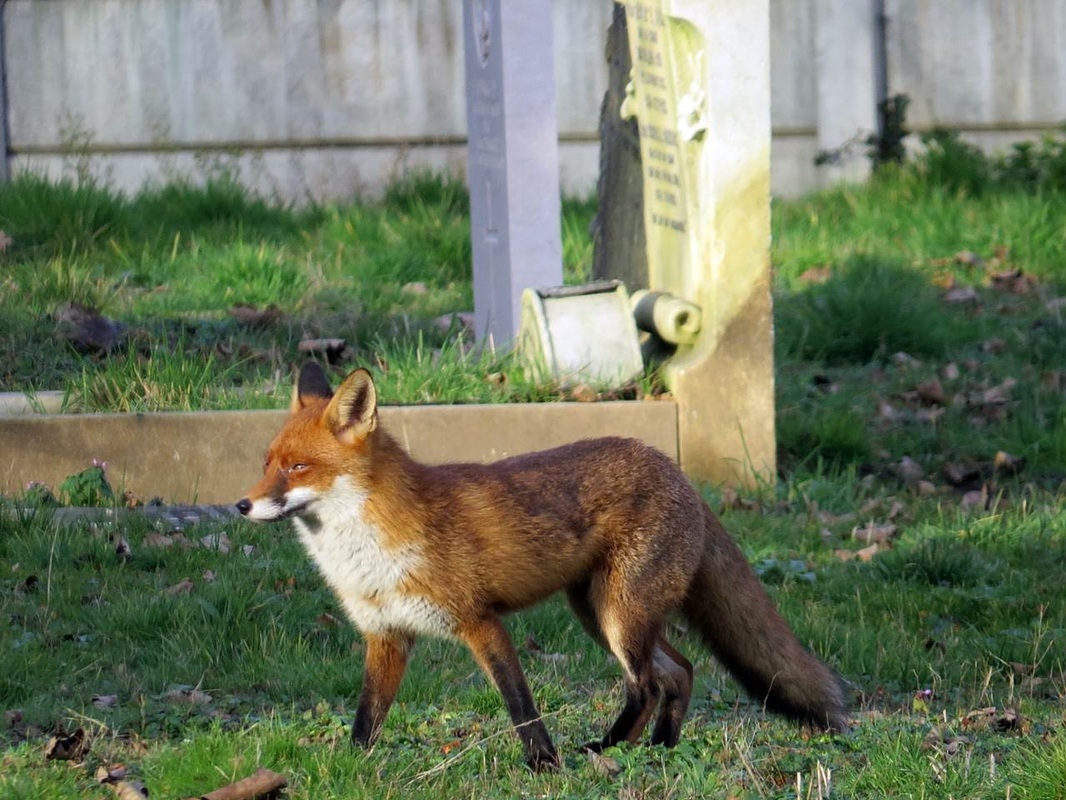
In 2000, there was a lively correspondence about Woodgrange Park Cemetery and some of the headstones to be used on the Emmerdale [ TV soap] set in Yorkshire,prepararatory to the sale of part of of the cemetery for housing. The London Evening Standard carried a full page report and pictures on the work of exhumation. The pictures are of a piles of discarded coffins and a large JCB at work as men sift through the soil for bones. "The graves of East London civilians killed during the worst raids in the Blitz are being bulldozed to make way for flats. ...the remains of about 15,000 people are being dug up and bagged in plastic bin-liners. .....Screens were erected around the graves but residents of flats overlooking the site said they have been shocked to see skeletons unearthed by mechanical diggers . . According to Council records the graves date back to the 1890s but during the height of the Blitza a 20ft deep pit was dug to
take the thousands of casualties. Most of the graves were unmarked, but details of the dead were entered in a burial register. Newham Council contacted 21 families and their relatives were exhumed and re-buried in part of the cemetery still in use. The 27-acre cemetery is privately owned. The deal to sell part of the site for residential development was done after Newham agreed planning permission for 120 two-bedroom flats."
The Friends of Woodgrange Cemetery would like to add the following statement;
"The memorial stones used in Emmerdale were not sold ...they were taken off by the cemetery owners ready to be broken up and put in a skip ..but the chairman of the friends of Woodgrange cemetery knew the people from Emmerdale were creating a cemetery for the programme and they agreed that they would come down from yorkshire wrap each stone individually and transport them back to yorkshire .but if anyone came forward at a later date and wanted their memorial stone they would bring it back.The stones were not bought no money what to ever changed hands they were just saved from being broken up. All of those buried in the squares used for housing have been re-intered within the cemetery ....mostly in mass graves ..but those that have been in touch with us or the cemetery since the begining and have wanted their relative buried in a seperate grave have their wish ..The fight was going on a very long time to stop the housing ,to the House of Lords and back in fact , but without success"
Patricia Langley writes to Derelict London: "A friend of mine moved into one of the new flats that were built on the site of the part-cleared cemetery. He told me that even though his vegetable garden was very fertile (anything would grow in it) he always seemed to always have bad luck and depression, not like Chris at all. He decided to move out when poltergeist-like activity began breaking out in his home, and his baby was injured by a mug flying through the air and hitting him."
FOREST GATE - WEST HAM JEWISH CEMETERY
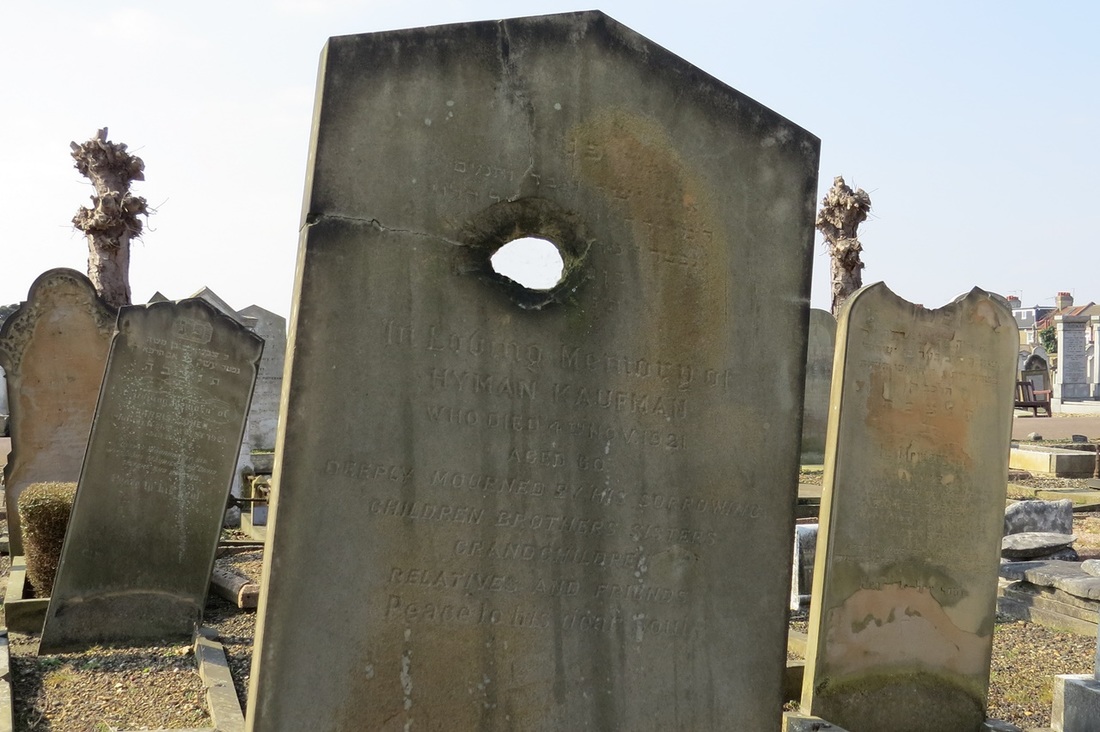
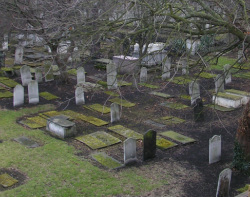
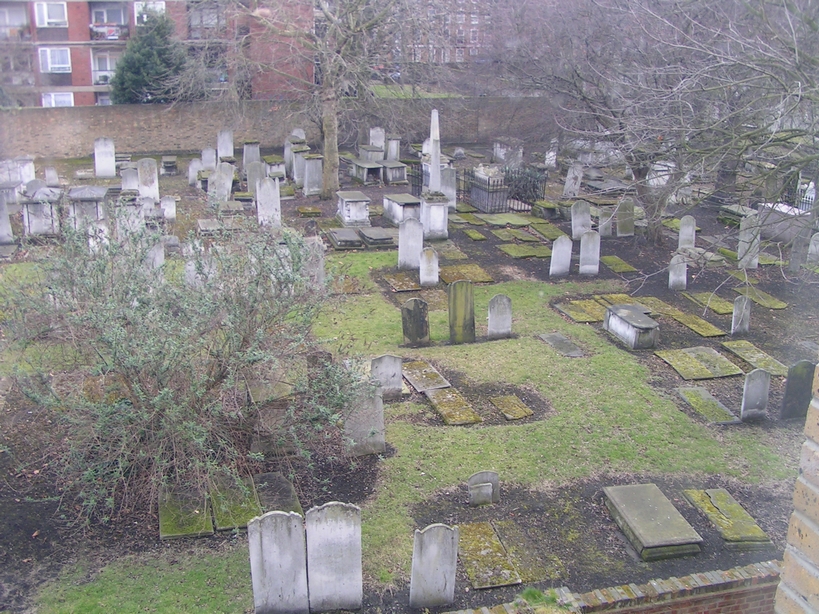
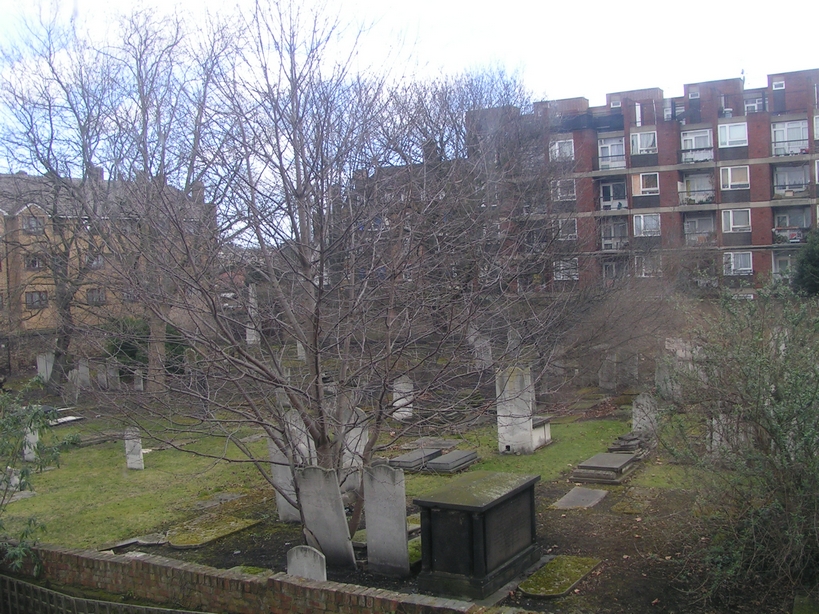
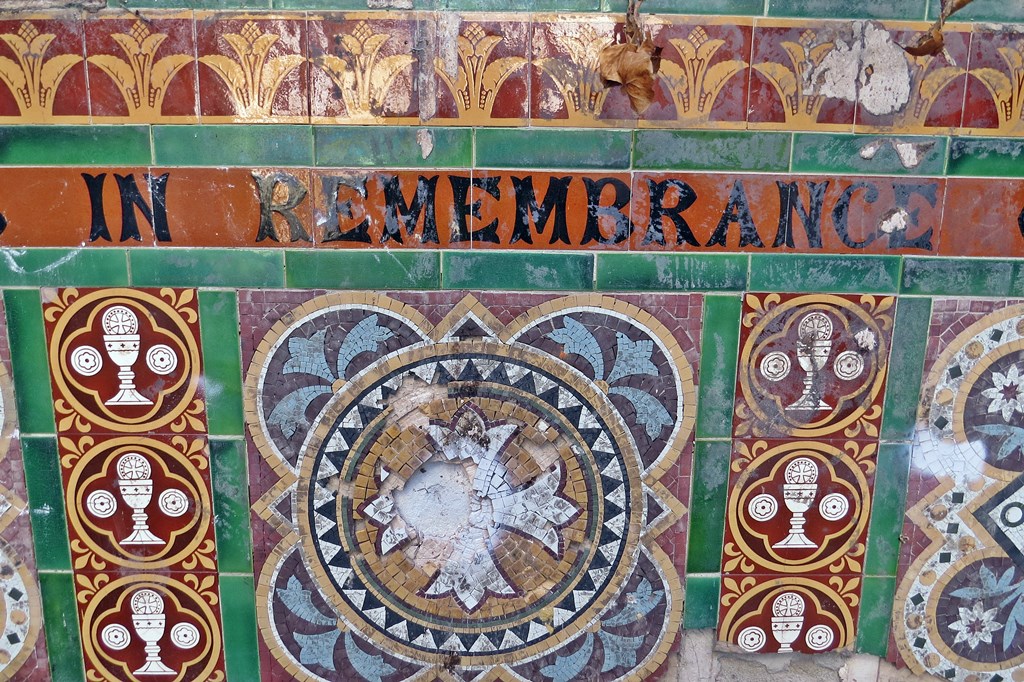
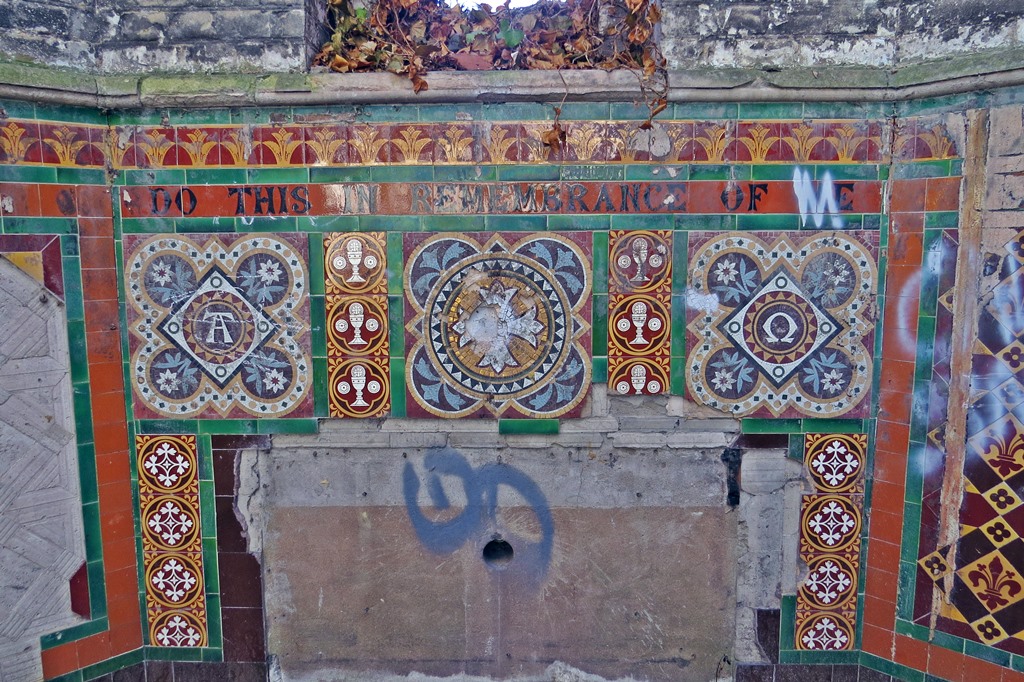
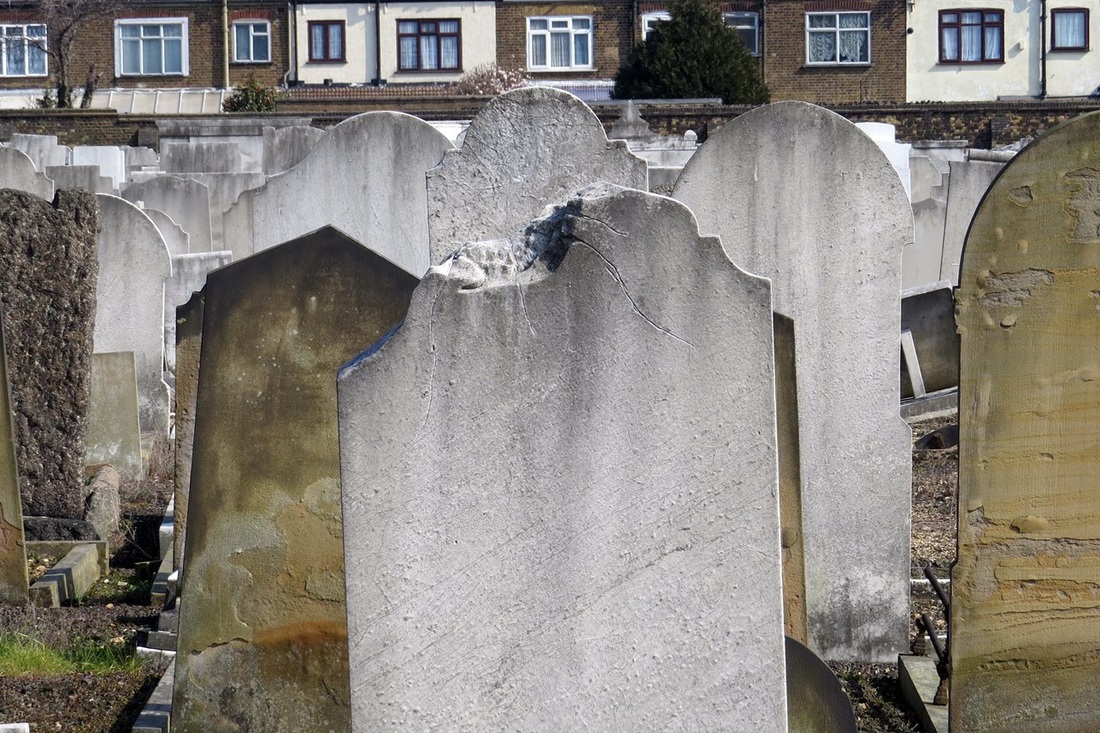
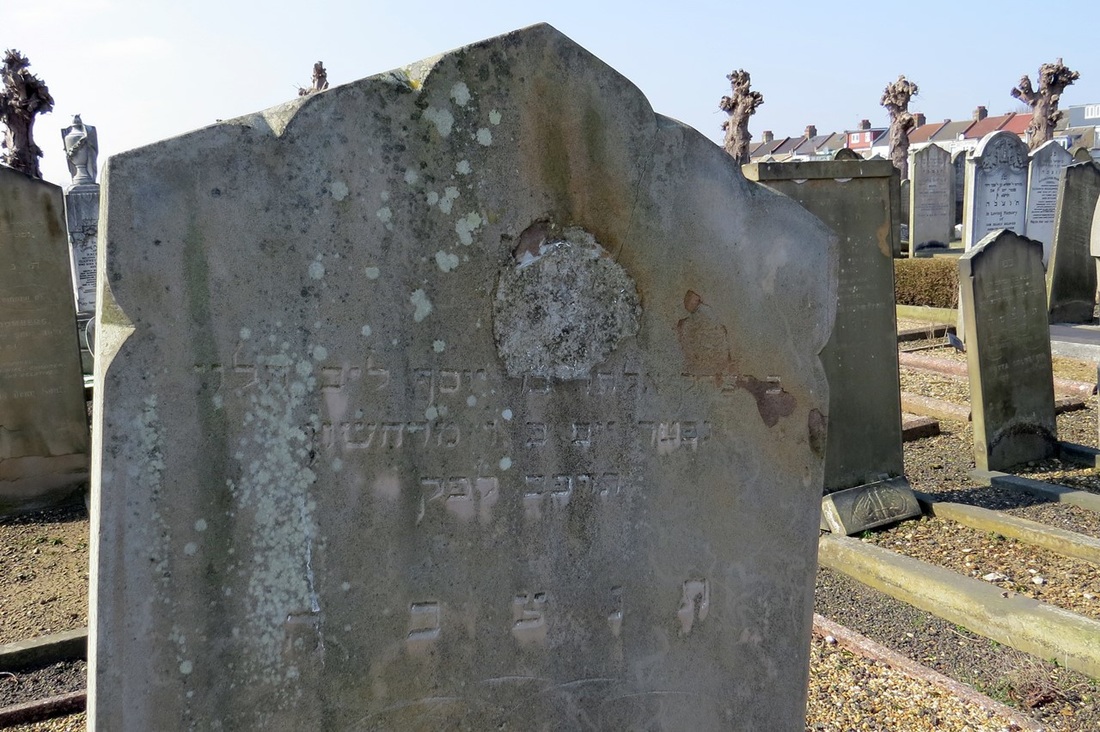
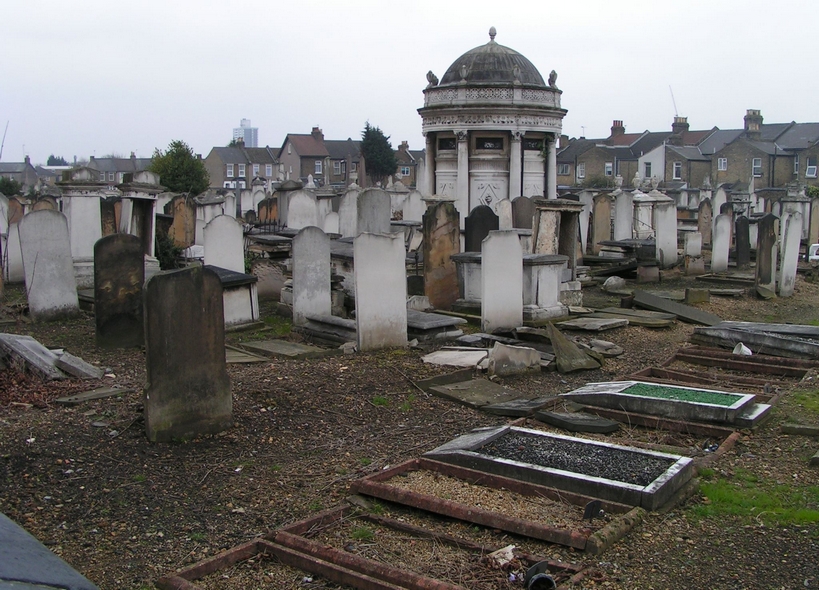
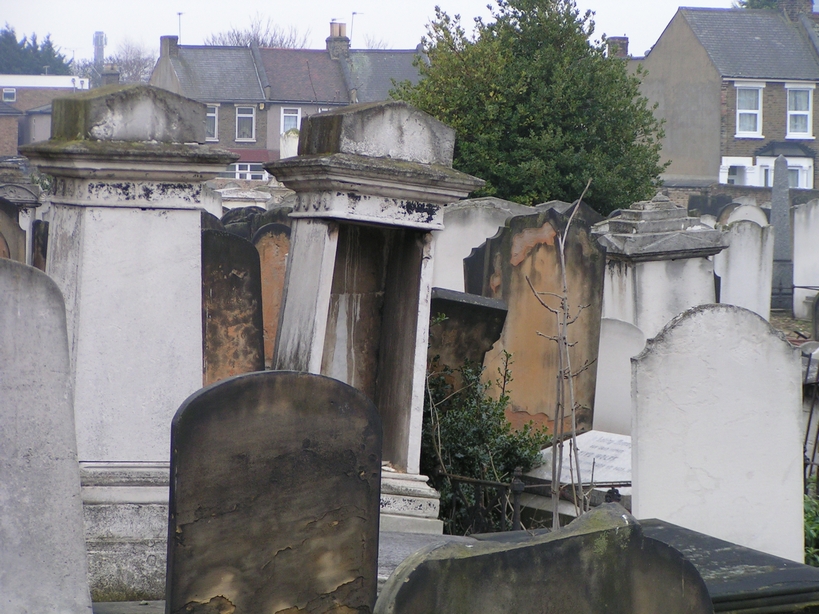
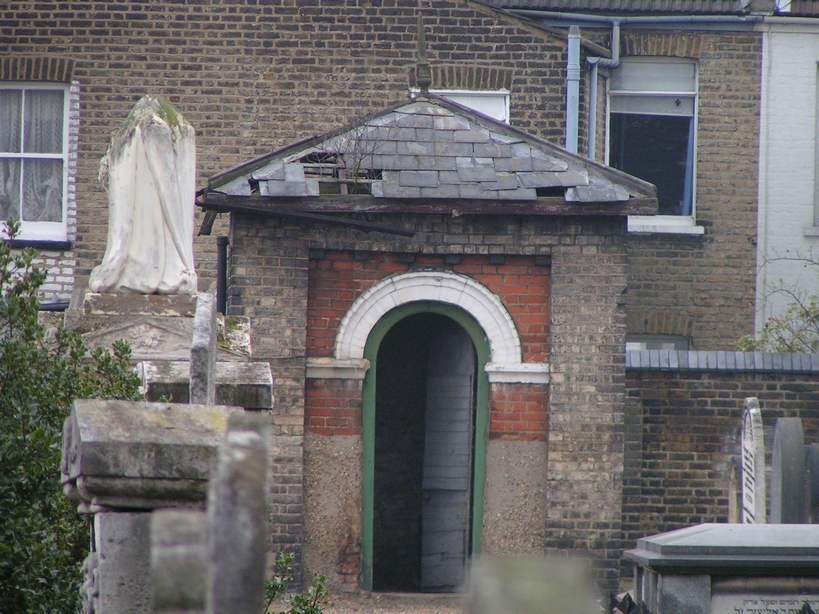
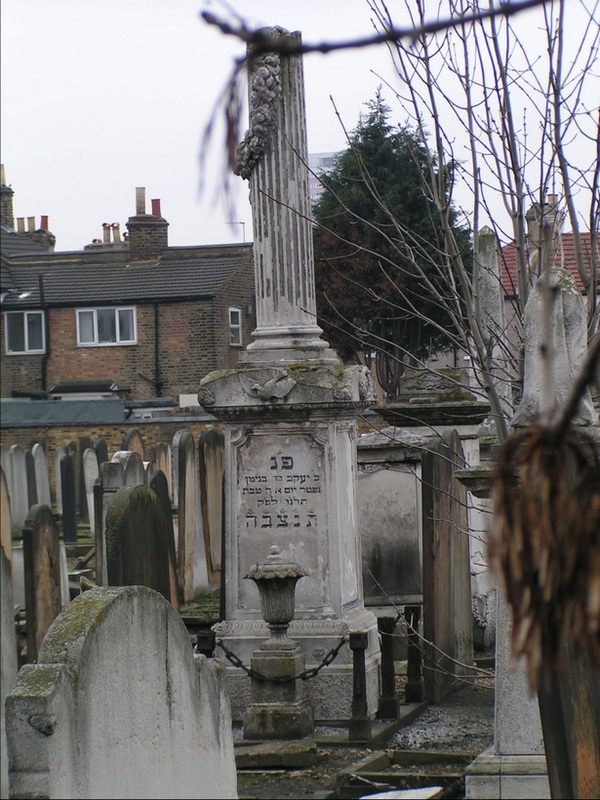
This Jewish part of the main cemetery walled off from the main cemetery opened in 1857 and closed to the public since 2002. The main cemetery is fairly well maintained, full of grass, trees and flowers but this area is in bleak contrast with little greenery and an eerie atmosphere. This cemetery also includes remains from the Hambro’ Synagogue Old Hoxton Cemetery, dating from 1707.
Serious vandalism, clearly anti-Semitic in intent, hit the national headlines in 2005. Some 100 headstones were toppled and smashed and swastikas and other hate graffiti scrawled on graves and walls. The doors of the fine Renaissance style Rothschild Mausoleum, designed by Matthew Digby Wyatt in 1866, were broken. The mausoleum was commissioned by Ferdinand de Rothschild (1839-1898) of Waddesdon in memory of his young wife Evelina (1839-1866) who died in childbirth aged 27. Both are buried within it.
CANNING TOWN - ST CEDDS PARISH CHURCH
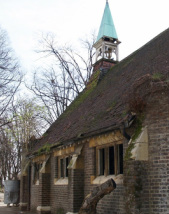
The church of St Cedd was originally a mission of St. Andrew's Plaistow.. A brick hall was built in 1903–4 A new red-brick church, in Romanesque style, was opened in 1939 as a memorial to 'Tom' Varney, the first mission curate, whose nephew, John Varney, the became the first vicar.
Terence Stamp (actor) grew up in the area & was in the choir at St Cedds church. The church and adjacent vicarage is currently closed due to vandalism.
WAPPING - ST GEORGE IN THE EAST MORTUARY
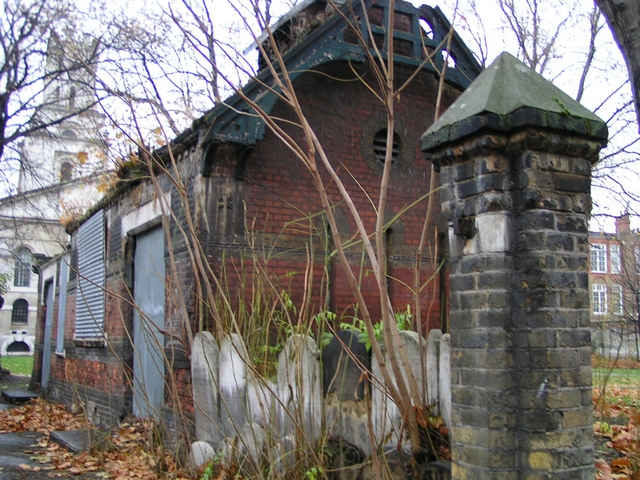
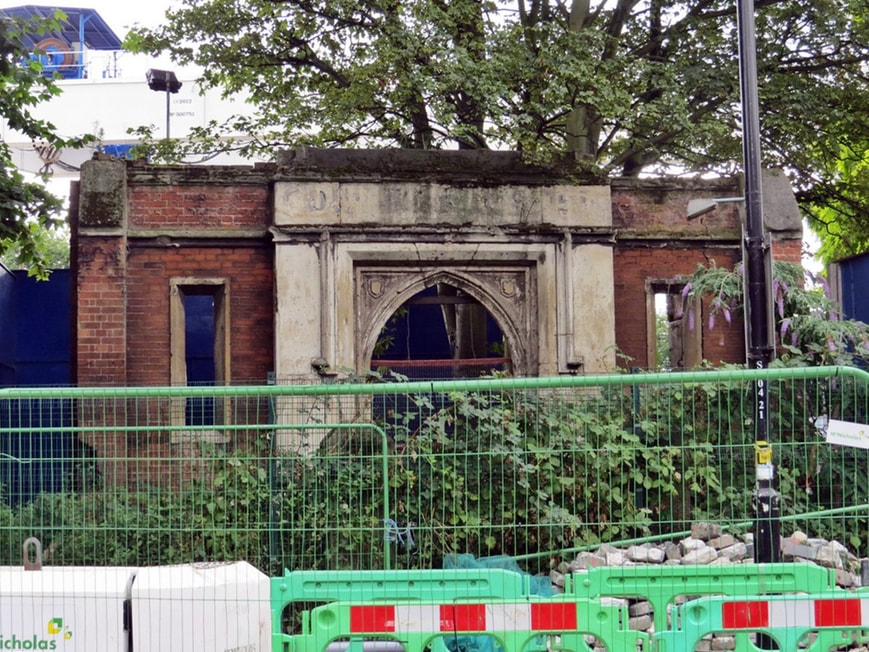
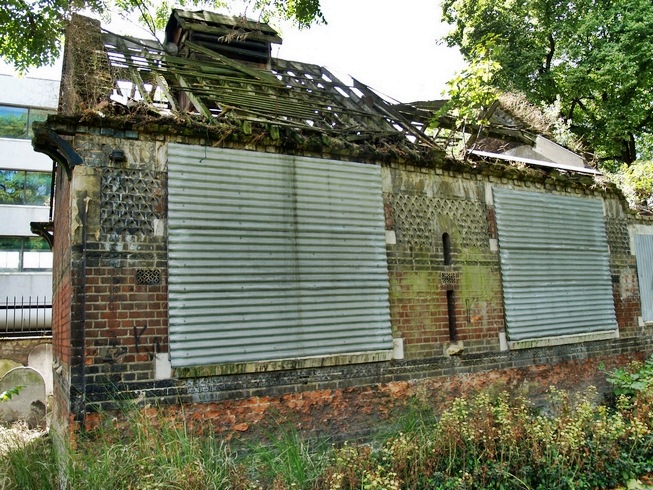
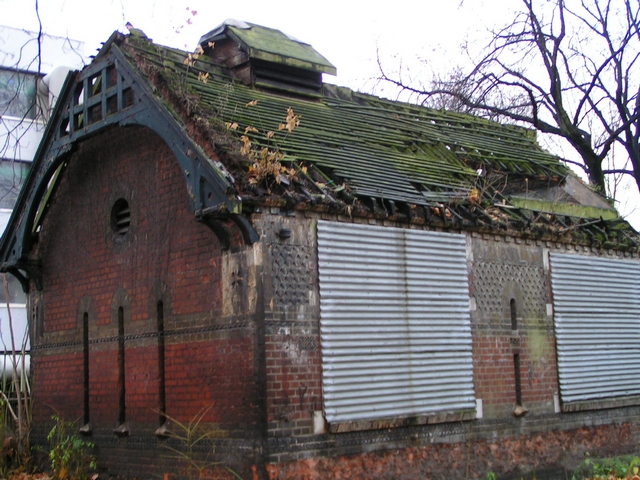
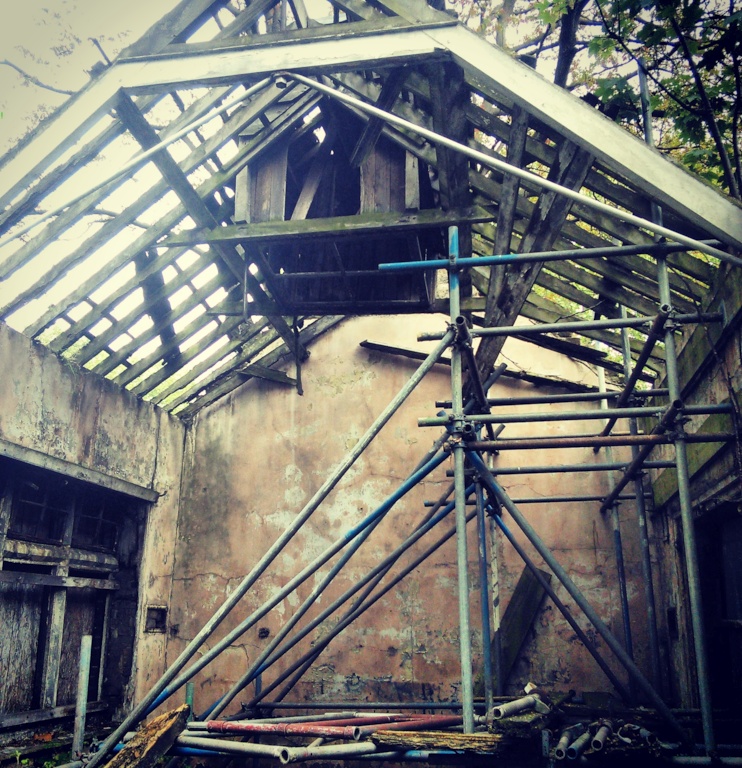
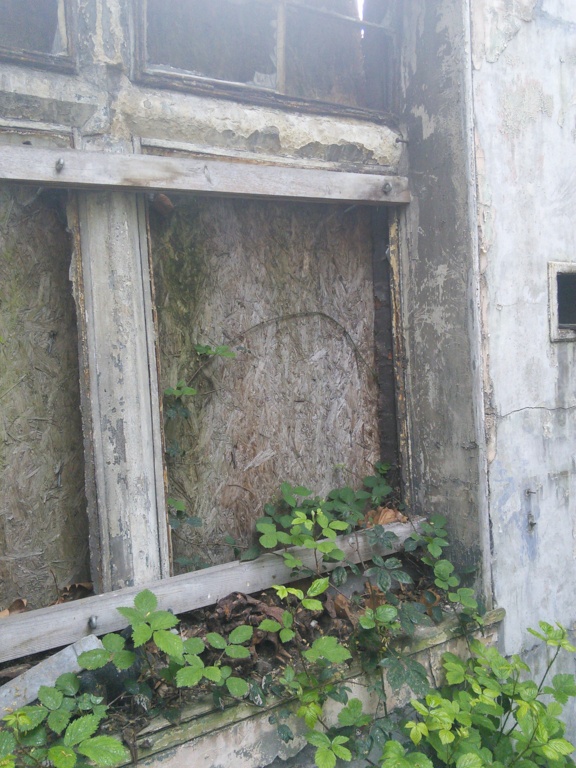
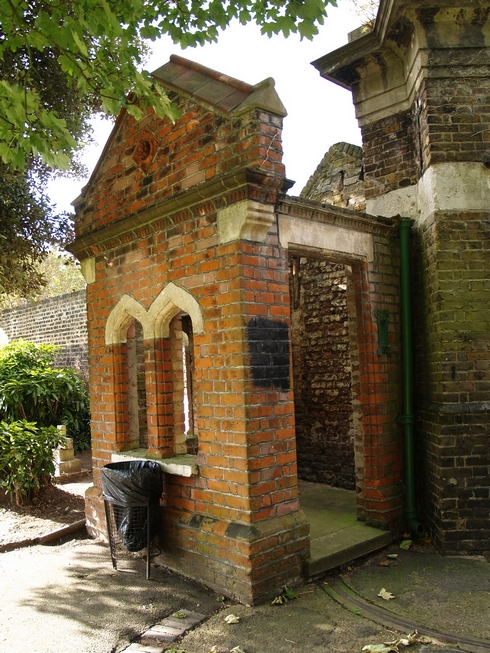
This building, in the grounds of Nicholas Hawksmoor's St George in the East chuch, was originally built and used as a mortuary and then as a Nature Study Museum until c1950. This tiny building was possibly the smallest museum building in London though many of the exhibits were in its own garden fenced
within the grounds of the church. Despite surviving WW2 bombing the building is in a bad state of repair. The adjacent church was badly bombed during the war and only the original shell survives. A new interior has since been added to the church.
The churchyard was used for exterior shots of the church in The Long Good Friday a British gangster film starring Bob Hoskins and Helen Mirren (where Harold's mum goes to a service and when his Rolls Royce is blown up in the churchyard)
THE BOROUGH, SOUTHWARK - CROSSBONES BURIAL GROUND
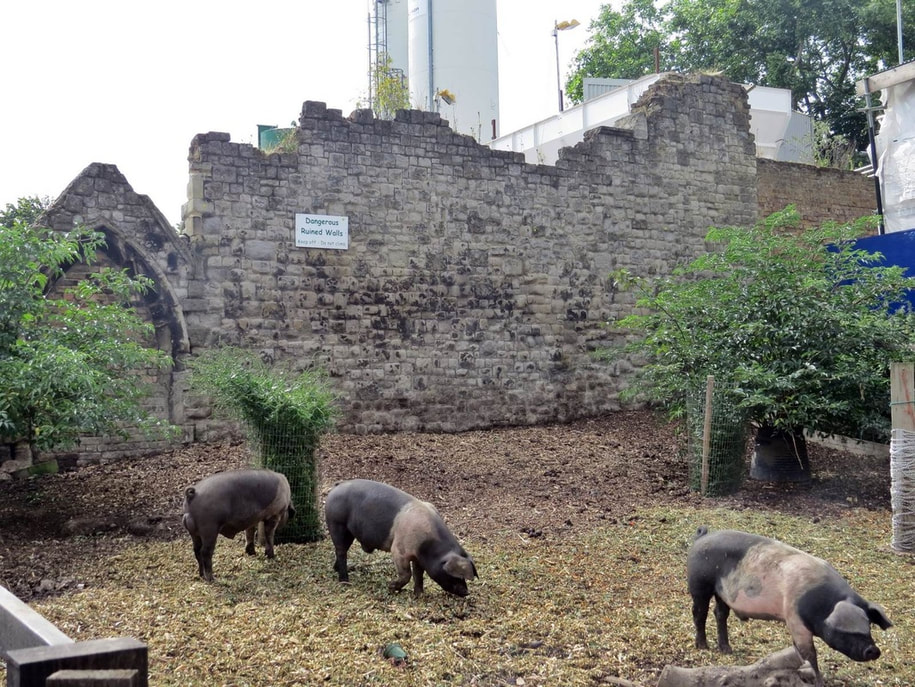
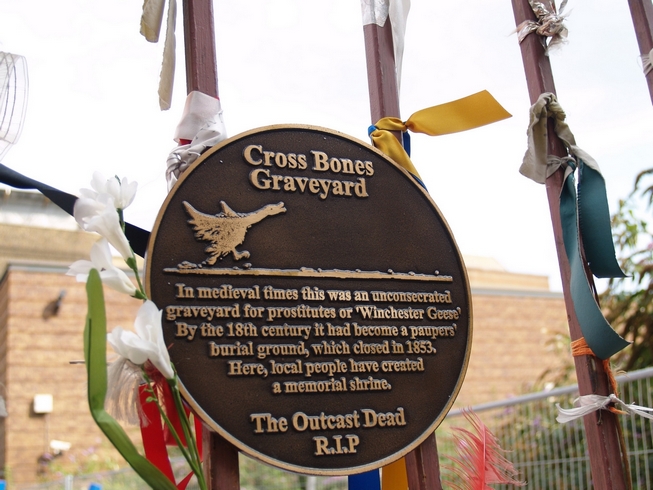
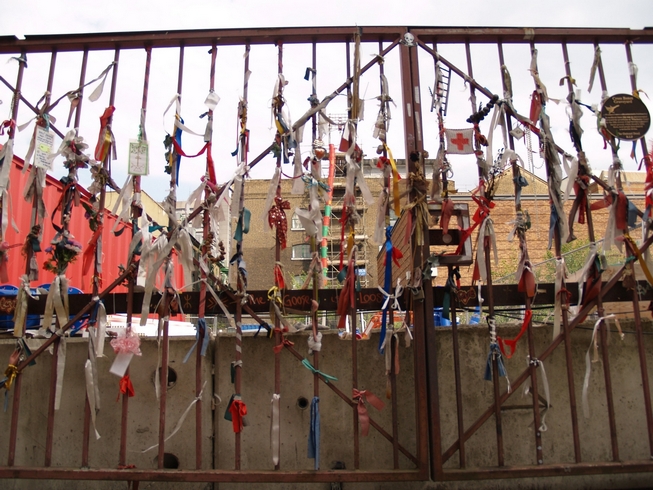
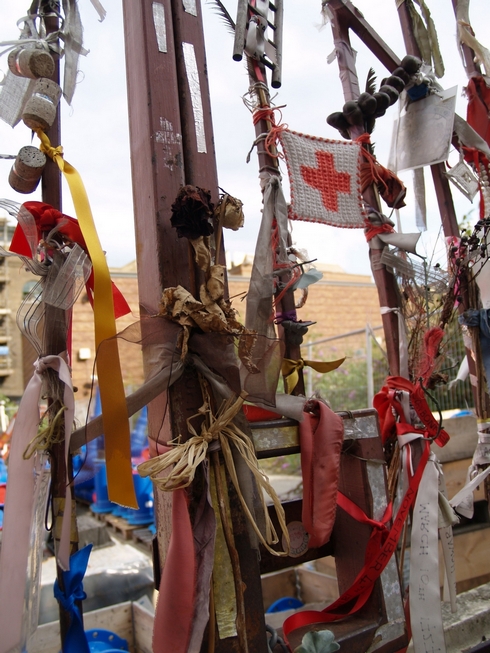
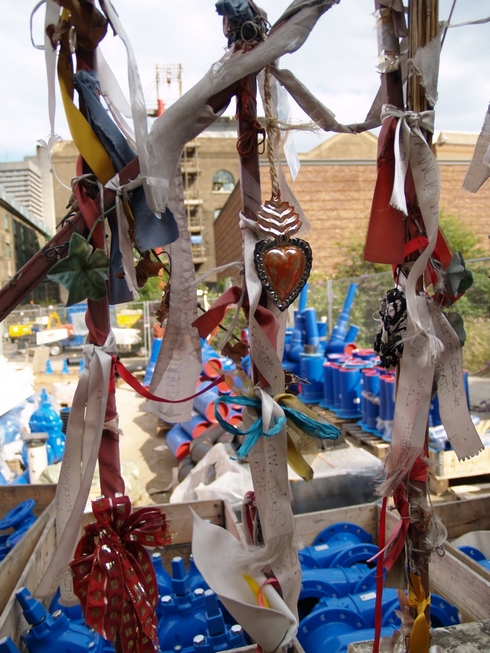
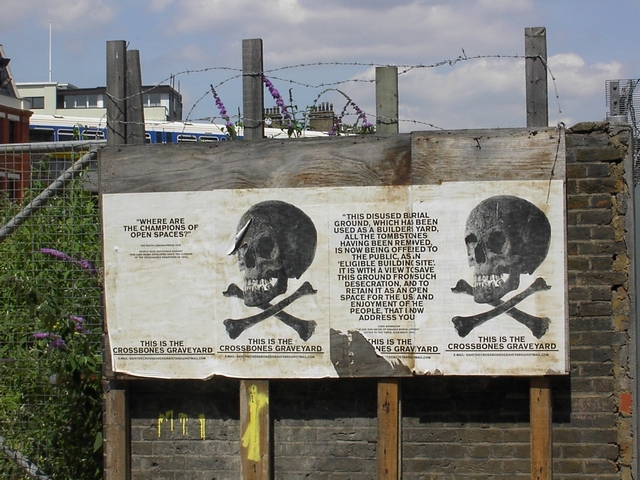
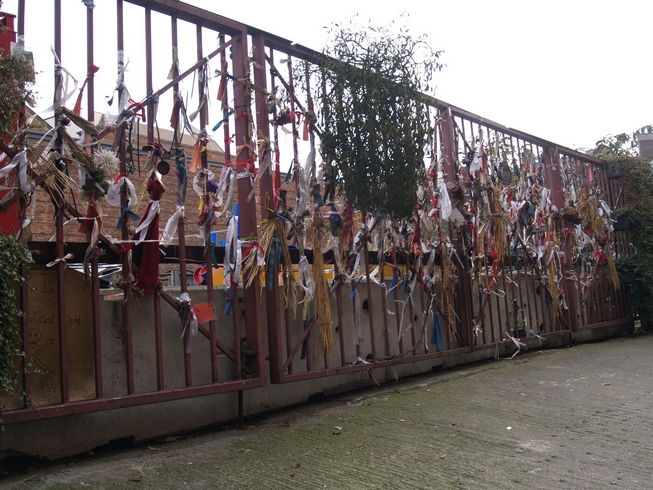
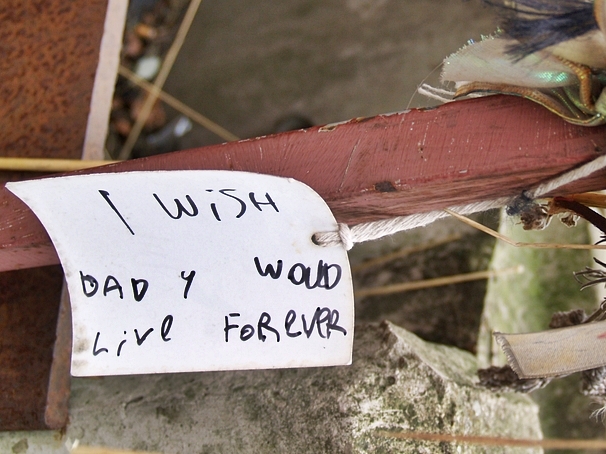
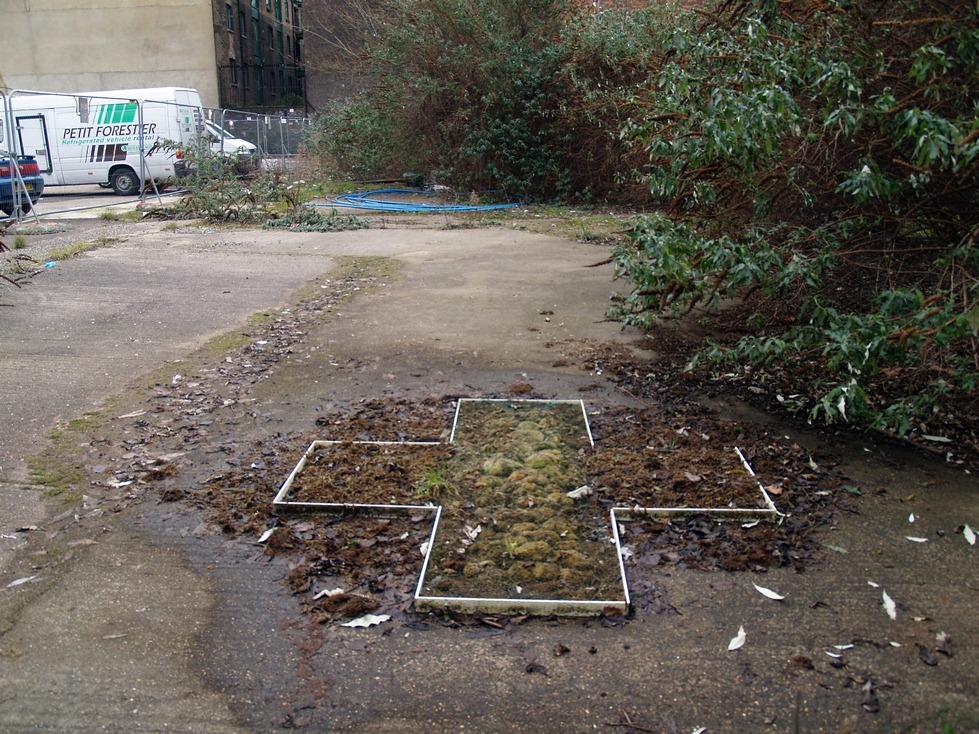
Apparently an ancient paupers & prostitutes' graveyard unearthed during work on the Jubilee Line extension.Now used as a builders yard. The site was a burial ground for hundreds of years, Roman remains and artefacts were also discovered by the Museum of London & its rumoured that plague victims were buried there. London transport who own the site want to build offices there,but Southwark council have refused planning permission.
NUNHEAD, PECKHAM SE15 - NUNHEAD CEMETERY
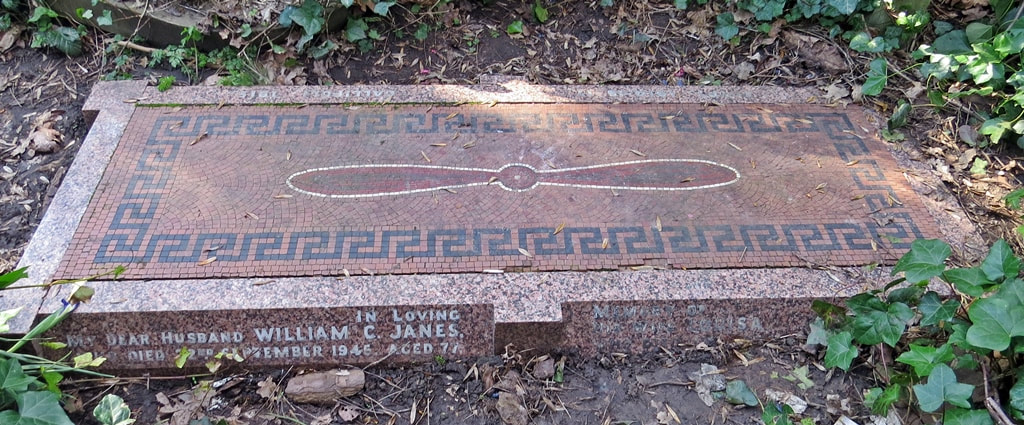
This, the 'Cemetery of all Saints', was the second (after Highgate) to be planned by the London Cemetery Company. The 52-acre site was opened for burials in 1840. much used by the better off folk in South London.Also buried at Nunhead are heroes who fought at the battles of Trafalgar and Waterloo, and a gallant airman who lost his life chasing an enemy Zepplin across London's skies.It became extremely overgrown and neglected - it was a jungle in there. A body called the
Friends of Nunhead Cemetery have been cleaning it up and trying to transcribe as many of the memorials as possible.
HAMPSTEAD - ST STEPHENS CHURCH
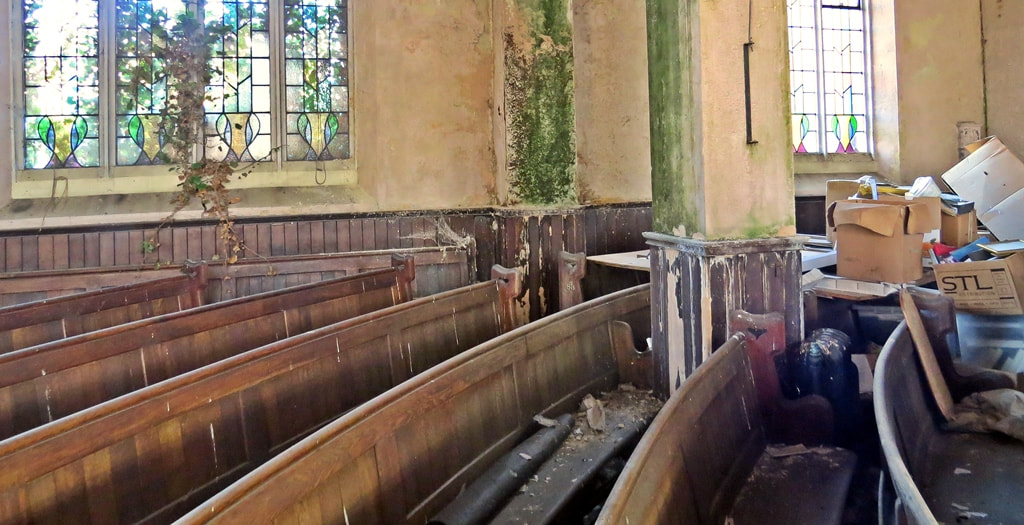
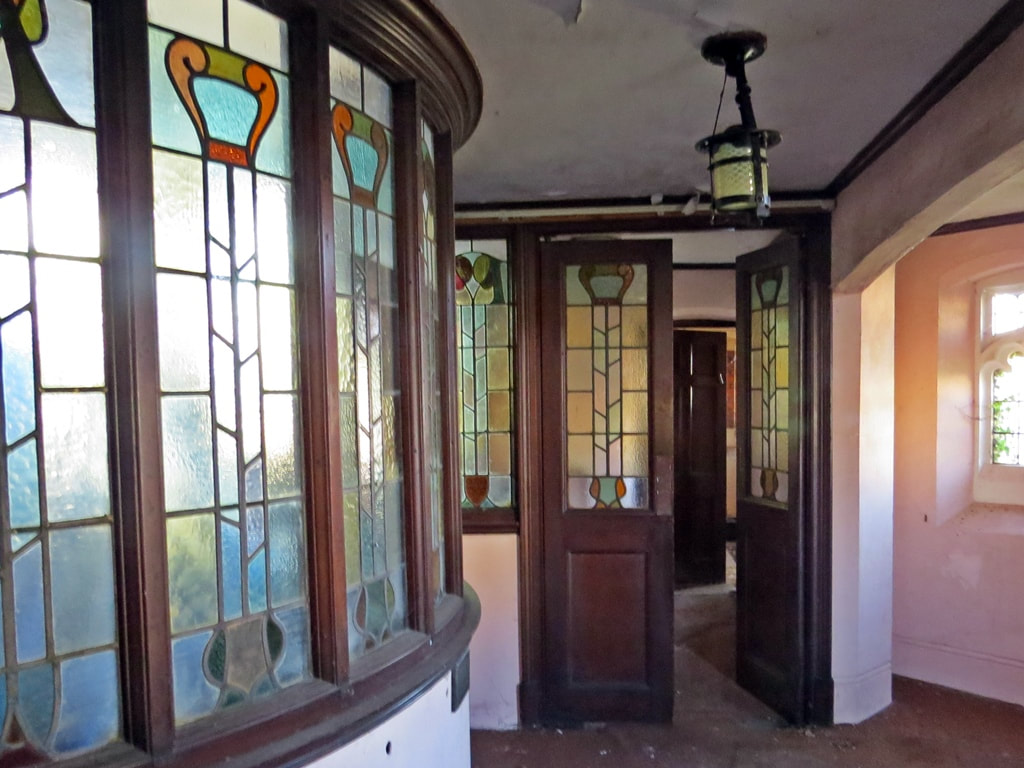
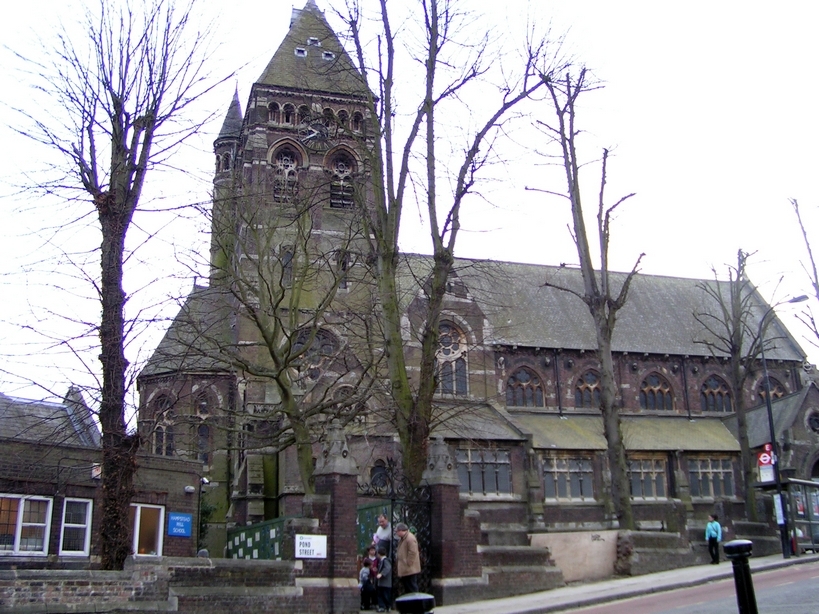
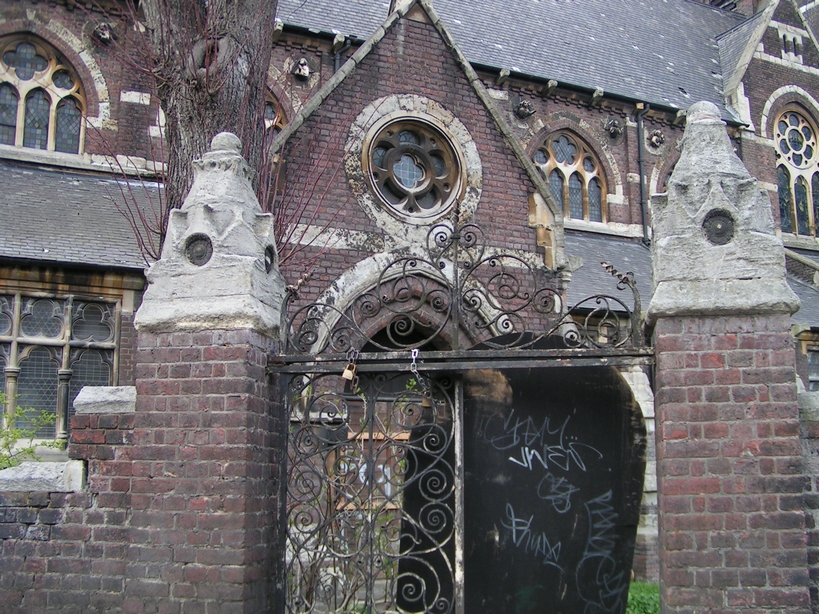
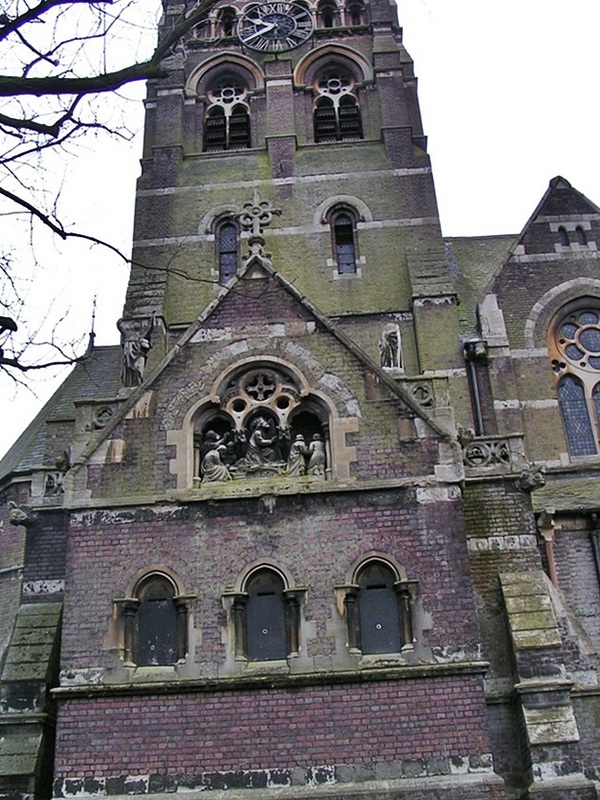
Derelict for 25 years but the restoration of St Stephen's Church has begun. The total cost of all the work is expected to be around £3 million... The main aim of the building work is to restore St. Stephens as closely as possible to its' pre-war condition, including all of its stained glass windows and railings.
When the work is completed, St. Stephen's Trust will grant three subleases of the building to:The Lifelong Learning Centre, The Museum of Children's Art and the Hampstead Hill School Pre-Prep Branch. he Trust wants St. Stephens to be used and seen by as many people as possible and once again become
part of local community life.
Doreen MacAninch writes "As a child I worshipped at St Stephen's Church. I was rather dismayed at the sad state of the old church. I remembered it was a busy church with the usual church activities. Church bazaars, Girl Guides & Brownies,Mother's Union, Sunday School etc. I used to attend Brownies and later Girl Guides so I spent a lot of hours in the church hall. I remember the stain glass windows .Were they removed and placed somewhere else? The Vicar at the time lived near by with his family in a house that went with the Chuch.The gardens were always kept neat & tidy. I am now 57 yrs old and have lived in Australia for 29yrs."
Sue Bates. writes: "My great-aunt Ethel Jones married Henry A.Shepherd here on May16th.1928. She was a hotel receptionist & lived on Constantine Rd.(poss.lived in hotel?) She was 27,he was 60.(His 2nd. marriage; widower) He died 1942; She committed suicide 1945. Such sad photos but heartening to note its restoration is in train."
MILE END - TOWER HAMLETS CEMETERY
The disused Tower Hamlets Cemetery (known locally as Bow Cemetery) consists of 29 acres & is the largest area of woodland in east London. The cemetery was one of the first seven to emerge in London in the 1830s, opening as the City of London and Tower Hamlets Cemetery in 1841. It closed for burials in 1963 and eventually passed into the ownership of the London Borough of Tower Hamlets.
The Cemetery opened in 1841 by an Act of Parliament and is one of London's Magnificent Seven Cemeteries. The Cemetery closed to burials in 1966. It became Tower Hamlets first Local Nature Reserve in 2001. Near-by land was added in the mid-nineties, known as "Scrapyard Meadow" and Ackroyd Drive Green Link. Today it is "managed" mature, broadleaved woodland and meadow. It is also a educational resource to 7000+ school children every academic year who use the Park as an outdoor classroom.
KENSAL GREEN - KENSAL GREEN CEMETERY
Kensal Green cemetery is London's oldest public burial ground and has an eclectic mix of architectural styles across its 79 acre site. The cemetery was established by Act of Parliament which had its final reading in July 1832, during a cholera epidemic. The famous buried in Kensal Green include writers Anthony Trollope and William Makepeace Thackeray; Oscar Wilde's mother; engineer Isambard Kingdom Brunel, Charles Babbage and Niagara tightrope walker Blondin
Kensal Green now serves as a conservation area harbouring flora and fauna rare elsewhere in Greater London.Eighty-five species of bird have been recorded within the cemetery and 33 species nest there.The east end of the cemetery is set aside as a butterfly and bee garden.
WOOLWICH - ROYAL GARRISON CHURCH OF ST GEORGE
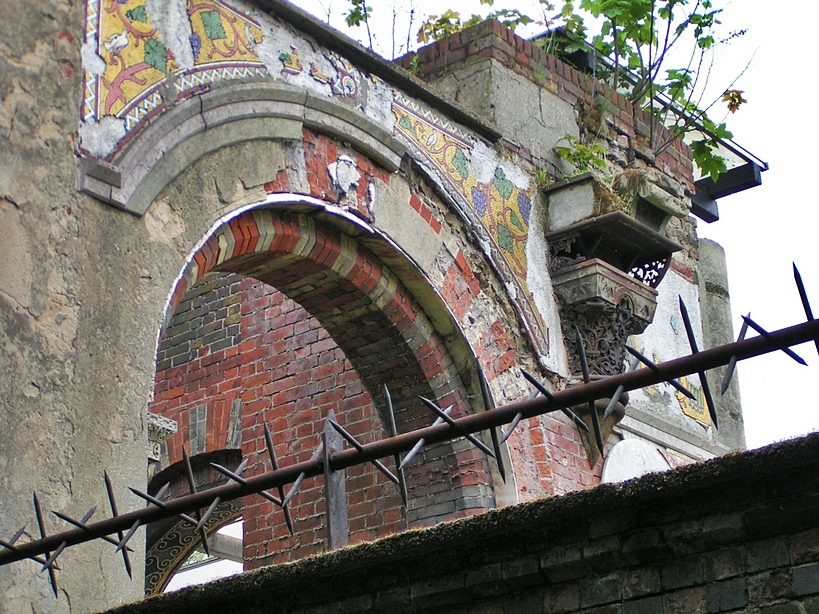
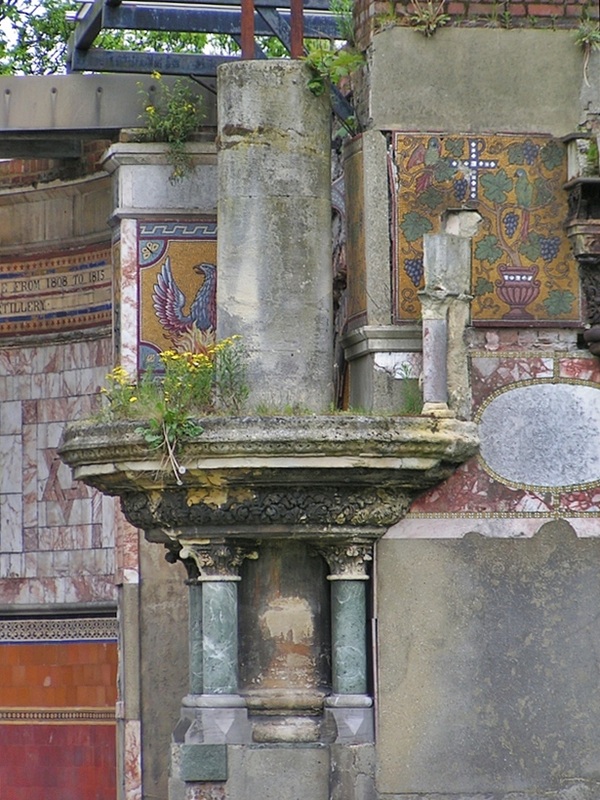
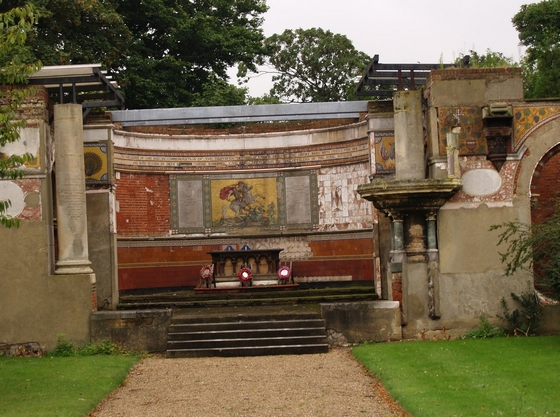
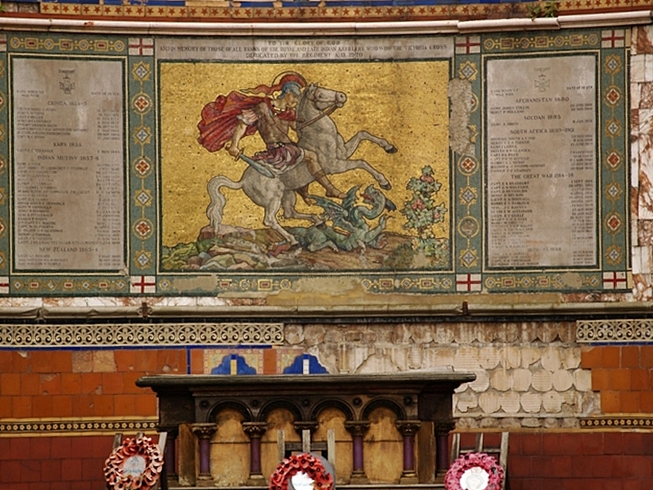
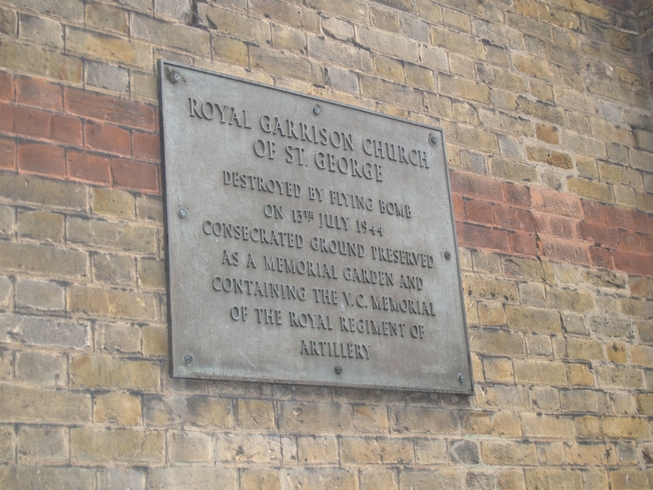
The church, named after a visit by King George in 1928, was destroyed in 1944 by a German V1 flying bomb. The The Royal Artillery Victoria Cross memorial is in the form of a fine Italian mosiac depicting St George. The ruins today remain consecrated as a memorial church
BRENTFORD - ST LAWRENCES CHURCH
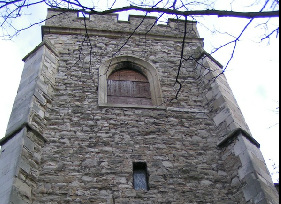
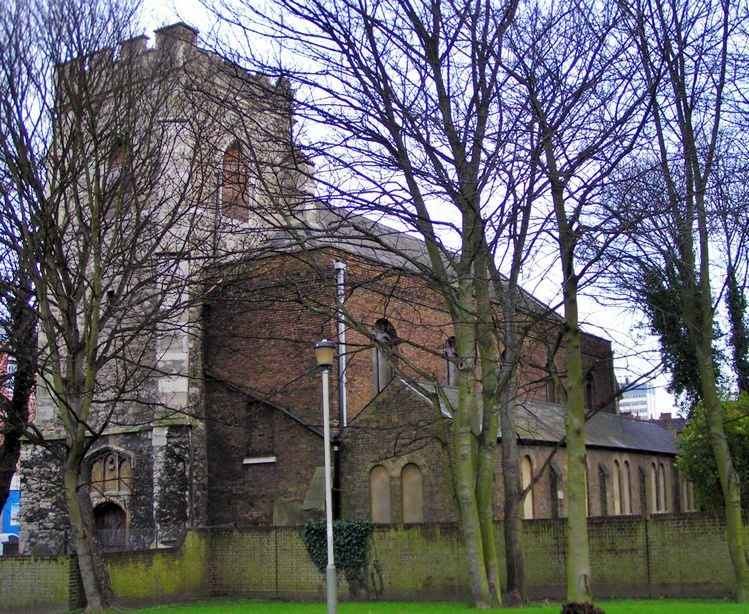
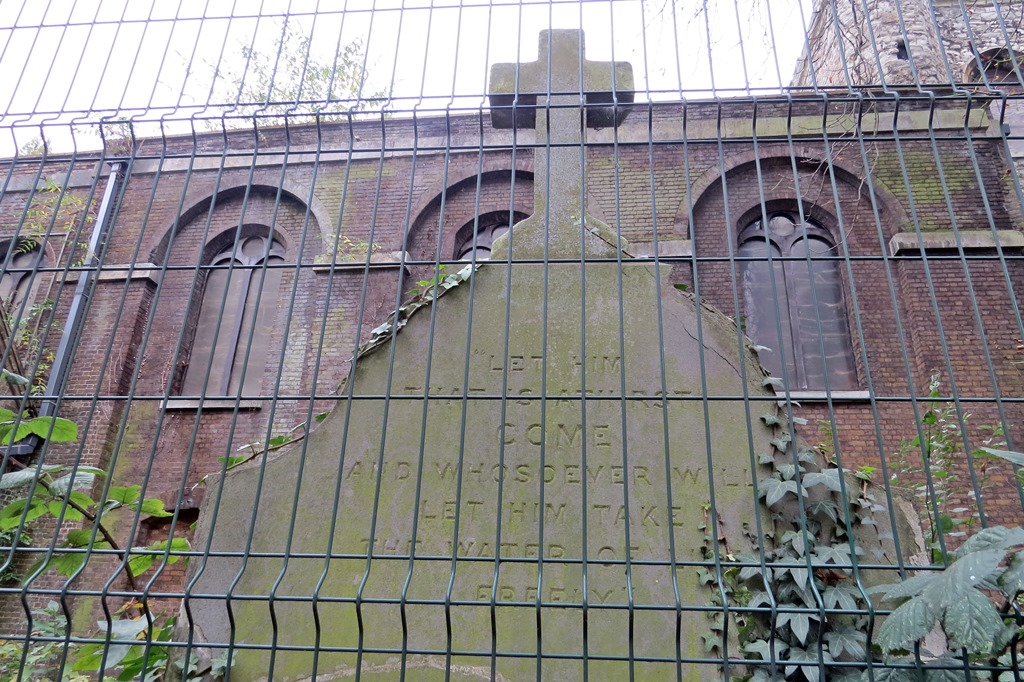
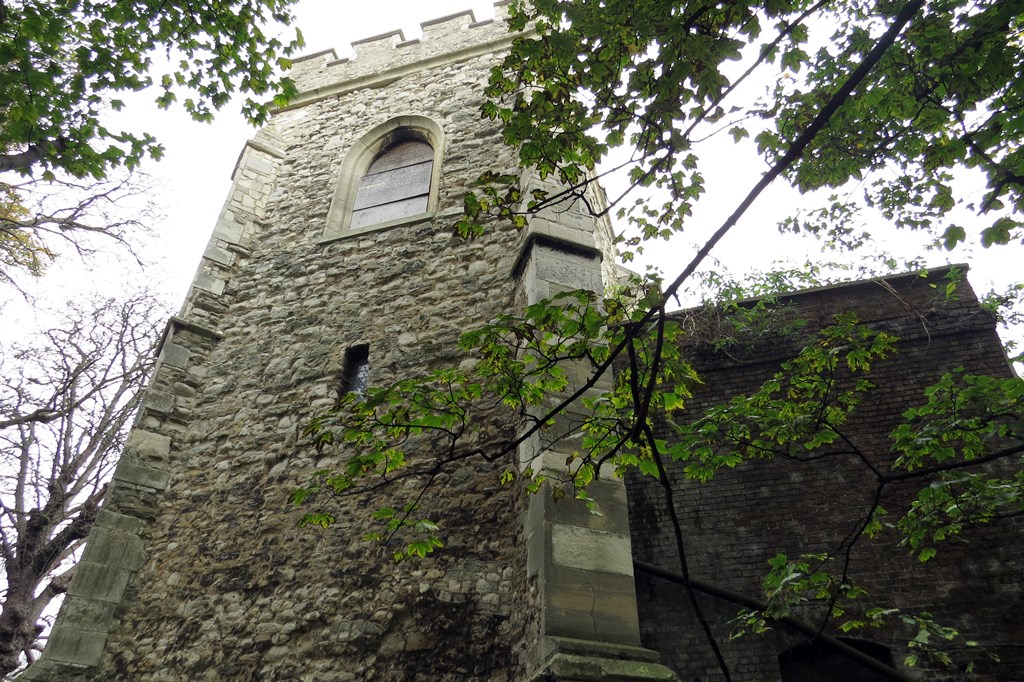
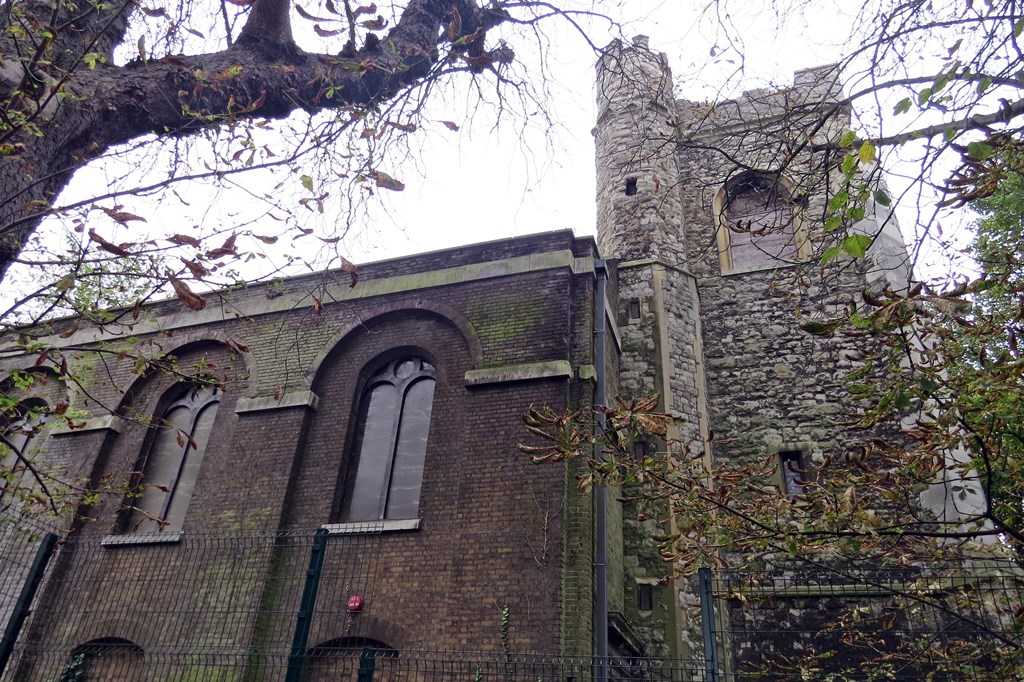
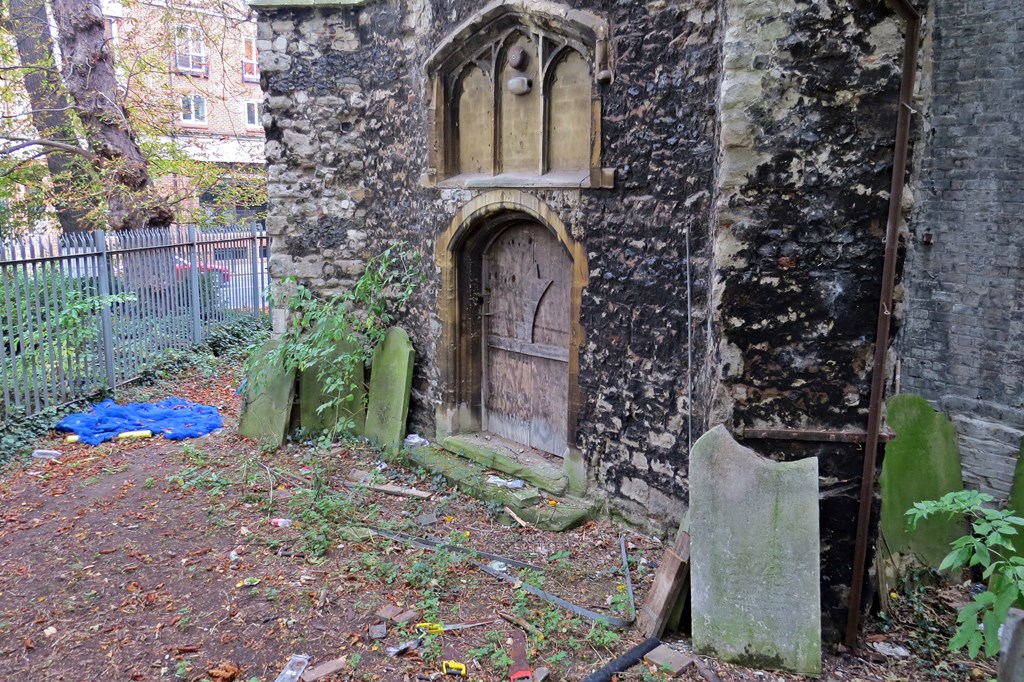
The original section of the Church is the Great West Tower built in the 15th century, during the Wars of the Roses, in Kentish ragstone. It is the earliest structure inBrentford and remains virtually unaltered. The church has been unused since 1979. Recently £25,000 has been spent on "securing" the church tower.
The site is now on sale for £1.5 million. There is a condition in the original sale by the London Diocesan Fund, that the future use of the buildings and the land be for the purpose of a restaurant or theatre with public car parking to the rear. There is an order subsequently granted by the Home Office of the Pastural Measure Act 1983 that dispenses with the need to remove human remains from the site on the understanding that future use will not disturb those remains
ISLEWORTH - ISLEWORTH CEMETERY
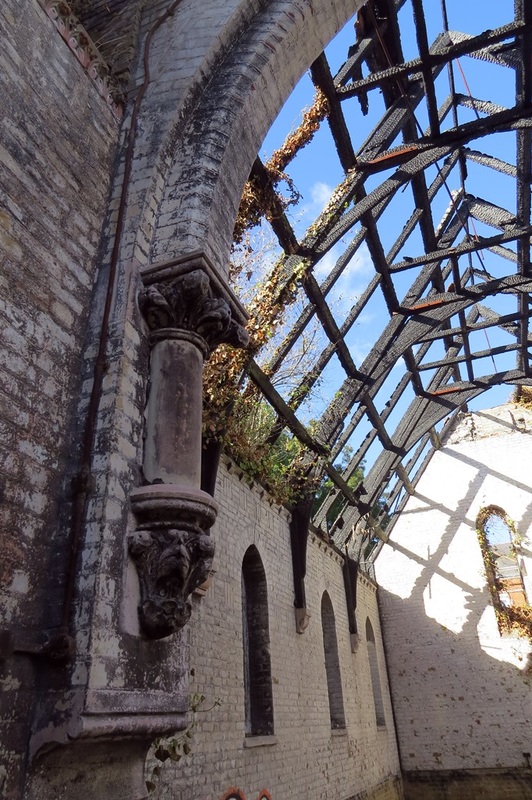
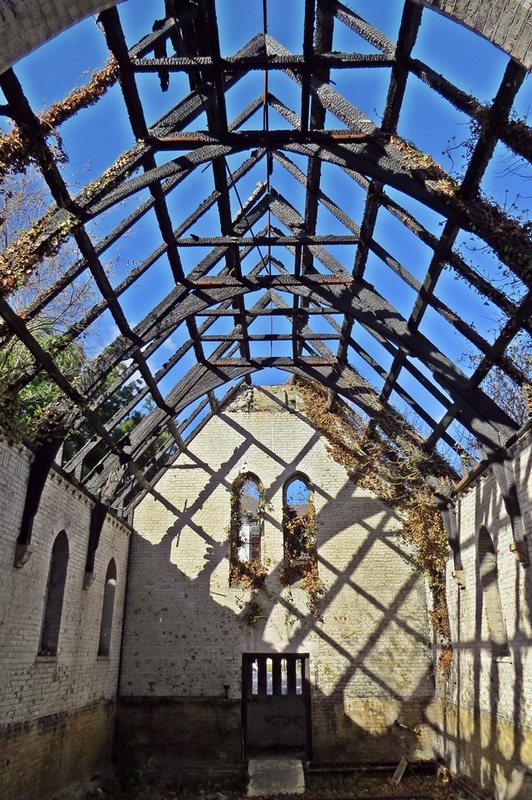
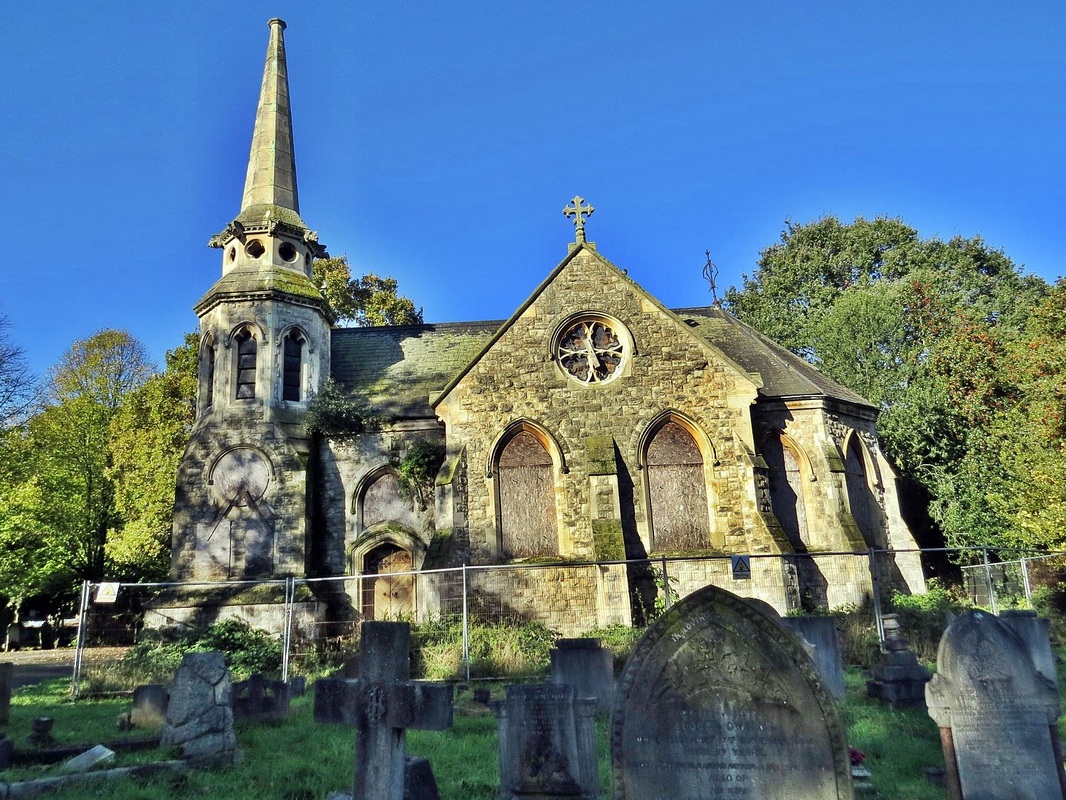
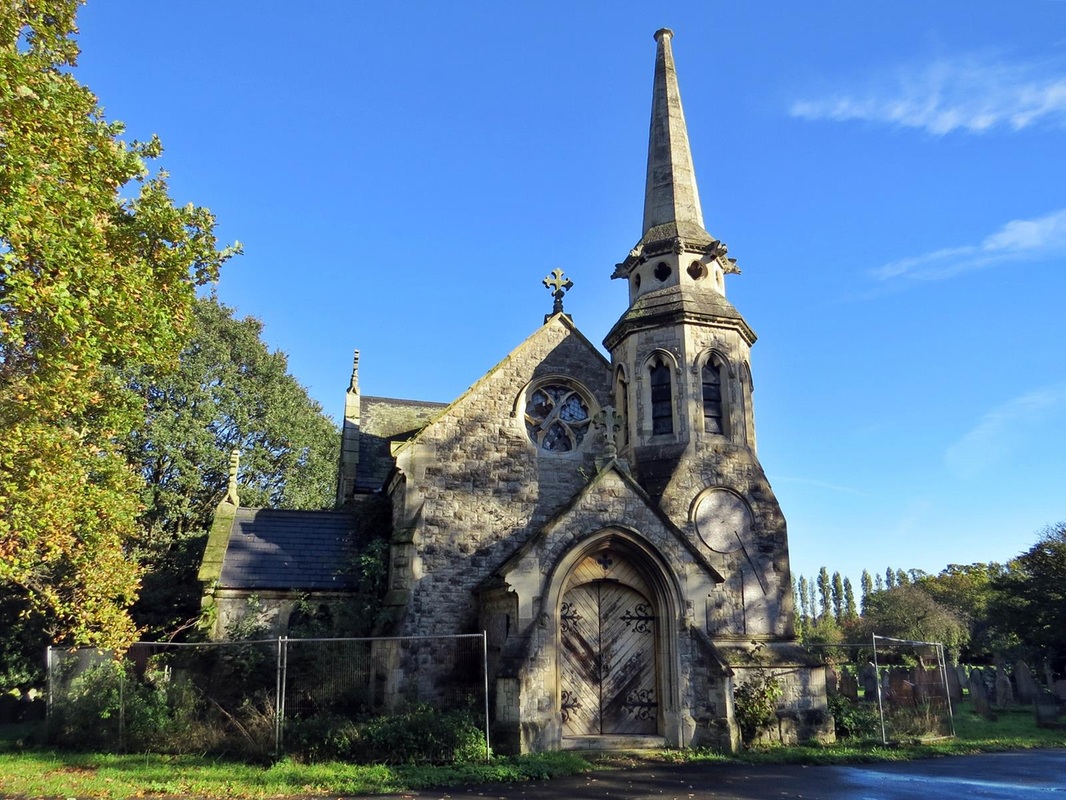
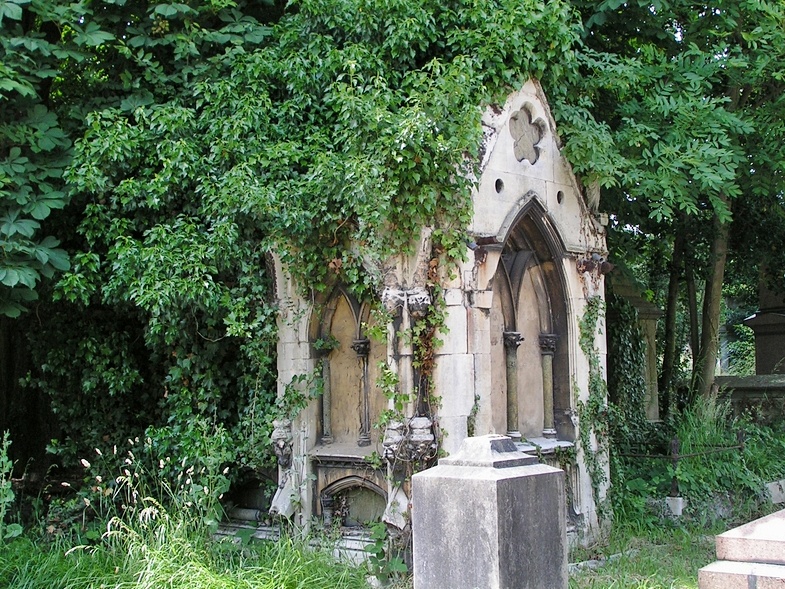
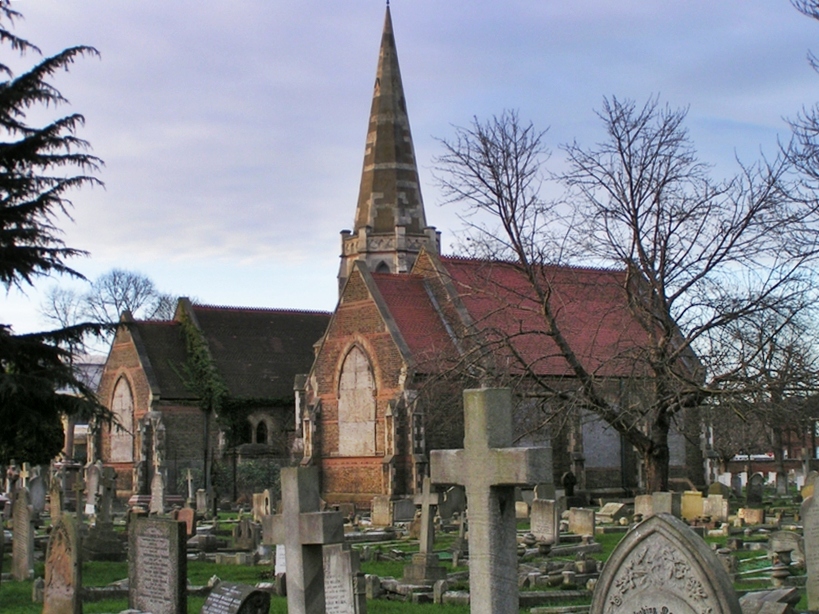
Opened 1880, the Isleworth Cemetery is 9 acres in size and has a large derelict twin Chapel placed in the centre of the cemetery. Notable amongst its memorials is the large fairly ornate structure to the Pears family, one of whom lost his life on the Titanic.
WEST NORWOOD - WEST NORWOOD CEMETERY
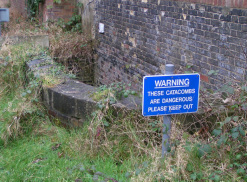
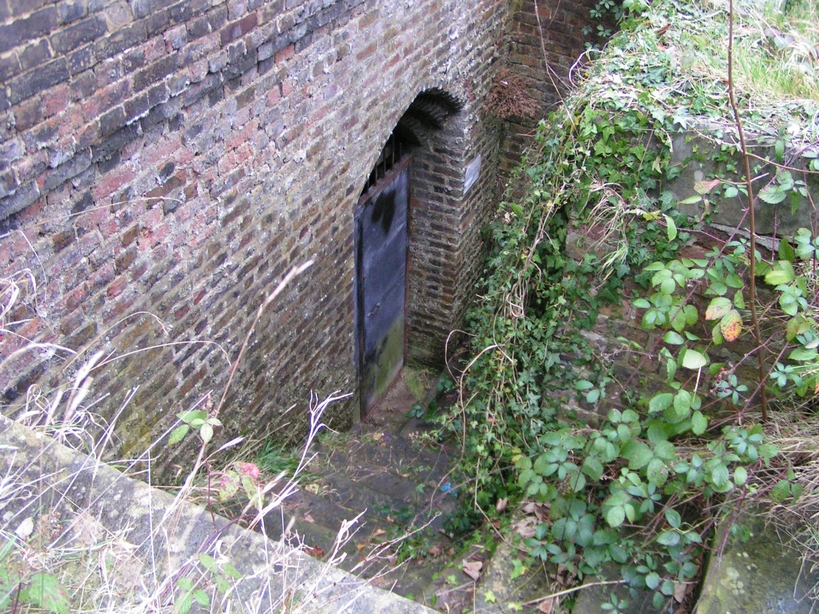
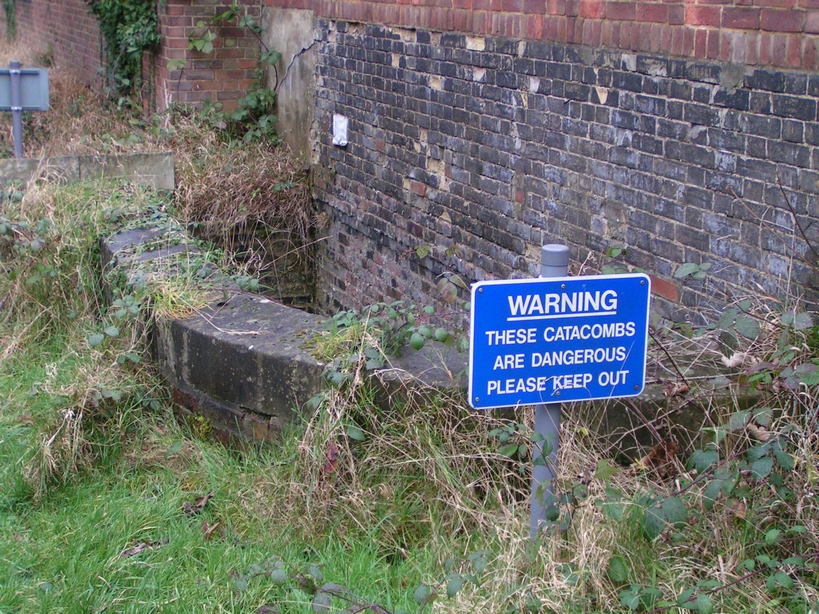
Built in 1837. To quote a local estate agent's blurb: "This ranks alongside Highgate as a bizarre and beautiful insight into the Victorian age. Its catacombs and monuments, including memorials to many famous names, are one of London's hidden treasures. The Catacombs are in poor condition from bomb damage, neglect, and vandalism. Following intervention by the Diocese of Southwark and English Heritage, a conservation management strategy has been adopted for the repair and restoration of catacombs.
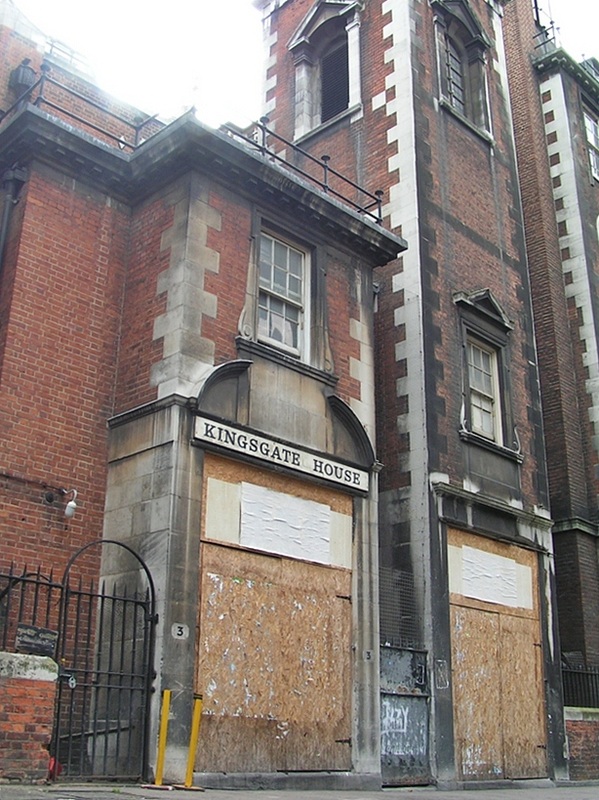
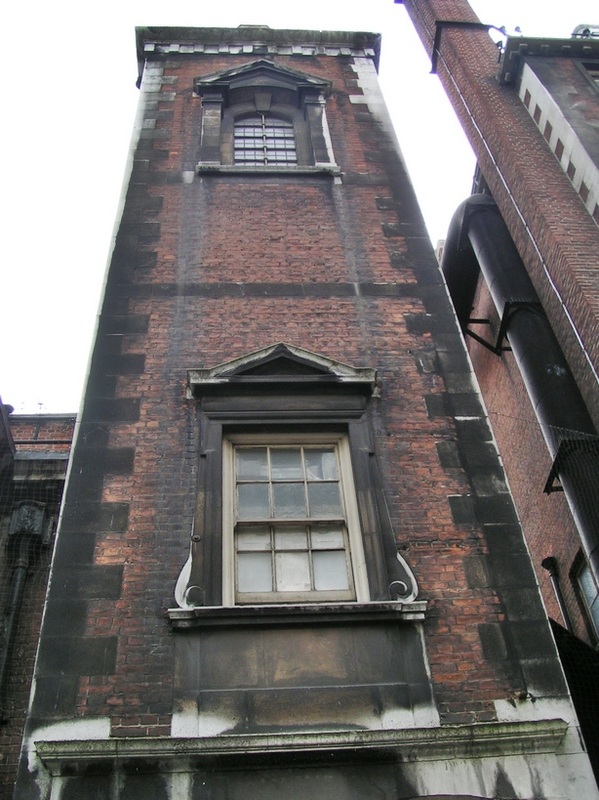
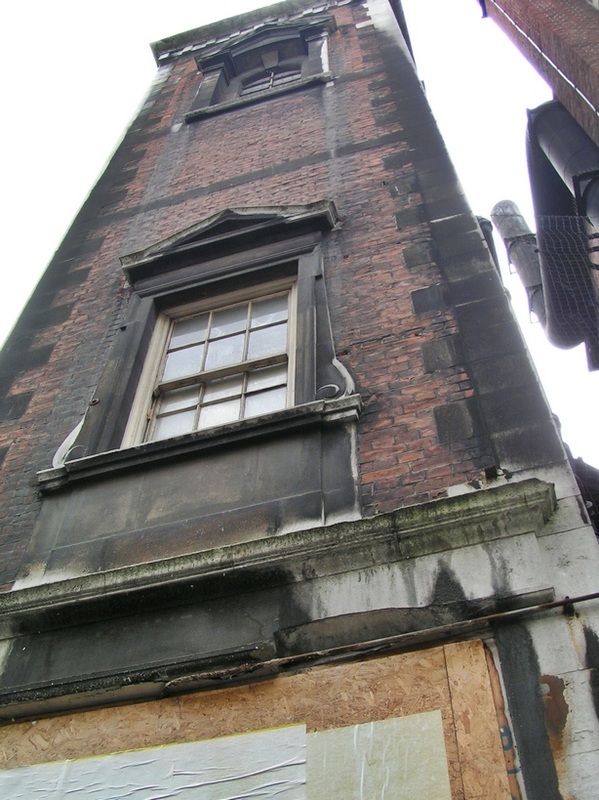
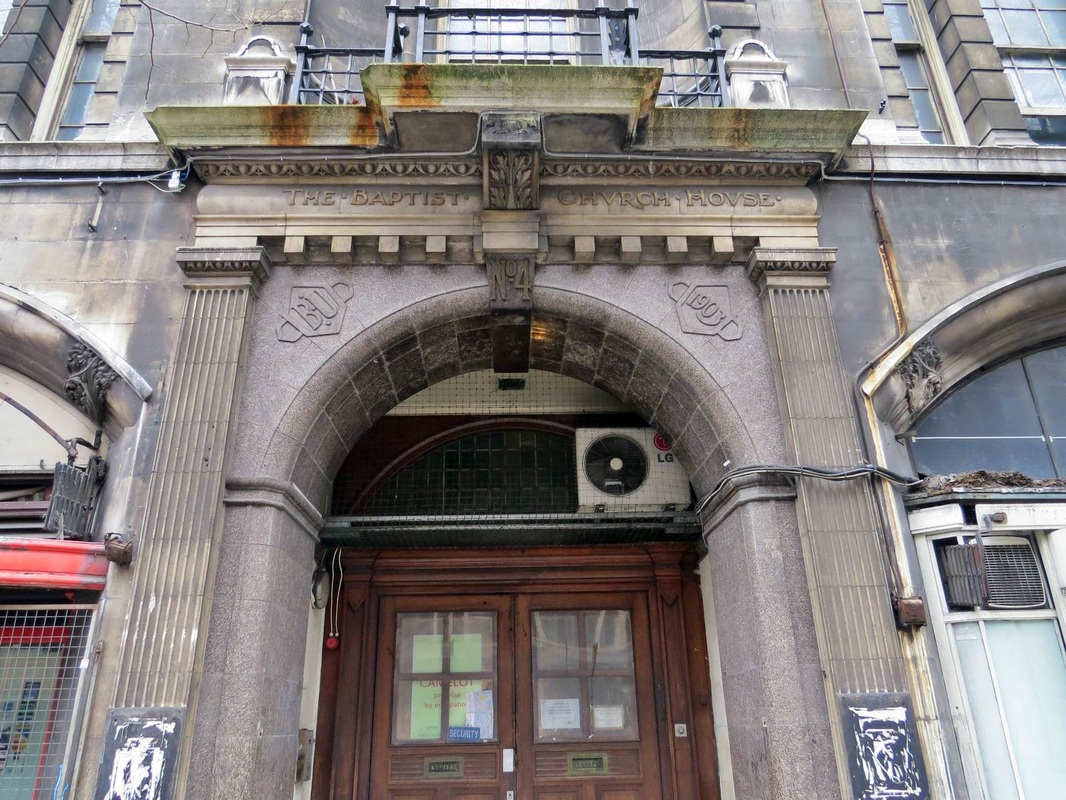
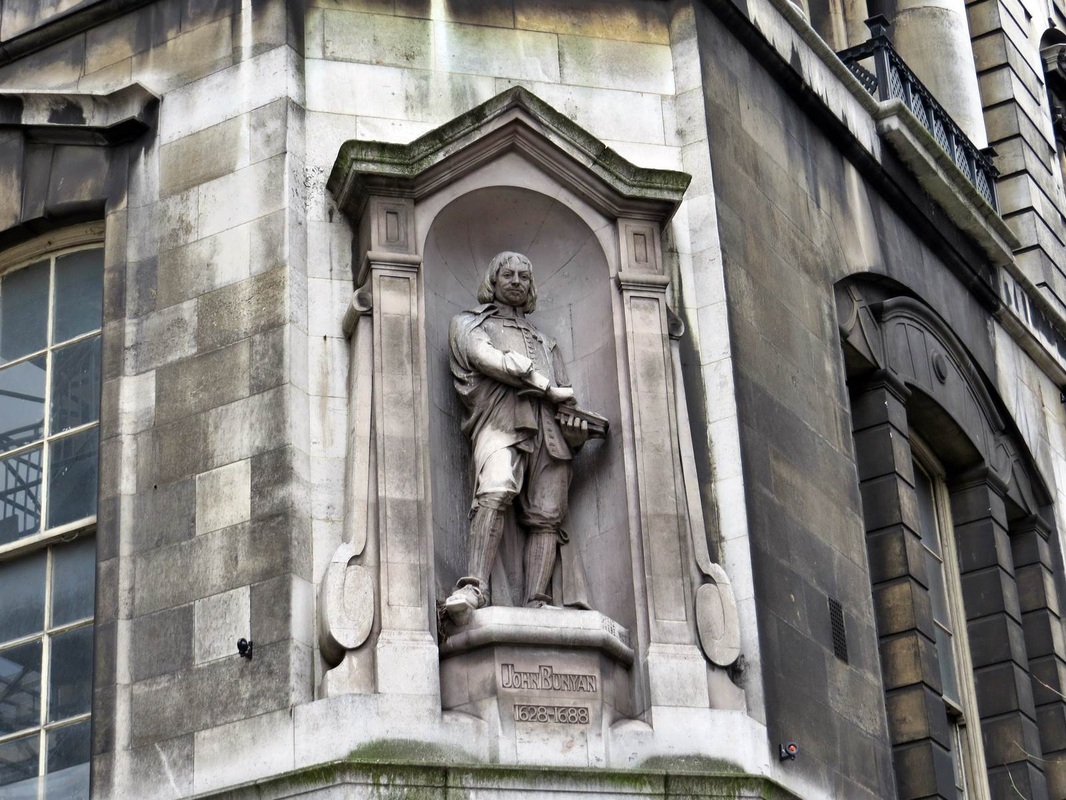
HOLBORN - KINGSGATE HOUSE
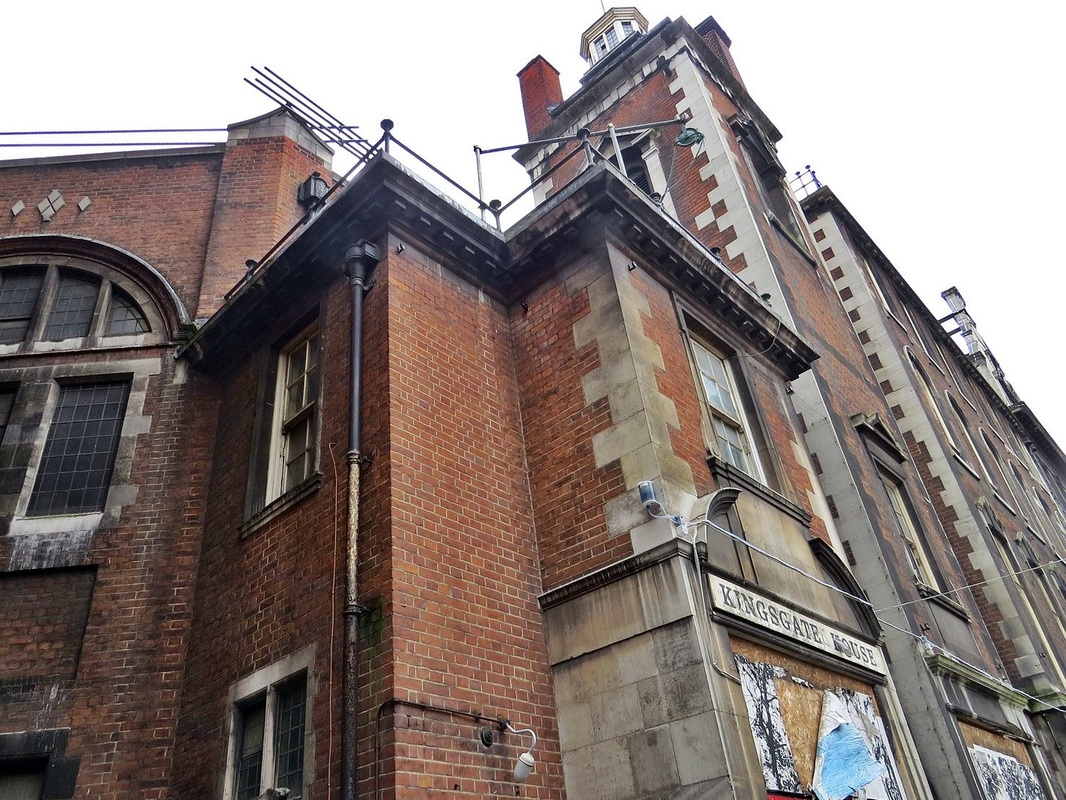
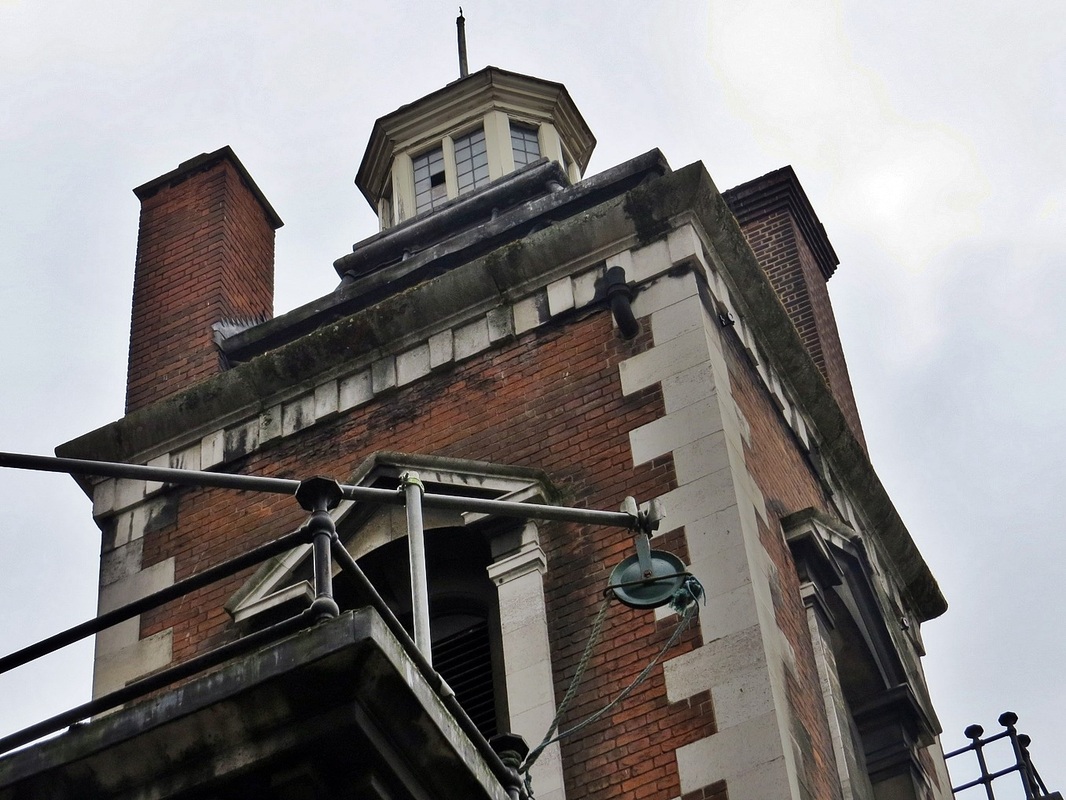
Formerly a baptist church.Was founded in 1736, and known by the name of Eagle-street Chapel until 1856,when the present building was erected on the same spot.
EDMONTON - TOTTENHAM PARK CEMETERY
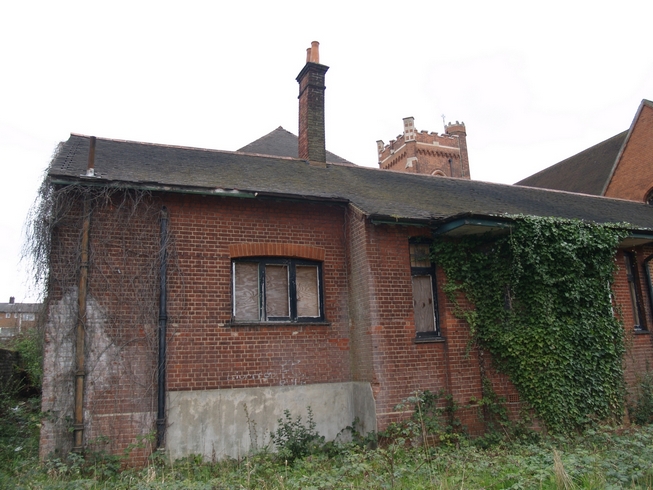
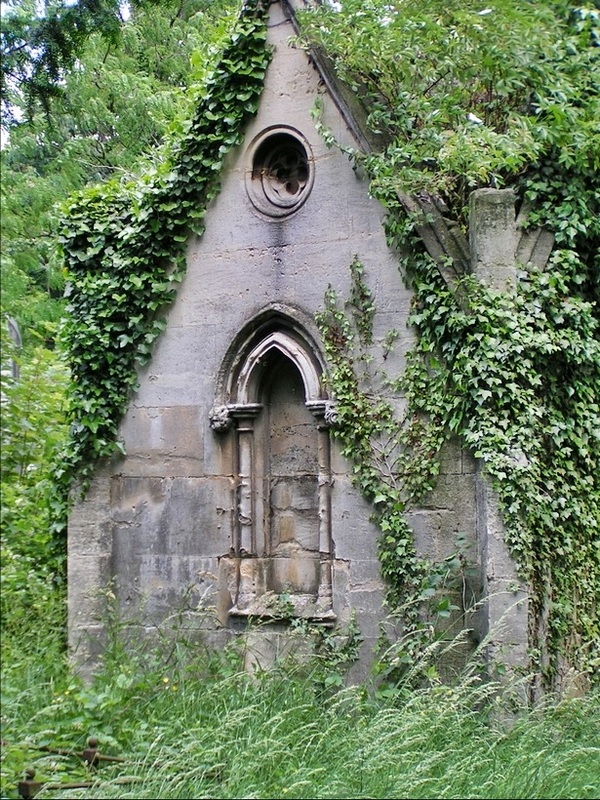
Tottenham Park Cemetery is a small private burial ground dating from 1912 - its still a very much used cemetery though I found this derelict little chapel within the grounds.
WHITECHAPEL - BRADY STREET BURIAL GROUND
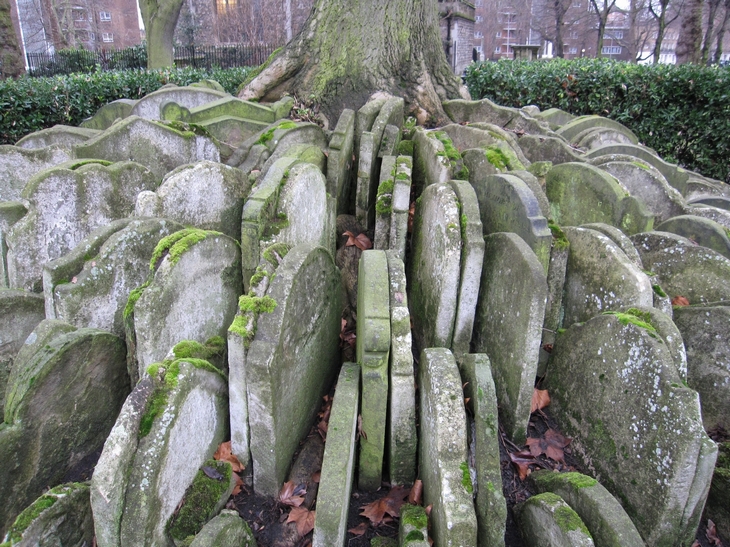
Jewish burial ground opened in 1761. Nathan Meyer Rothschild, founder of the Rothschild corporation is buried here. By 1840 little space was left here and to extend the number of graves available it was decided to put a four foot layer of earth on top of the centre ground and bury on top.This has resulted in a large flat-topped mound in the centre with headstones back to back - the one stone for the grave below and the one for the one above. The cemetery closed in 1858 except for reserved graves.
NEWGATE EC2 - CHRIST CHURCH GREYFRIARS
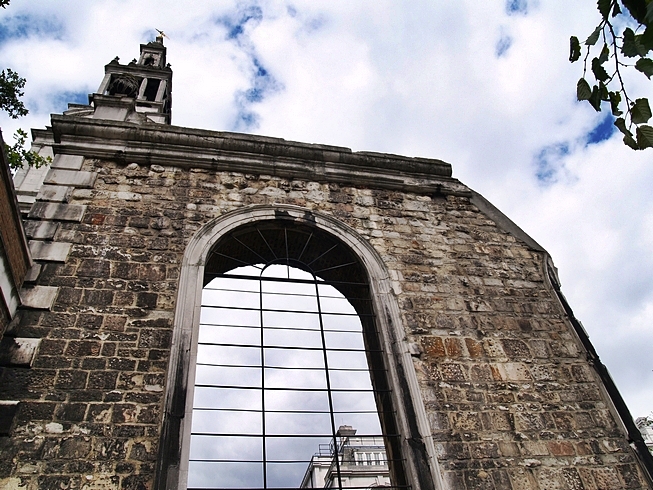
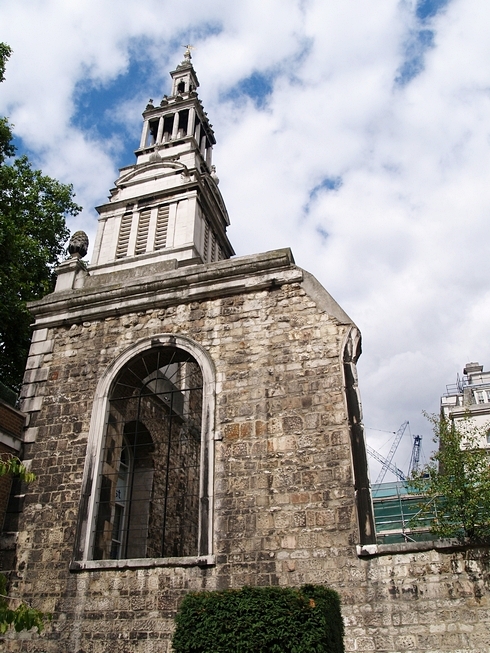
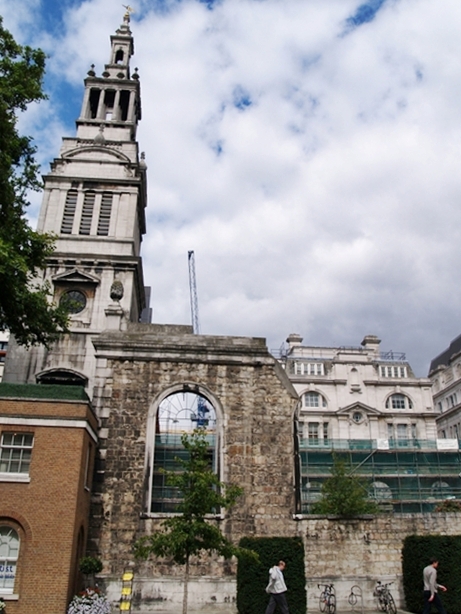
Also known as Christ Church Newgate, was an Anglican church opposite St Paul's Cathedral in the City of London. Built first in the gothic style before being destroyed in the Great Fire in 1666 then rebuilt in the English Baroque style by Sir Christopher Wren, it ranked among the City's most notable pieces of architecture and places of worship The church was destroyed in the Second World War—a total of eight Wren churches burned that night. At Christ Church, the only fitting known to have been saved was the cover of the finely carved wooden font, recovered by an unknown postman who ran inside as the flames raged. The roof and vaulting collapsed into the nave; the tower and four main walls, made of stone, remained standing but were smoke-scarred and gravely weakened. The ruins are now a public garden.
CHISWICK - CHISWICK OLD CEMETERY
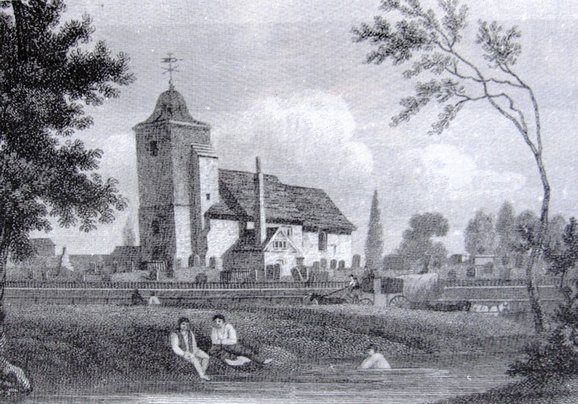
The churchyard of St Nicholas (the patron saint of sailors) was Chiswick's only burial ground for many centuries. It was extended in 1838 by a gift of land from the Duke of Devonshire but closed in 1854 when for some years Chiswick residents were interred in the large cemetery near Woking run by the London Necropolis Company. However, it re-opened as a graveyard after the Duke of Devonshire gave the parish another acre adjoining the churchyard in 1871.
HONOR OAK - BAPTIST CHURCH
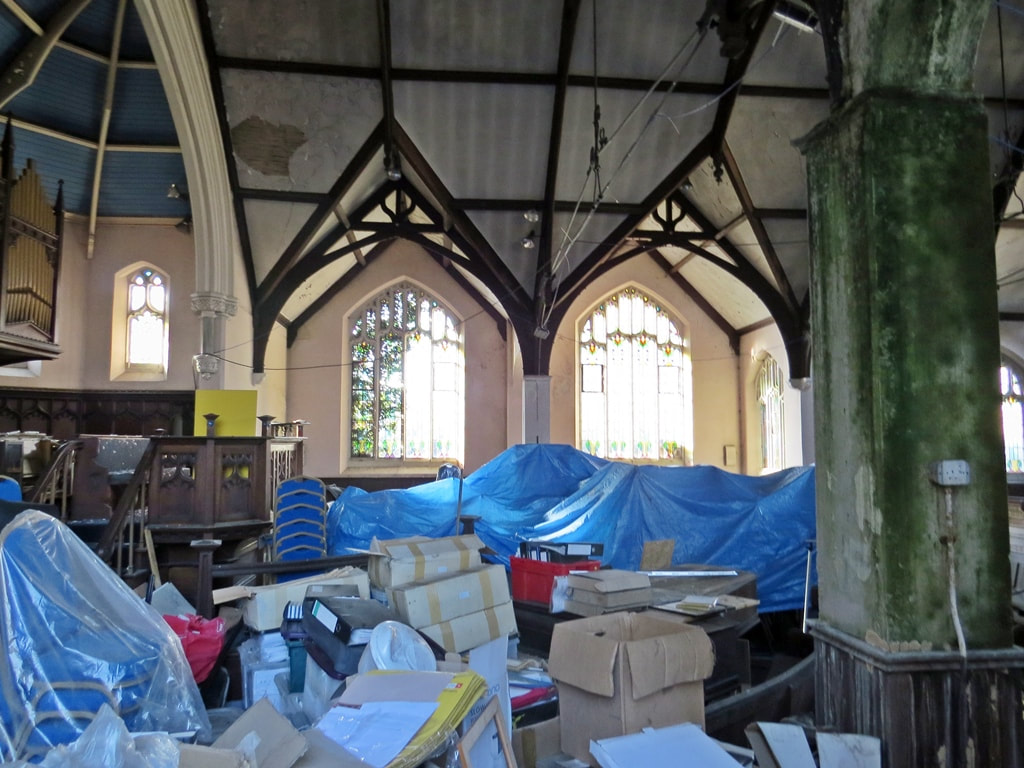
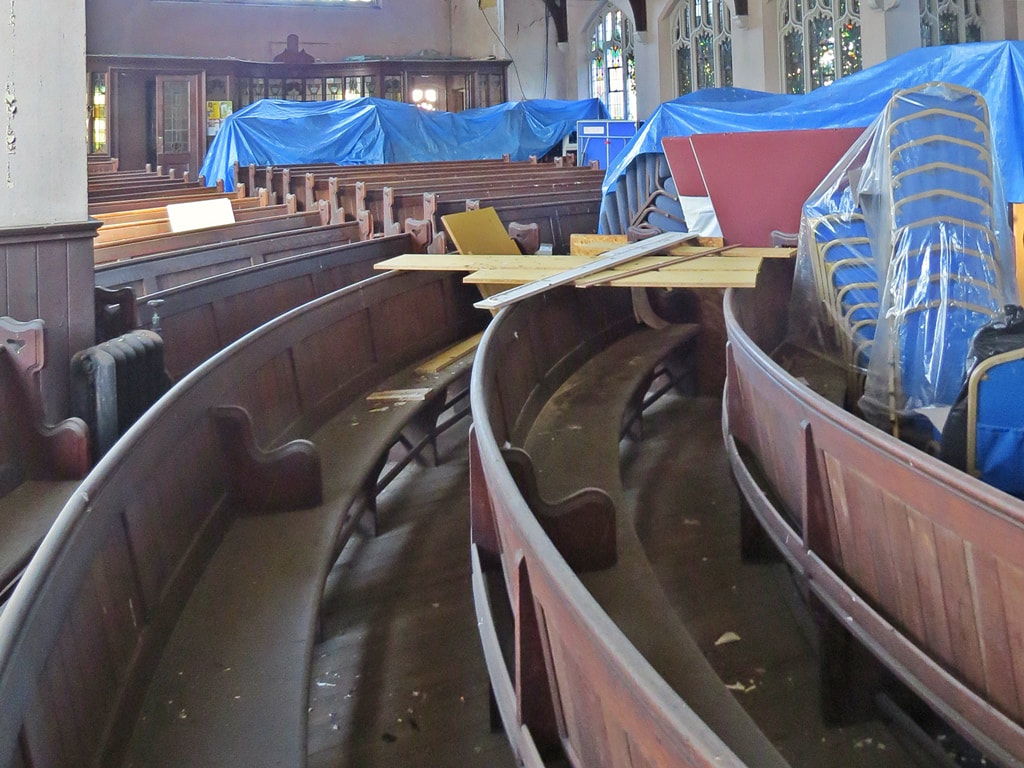
Built in 1891 to the design of George Baines. Currently being converted into14 flats There will still be a church within the complex.but dwindling congregations and high running costs have led to this compromise.
WATERLOO - NECROPOLIS RAILWAY STATION
An unusual train service operated from Waterloo to Brookwood Cemetery, near Woking. It conveyed the deceased and their accompanying mourners to their final resting place, the Brookwood Necropolis, which at one time was the largest cemetery in the world. The Necropolis was originally promoted as concerns about public health in the nation's capital and elsewhere had increased, London having suffered its first cholera epidemic in the mid-nineteenth century. The railway had many unusual features. In the cemetery there were two stations, one for the Anglican section and another for the Nonconformist section. The station was bombed in April 1941and suffered severe damage and was never rebuilt after the Second World War although the entrance pictured above still survives.
HACKNEY WICK - MOUNTAIN OF FIRE & MIRACLE MINISTRIES
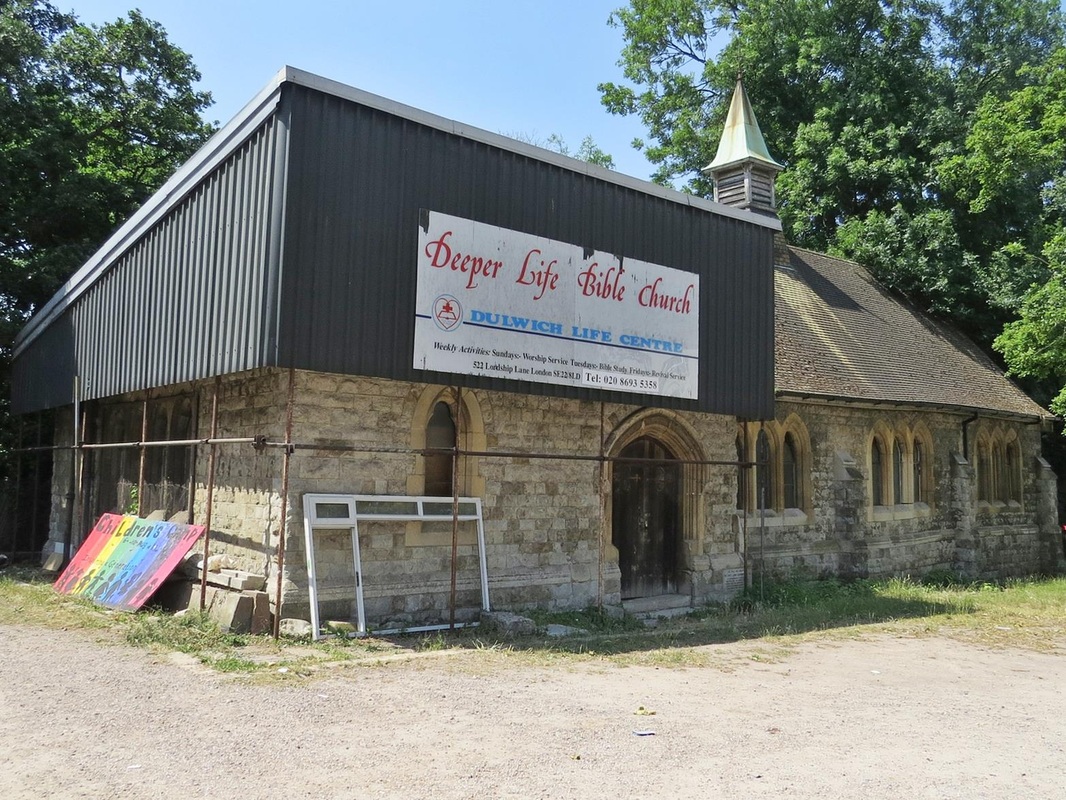
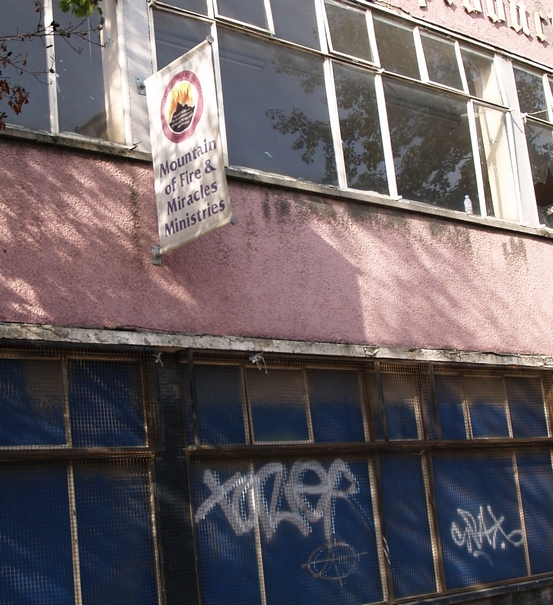
This decaying building in a run down industrial area was apparently according to their website a "do-it-yourself gospel ministry where your hands are trained to wage war and your fingers to fight. The Mountain of Fire and Miracles Ministries' Headquarters in Lagos Nigeria is the largest single Christian congregation in Africa with attendance of over 100,000 in single meetings."
CITY OF LONDON EC3 - ST DUNSTANS THE EAST
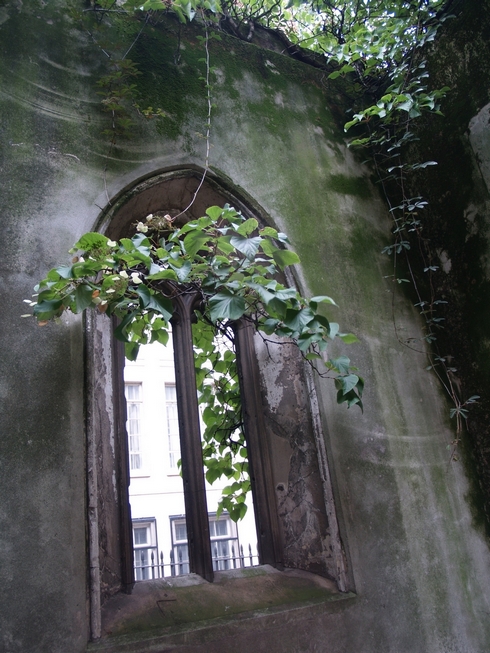
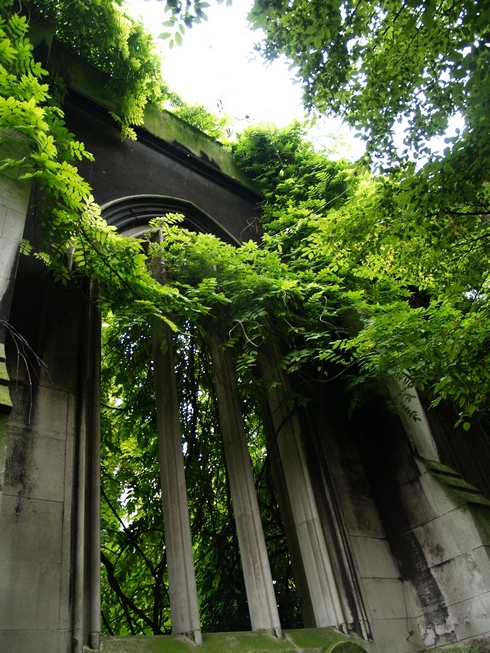
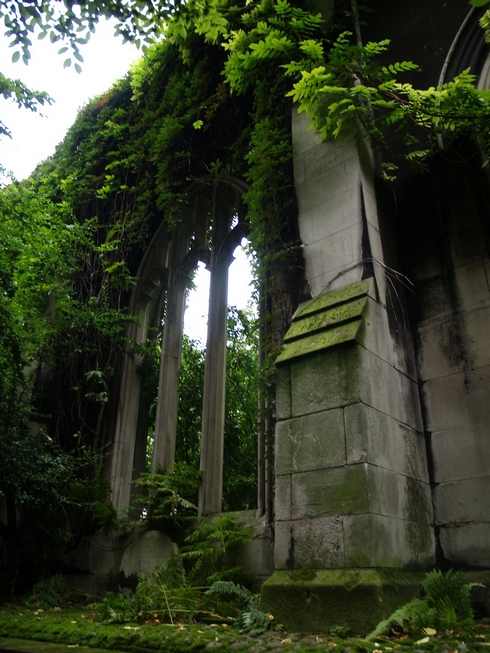
This Anglican church situated near the Tower of London dates back to 1382 and was partially destroyed by the Great Fire of London in 1666. It was then rebuilt by Christopher Wren in 1668, but reduced to a shell by German bombs during the Blitz in 1941. Wren’s tower and steeple survived, however, and now house the offices of a small health clinic.
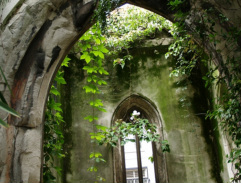
There is now a beautiful walled garden within the ruins of the old church, providing a haven of tranquillity in the heart of the City of London.
UPMINSTER - UPMINSTER OLD CHAPEL
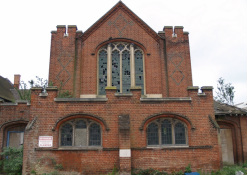
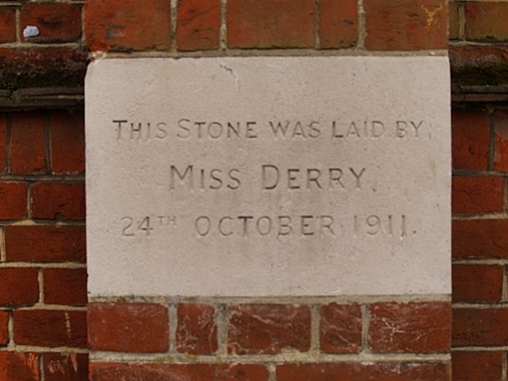
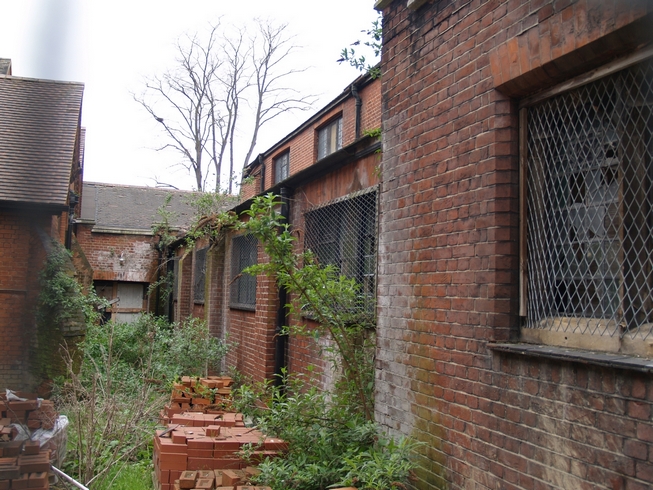
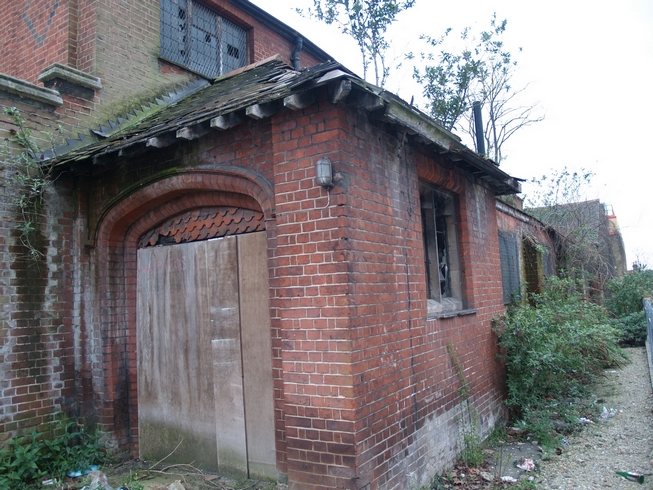
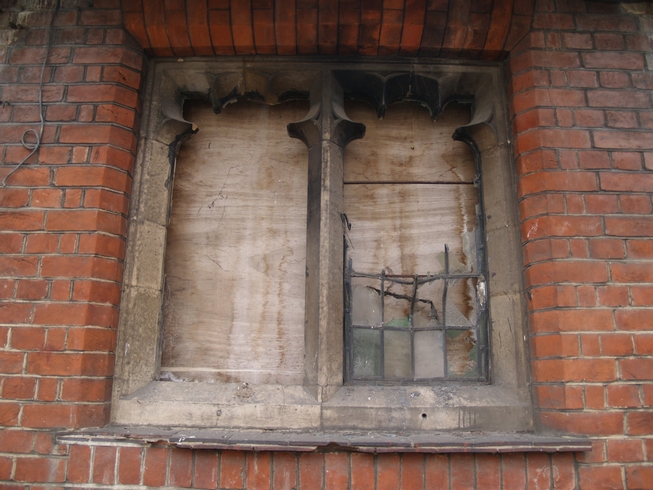
Built in 1800 and then known as the "Church of Protestant Dissenters". Due to increasing congregation sizes the church moved to new premises and the Old Chapel was sold to the Plymouth Brethren in 1911 for £400 who used the building for services until 1988.An application has been made to the Heritage Lottery Fund for money to turn the building into a community resource/exhibition space/performance venue.
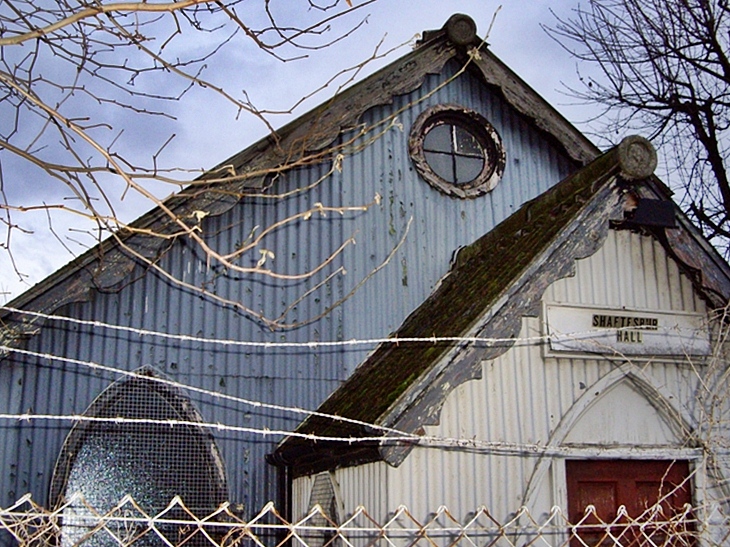
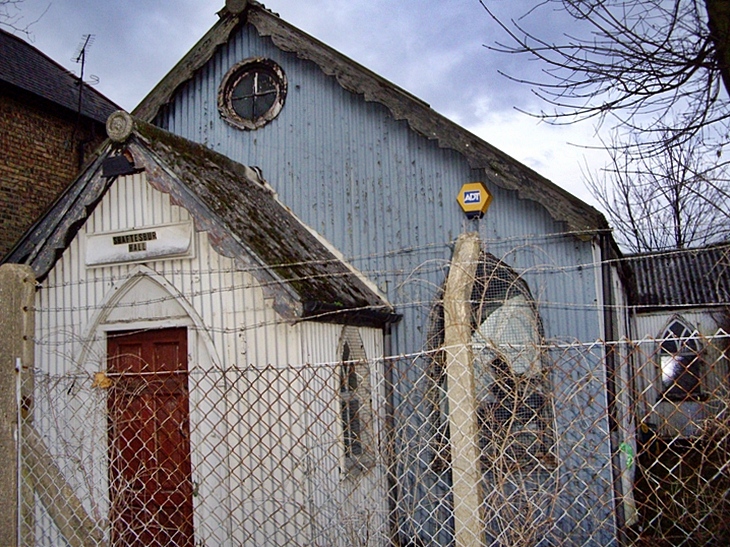
PONDERS END - TIN TABERNACLE
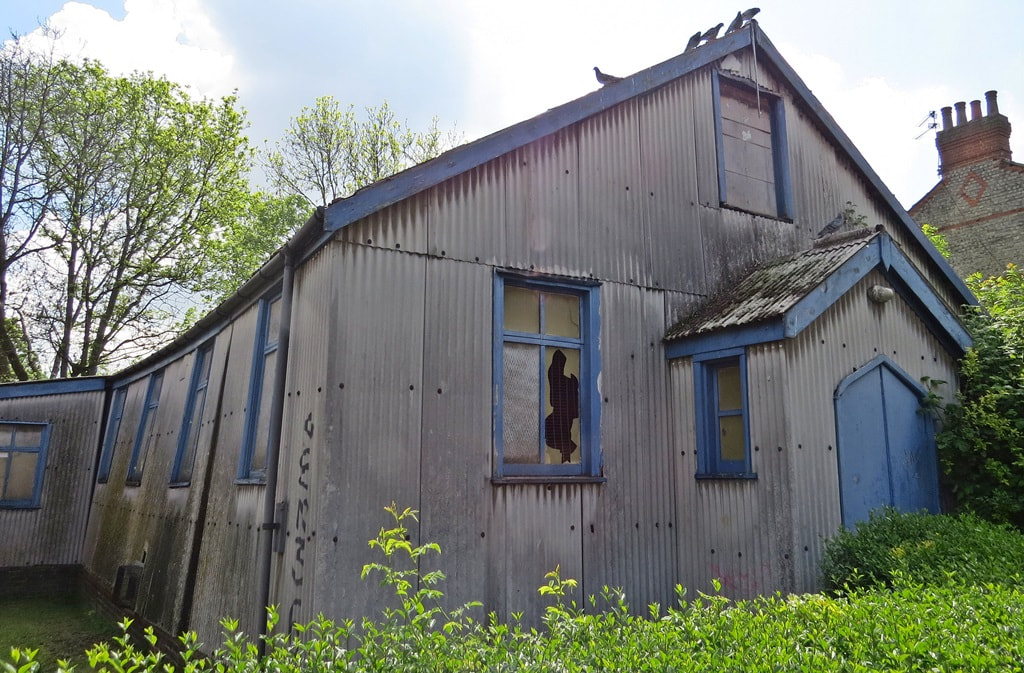
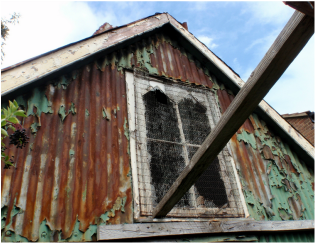
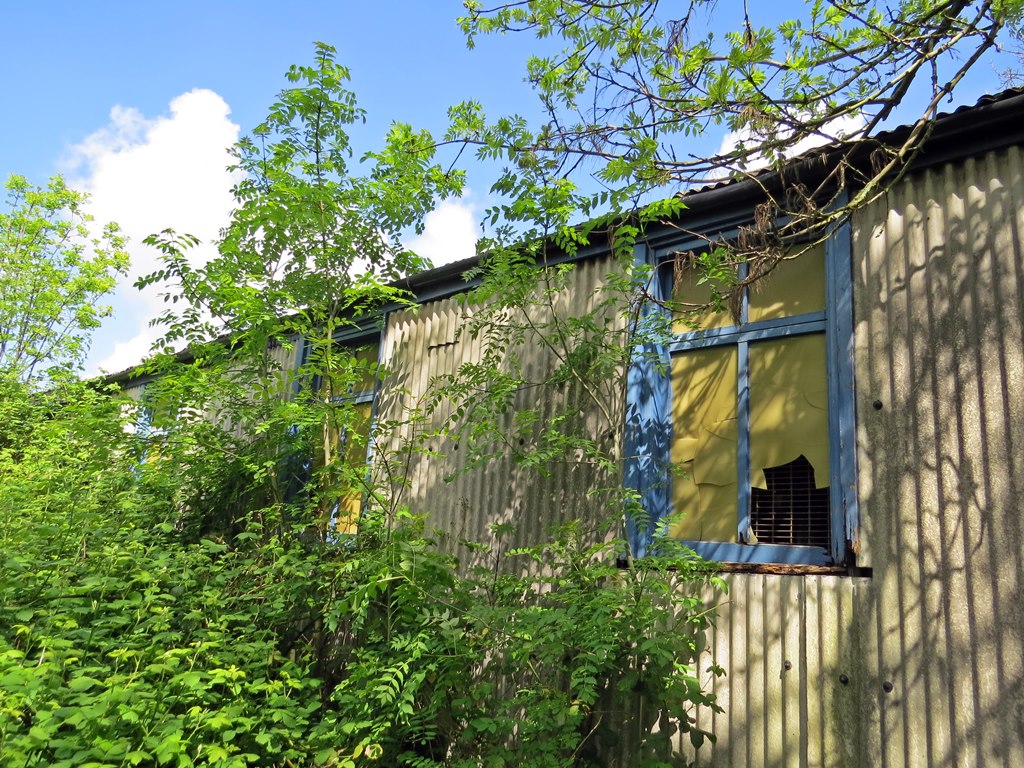
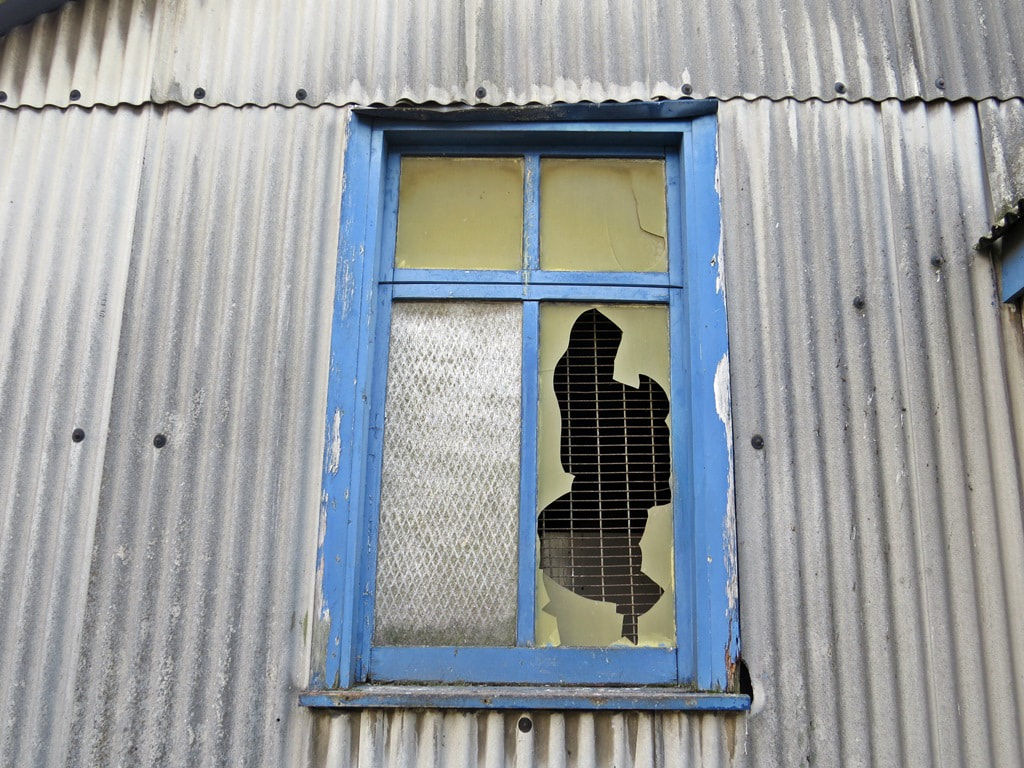
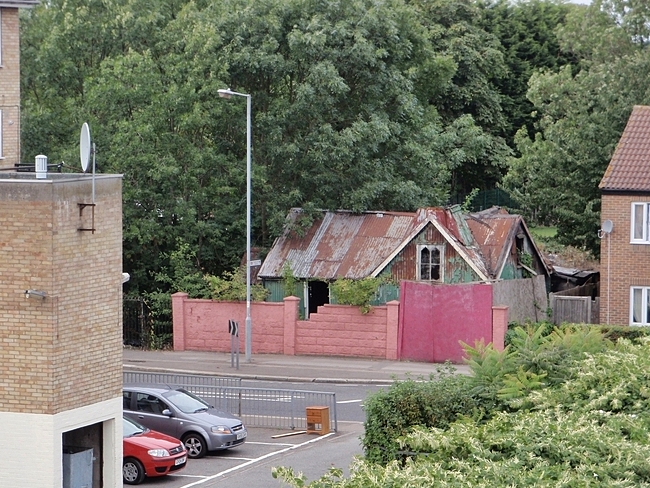
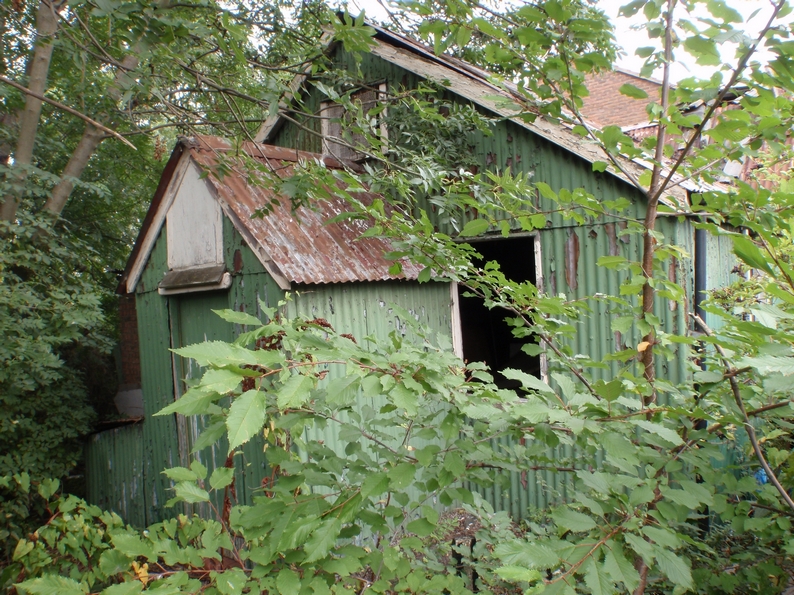
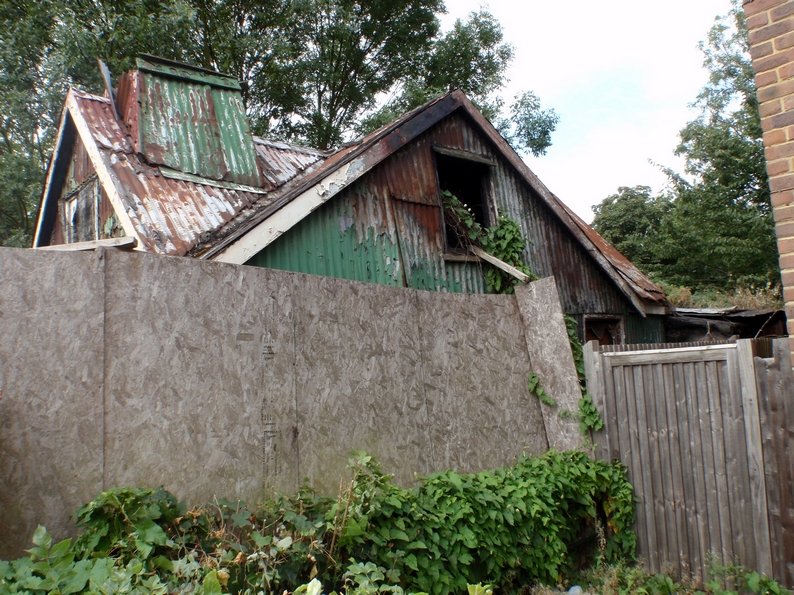
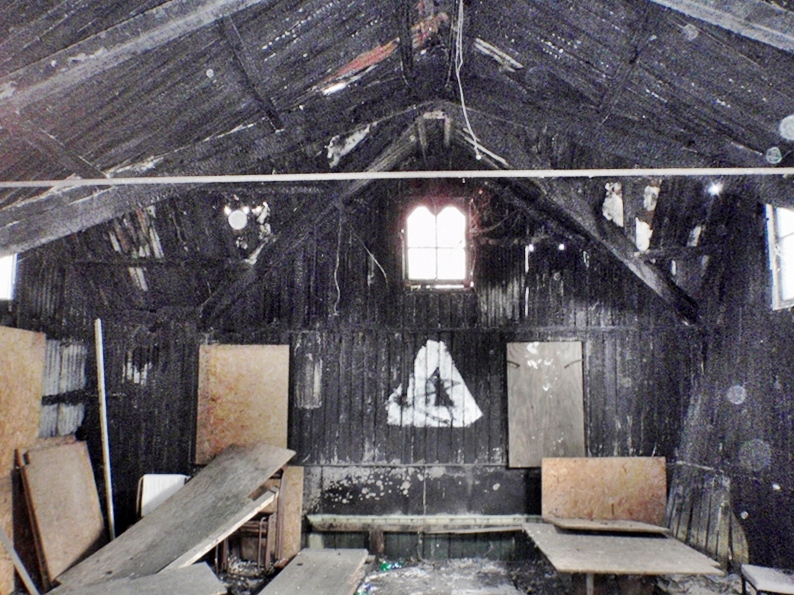
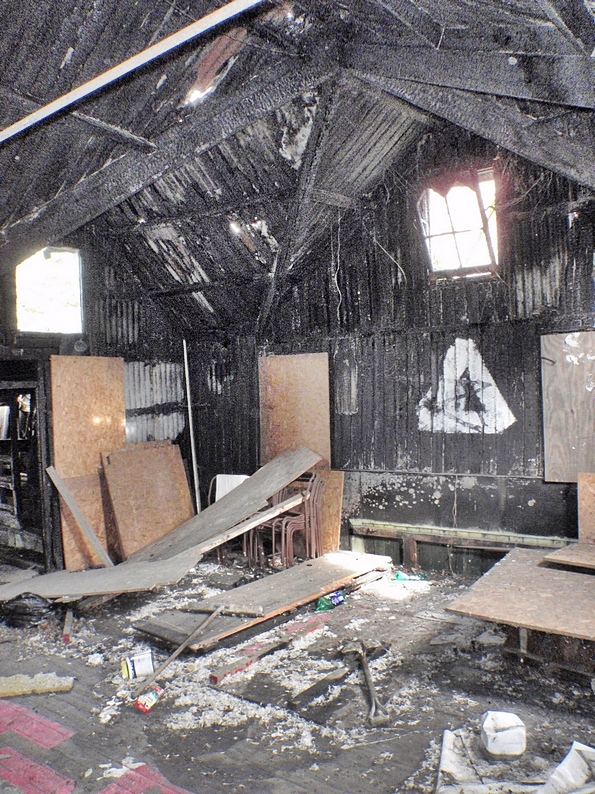
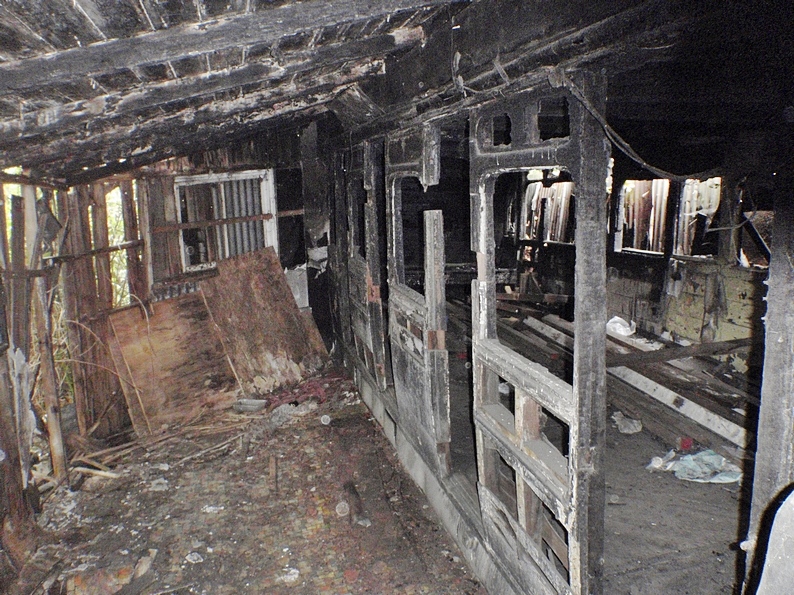
The mission halls, chapels and churches were built economically and quickly to service the needs of small groups of worshippers from about the 1870s onwards. Often referred to as 'Tin Tabernacles' they were built as temporary accommodation and the vast majority of them have already disappeared. Many were built as prefabricated kits bought from builders merchants.
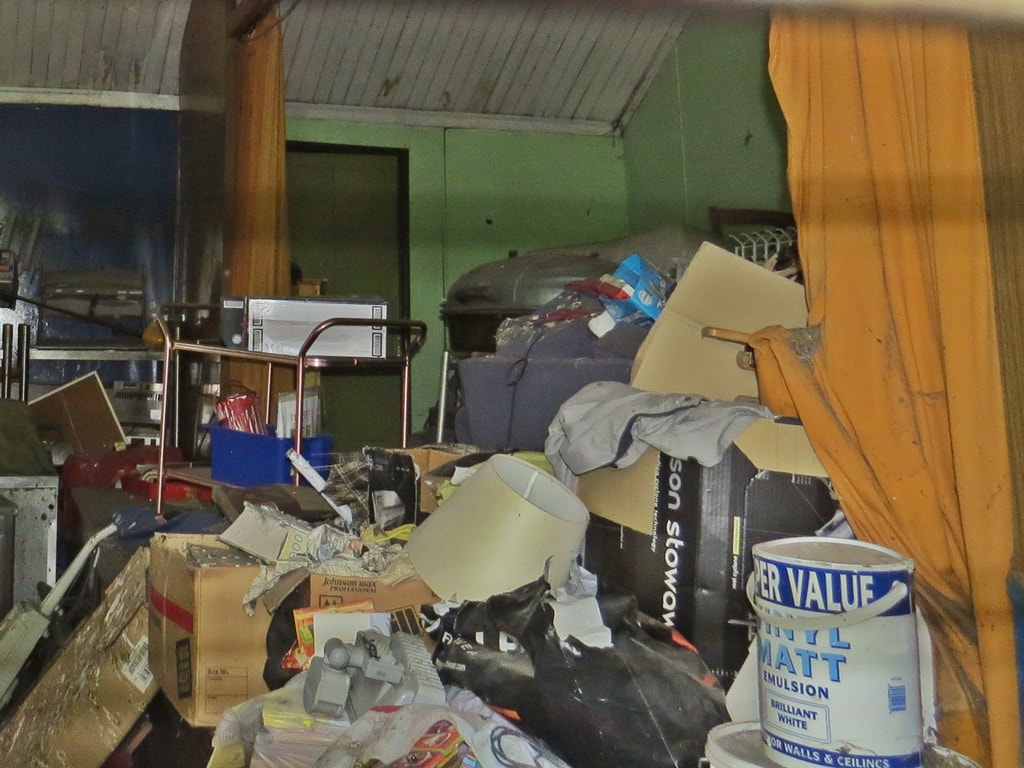
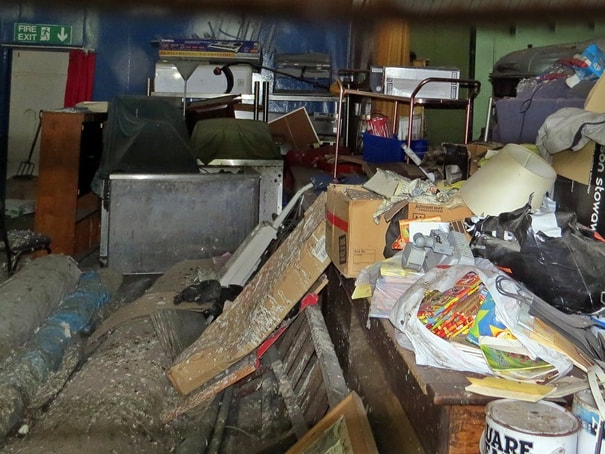
This Methodist chapel was erected in around 1882 and used until 1898. No idea what it was used for since then.
Richard Turner writes: "Your picture of a Tin Tabernacle reminds me. I was a pupil at Latymer School Edmonton. The sports equipment and changing room was in the 'Tin Tab' a large hall built of corrugated iron looking very much like your picture of one in Ponders End."
And finally:
East Finchley Cemetery
NOT a derelict place and not even any decay around the edges! - I took these when in the area during a blizzard.
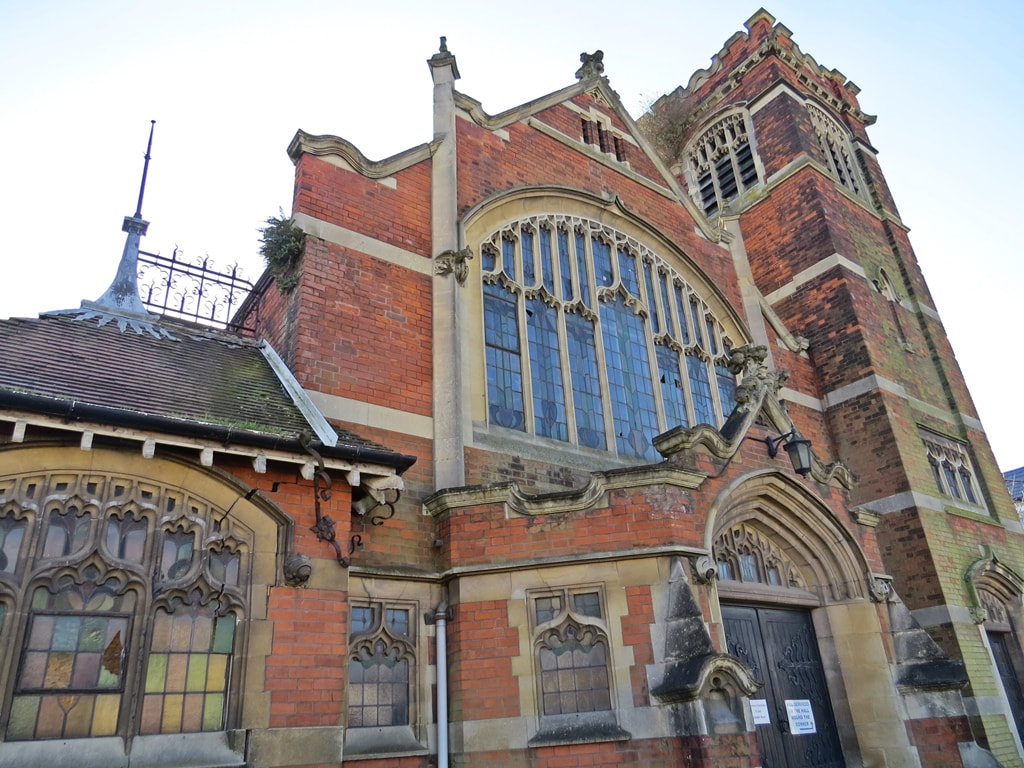
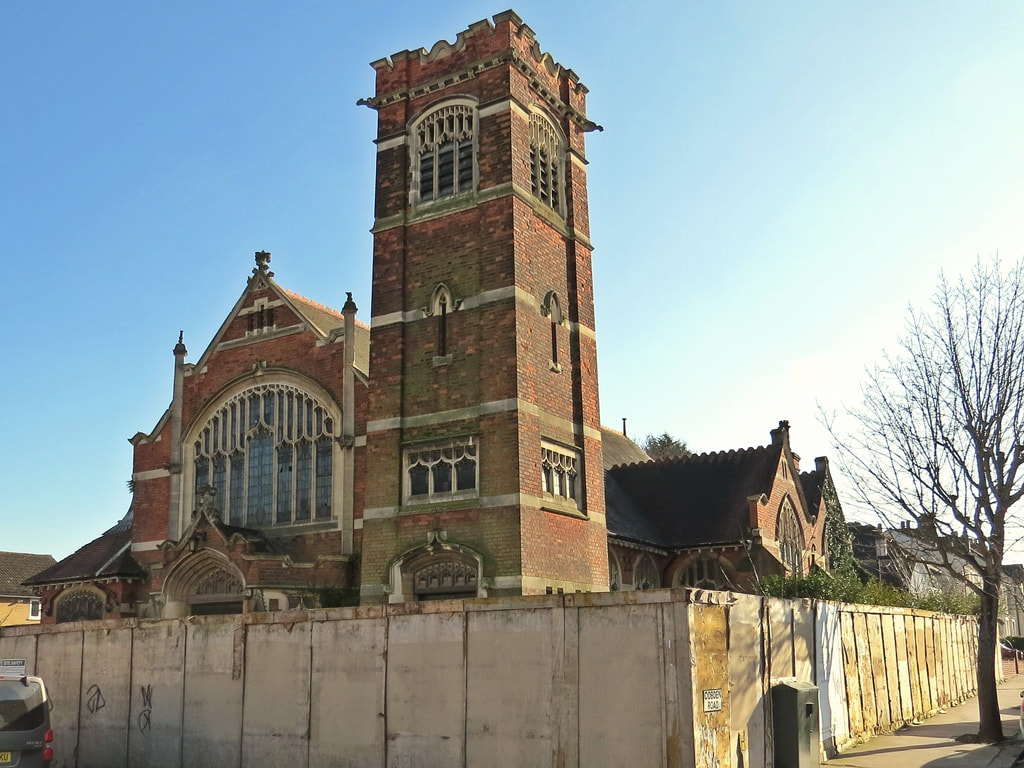
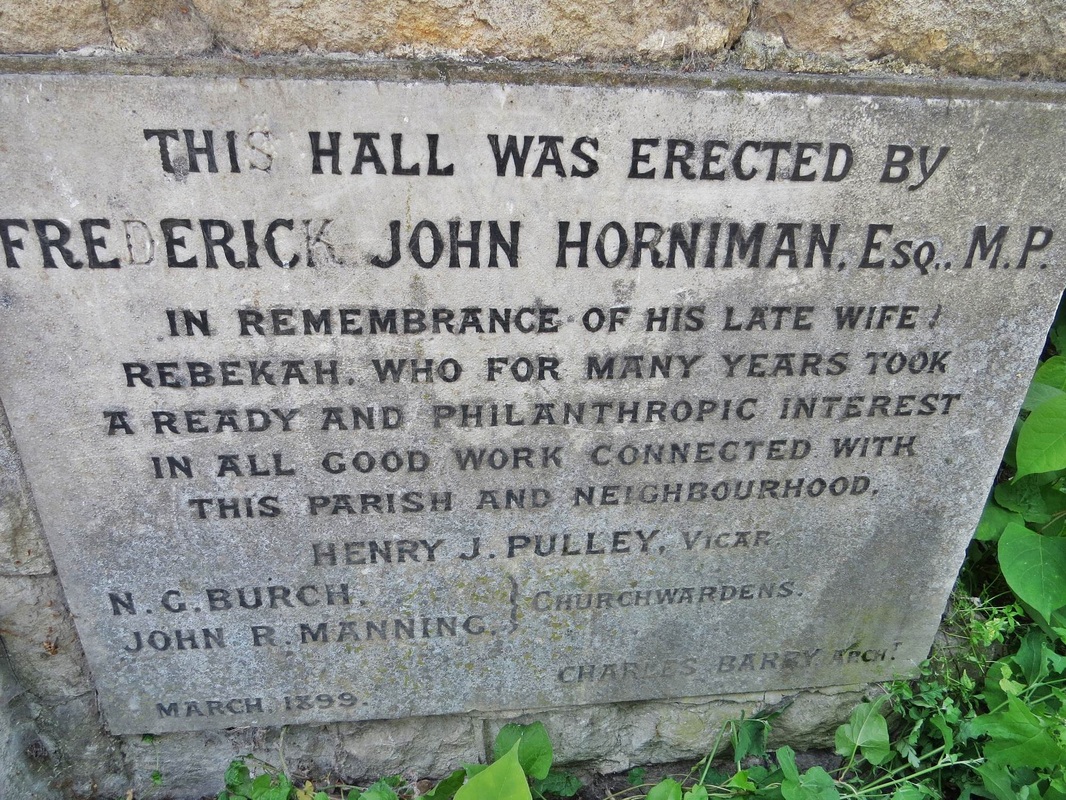
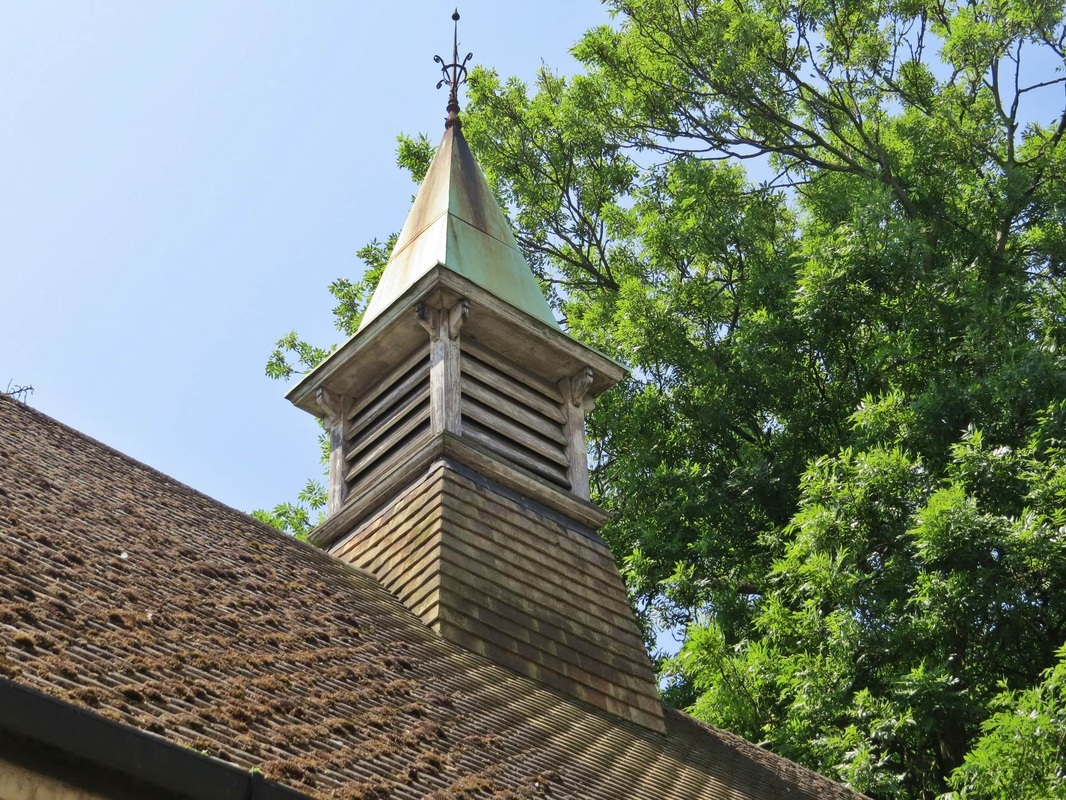
DEPTFORD - VICTORIA HALL (PREVIOUSLY VICTORIA CHAPEL)
LONDON WALL - ST ALPHAGE
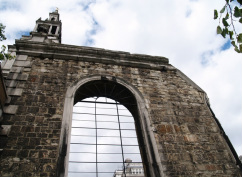
This 14th-century tower of the hospital priory of Elsing Spital was later incorporated into the church of St Alphage on London Wall. The church was damaged but not totally destroyed in the Great Fire of 1666. Further damage occurred in World War 1. Its scant remains consist of the ruin of a central tower, built of flint and rubble masonry, with arches on three sides and the south wall missing.
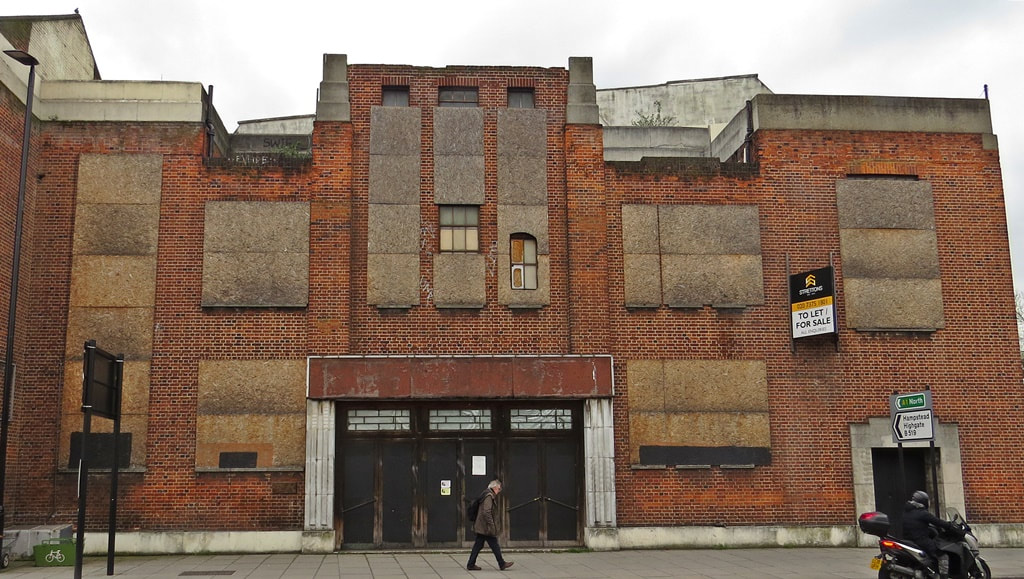
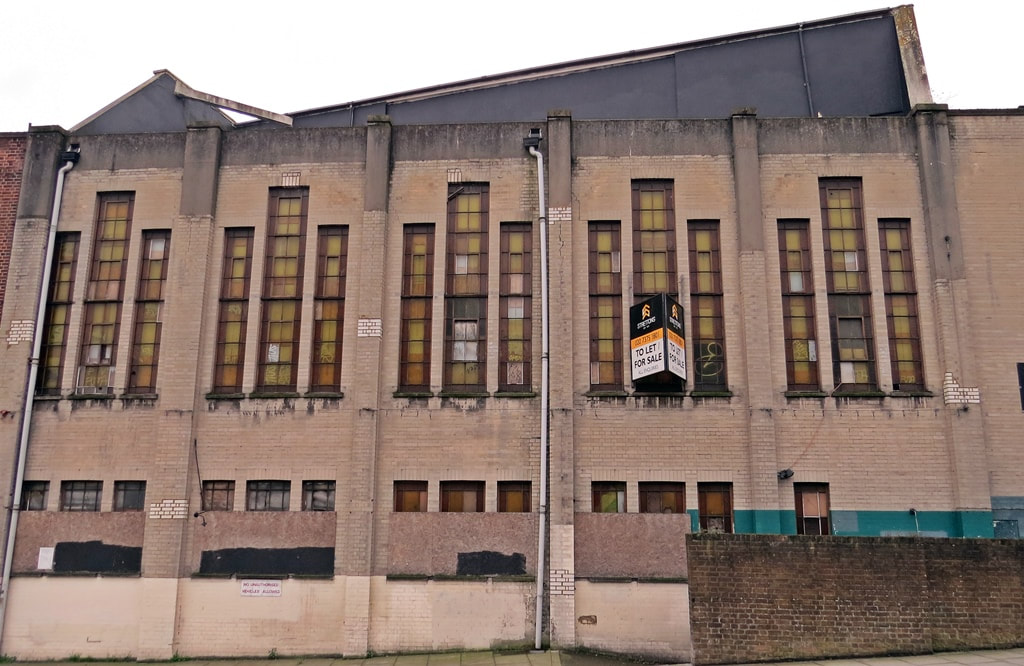
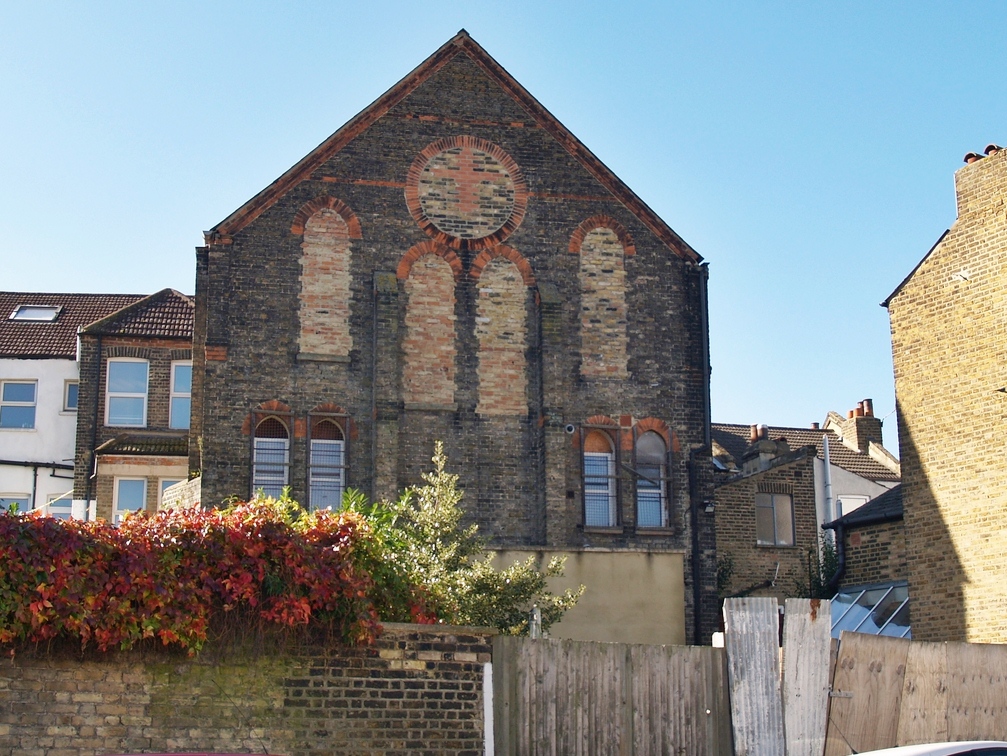
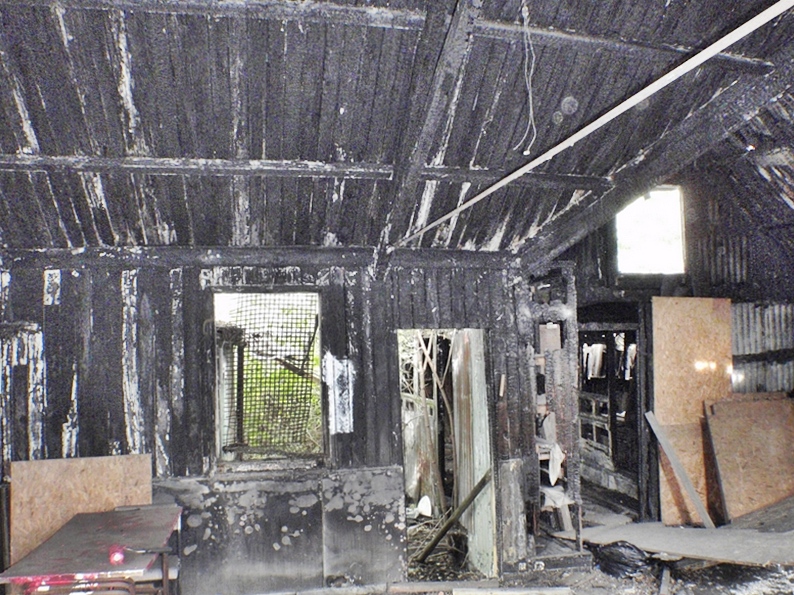
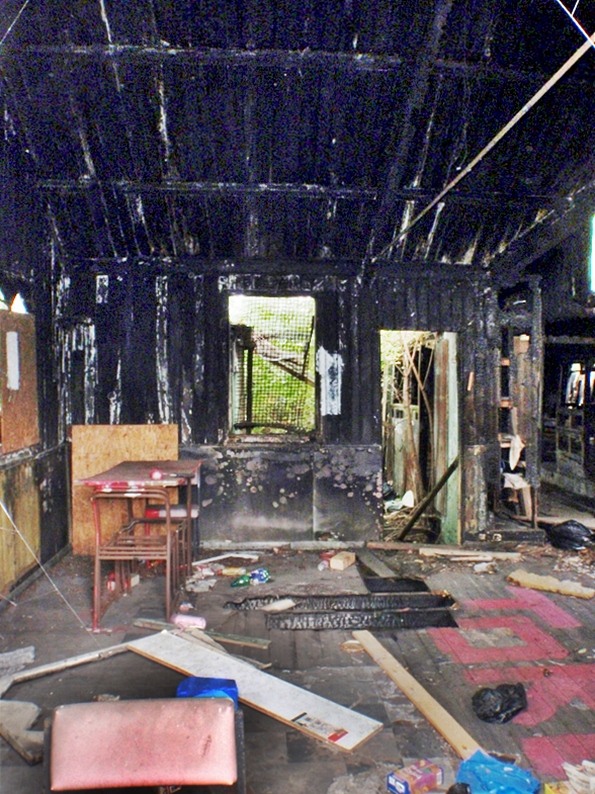
SIDCUP - PUBLIC HALL
ST PANCRAS OLD CHURCH
St Pancras Old Church is believed to be one of the oldest sites of Christian worship in England, and is dedicated to the Roman martyr Saint Pancras, In the mid-19th century the writer Thomas Hardy, then a trainee architect, was involved in the controversial clearance of part of the churchyard to make way for the railway. It was affected again, some 140 years later, by the St Pancras Channel Tunnel scheme.
Charles Dickens mentions it by name in A Tale of Two Cities, making it the location of body-snatching to provide corpses for dissection at medical schools, a common practice at the time. In 1968, The Beatles were photographed in the churchyard grounds, in a series of pictures designed to promote the single "Hey Jude"
UPPER NORWOOD - ST MARGARETS CHURCH
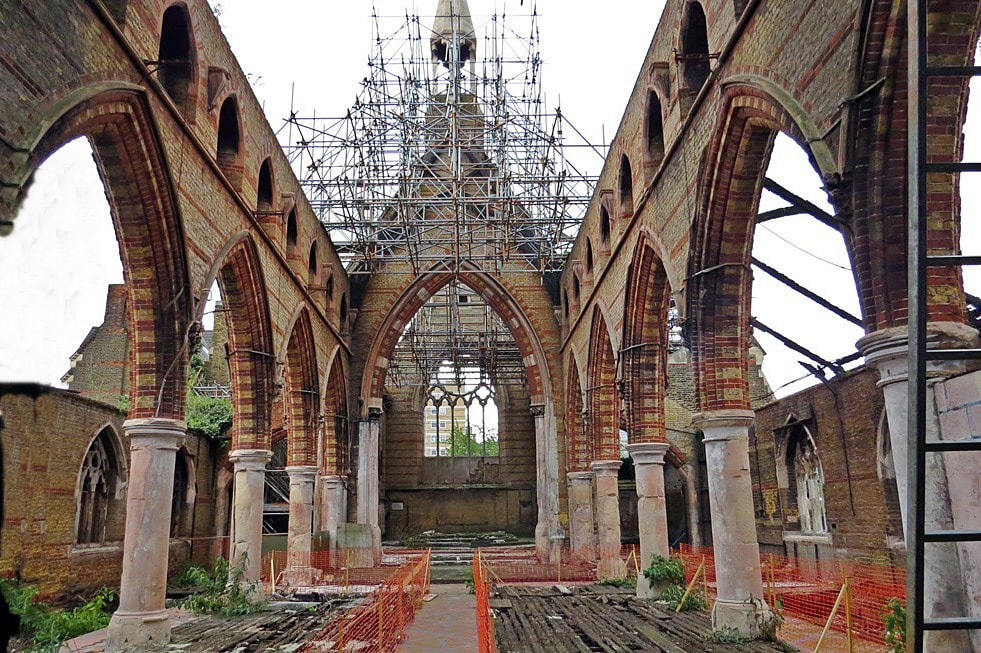
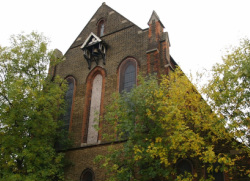
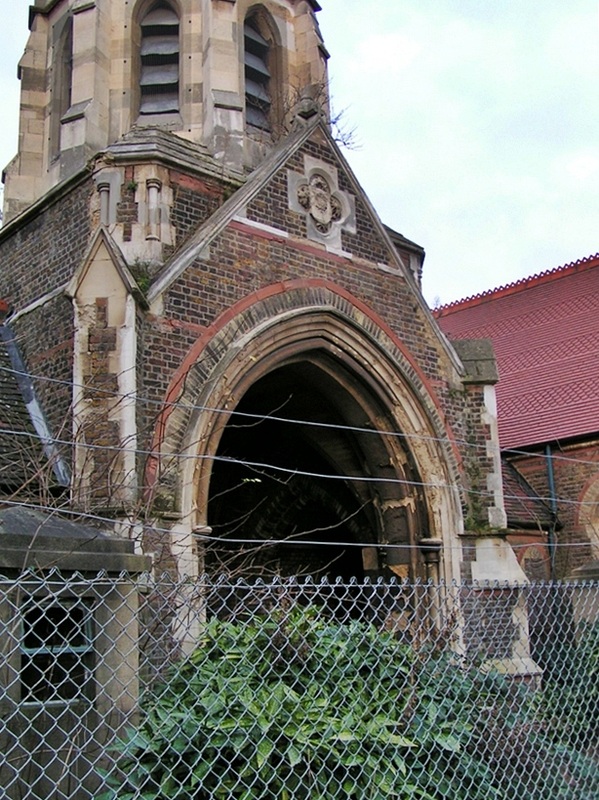
Built in 1901. Unoccupied since 2002 and made formerly redundant by the Church of England in 2003. There are now subsidence issues with the building and its days are numbered....
BROMPTON CEMETERY
|
|
www.derelictlondon.com
|
|
Want present day pics of your old haunts?
Researching your family tree and need location pics?
Pictures taken to order - low cost - any job considered
(not just derelicts!).
Much cheaper than professional photographers
Contact: Paul at derelictlondon.com
|
|